










EBOOK IN LINGUA STRANIERA





Permutation Statistical Methods for Criminology and Criminal Justice

168,47 €
+1680
punti 
Venditore: Feltrinelli

Acquista online
Scaricabile subito
Articolo acquistabile con Carta del Docente

Articolo acquistabile con Carta Cultura Giovani e Carta del Merito

Articolo acquistabile con Carta della Cultura

Dati e Statistiche
 Salvato in 0 liste dei desideri
Salvato in 0 liste dei desideri
Permutation Statistical Methods for Criminology and Criminal Justice
Scaricabile subito
168,47 €
168,47 €
Scaricabile subito
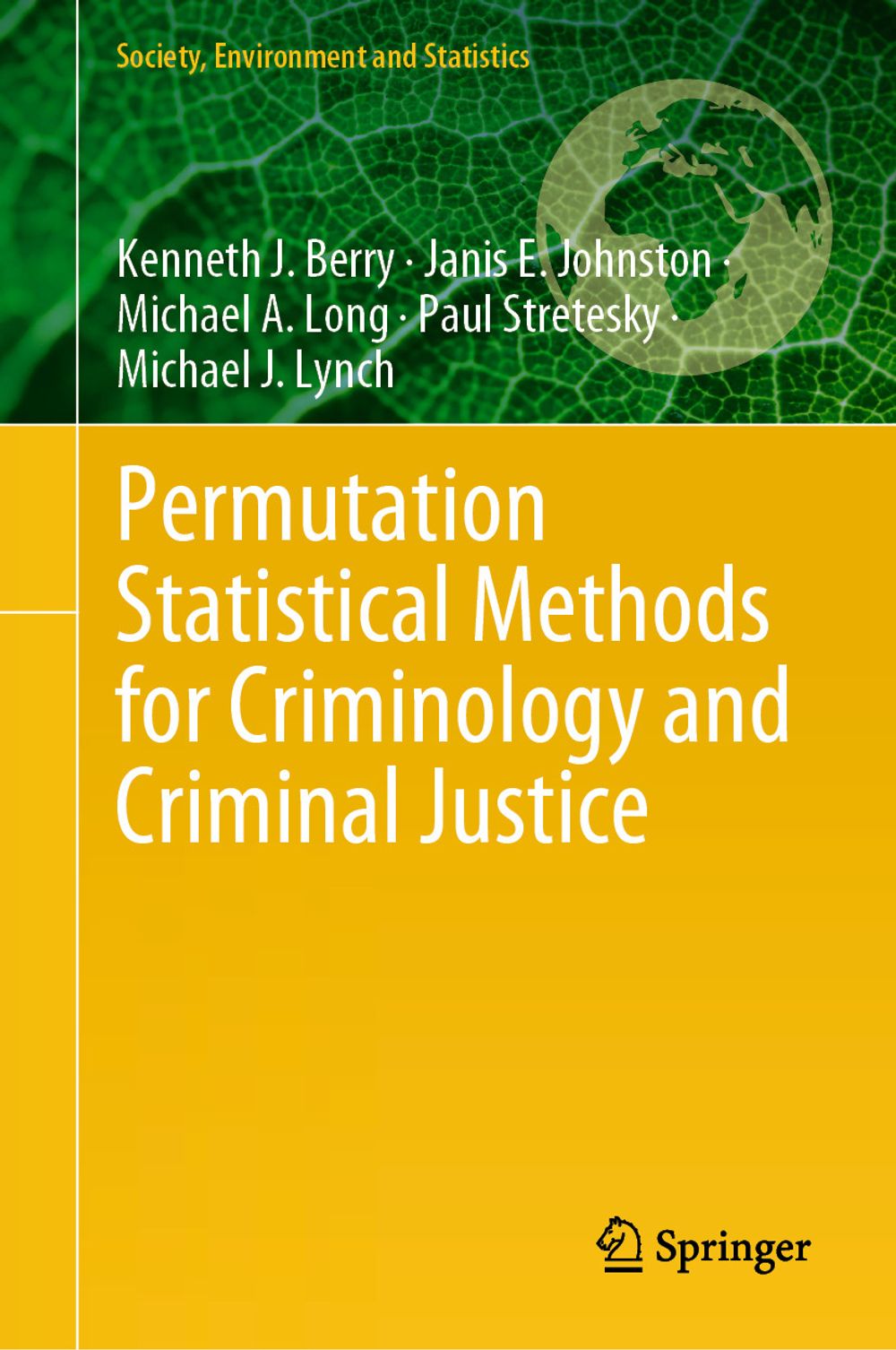


This book takes a unique approach to explaining permutation statistical methods for advanced undergraduate students, graduate students, faculty, researchers, and other professionals interested in the areas of criminology or criminal justice. The book integrates permutation statistical methods with a wide range of classical statistical methods. It opens with a comparison of two models of statistical inference: the classical population model espoused by J. Neyman and E. Pearson and the permutation model first introduced by R.A. Fisher and E.J.G. Pitman. Numerous comparisons of permutation and classical statistical methods are illustrated with examples from criminology and criminal justice and supplemented with a variety of R scripts for ease of computation. The text follows the general outline of an introductory textbook in statistics with chapters on central tendency, variability, one-sample tests, two-sample tests, matched-pairs tests, completely-randomized analysis of variance, randomized-blocks analysis of variance, simple linear regression and correlation, and the analysis of goodness of fit and contingency. Unlike classical statistical methods, permutation statistical methods do not rely on theoretical distributions, avoid the usual assumptions of normality and homogeneity, depend solely on the observed data, and do not require random sampling, making permutation statistical methods ideal for analyzing criminology and criminal justice databases. Permutation methods are relatively new in that it took modern computing power to make them available to those working in criminology and criminal justice research. The book contains detailed examples of permutation analyses. Each analysis is paired with a conventional analysis; for example, a permutation test of the difference between experimental and control groups is contrasted with Student's two-sample $t$ test. An added feature is the inclusion of multiple historical notes on the origin and development of both parametric and conventional tests and measures. Designed for an audience with a basic statistical background and a strong interest in parametric and non-parametric statistics, the book can easily serve as a textbook for undergraduate and graduate students in criminology, criminal justice, or sociology, as well as serving as a research source for faculty, researchers, and other professionals in the area of criminology. No statistical training beyond a first course in statistics is required, but some knowledge of, or interest in, criminology or criminal justice is assumed.
-
Autore:
-
Anno edizione:2025
-
Editore:
-
Formato:
-
Lingua:Inglese
Compatibilità:
Tutti i dispositivi (eccetto Kindle) Scopri di più
Layout:
Reflowable
EAN:
9783031596674

Formato:
Gli eBook venduti da Feltrinelli.it sono in formato ePub e possono essere protetti da Adobe DRM. In caso di download di un file protetto da DRM si otterrà un file in formato .acs, (Adobe Content Server Message), che dovrà essere aperto tramite Adobe Digital Editions e autorizzato tramite un account Adobe, prima di poter essere letto su pc o trasferito su dispositivi compatibili.
Cloud:
Gli eBook venduti da Feltrinelli.it sono sincronizzati automaticamente su tutti i client di lettura Kobo successivamente all’acquisto. Grazie al Cloud Kobo i progressi di lettura, le note, le evidenziazioni vengono salvati e sincronizzati automaticamente su tutti i dispositivi e le APP di lettura Kobo utilizzati per la lettura.
Clicca qui per sapere come scaricare gli ebook utilizzando un pc con sistema operativo Windows
