










LIBRO INGLESE





Primes and Particles: Mathematics, Mathematical Physics, Physics

132,50 €
+1330
punti 
Venditore: Feltrinelli
Articolo acquistabile con Carta del Docente

Articolo acquistabile con Carta Cultura Giovani e Carta del Merito

Articolo acquistabile con Carta della Cultura

Paga con Klarna in 3 rate senza interessi per ordini superiori a 39 €

Dati e Statistiche
 Salvato in 0 liste dei desideri
Salvato in 0 liste dei desideri
Primes and Particles: Mathematics, Mathematical Physics, Physics
Disponibilità in 2 settimane
132,50 €
132,50 €
Disponibilità in 2 settimane

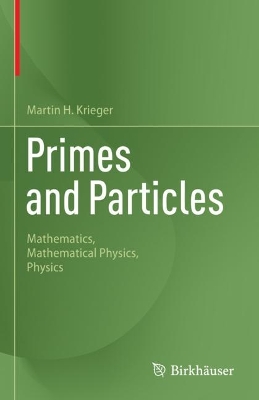



Many philosophers, physicists, and mathematicians have wondered about the remarkable relationship between mathematics with its abstract, pure, independent structures on one side, and the wilderness of natural phenomena on the other. Famously, Wigner found the "effectiveness" of mathematics in defining and supporting physical theories to be unreasonable, for how incredibly well it worked. Why, in fact, should these mathematical structures be so well-fitting, and even heuristic in the scientific exploration and discovery of nature? This book argues that the effectiveness of mathematics in physics is reasonable. The author builds on useful analogies of prime numbers and elementary particles, elementary structure kinship and the structure of systems of particles, spectra and symmetries, and for example, mathematical limits and physical situations. The two-dimensional Ising model of a permanent magnet and the proofs of the stability of everyday matter exemplify such effectiveness, and the power of rigorous mathematical physics. Newton is our original model, with Galileo earlier suggesting that mathematics is the language of Nature.
-
Autore:
-
Editore:
-
Anno:2024
-
Rilegatura:Hardback
-
Pagine:102 p.
Testo in English
Dimensioni:
235 x 155 mm
EAN:
9783031497759

Informazioni e Contatti sulla Sicurezza dei Prodotti
Le schede prodotto sono aggiornate in conformità al Regolamento UE 988/2023. Laddove ci fossero taluni dati non disponibili per ragioni indipendenti da Feltrinelli, vi informiamo che stiamo compiendo ogni ragionevole sforzo per inserirli. Vi invitiamo a controllare periodicamente il sito www.lafeltrinelli.it per eventuali novità e aggiornamenti.
Per le vendite di prodotti da terze parti, ciascun venditore si assume la piena e diretta responsabilità per la commercializzazione del prodotto e per la sua conformità al Regolamento UE 988/2023, nonché alle normative nazionali ed europee vigenti.
Per informazioni sulla sicurezza dei prodotti, contattare productsafety@feltrinelli.it
