










EBOOK IN LINGUA STRANIERA





Programming for the Puzzled

15,80 €
+160
punti 
Venditore: Feltrinelli

Acquista online
Scaricabile subito
Articolo acquistabile con Carta del Docente

Articolo acquistabile con Carta Cultura Giovani e Carta del Merito

Articolo acquistabile con Carta della Cultura

Dati e Statistiche
 Salvato in 0 liste dei desideri
Salvato in 0 liste dei desideri
Programming for the Puzzled
Scaricabile subito
15,80 €
15,80 €
Scaricabile subito

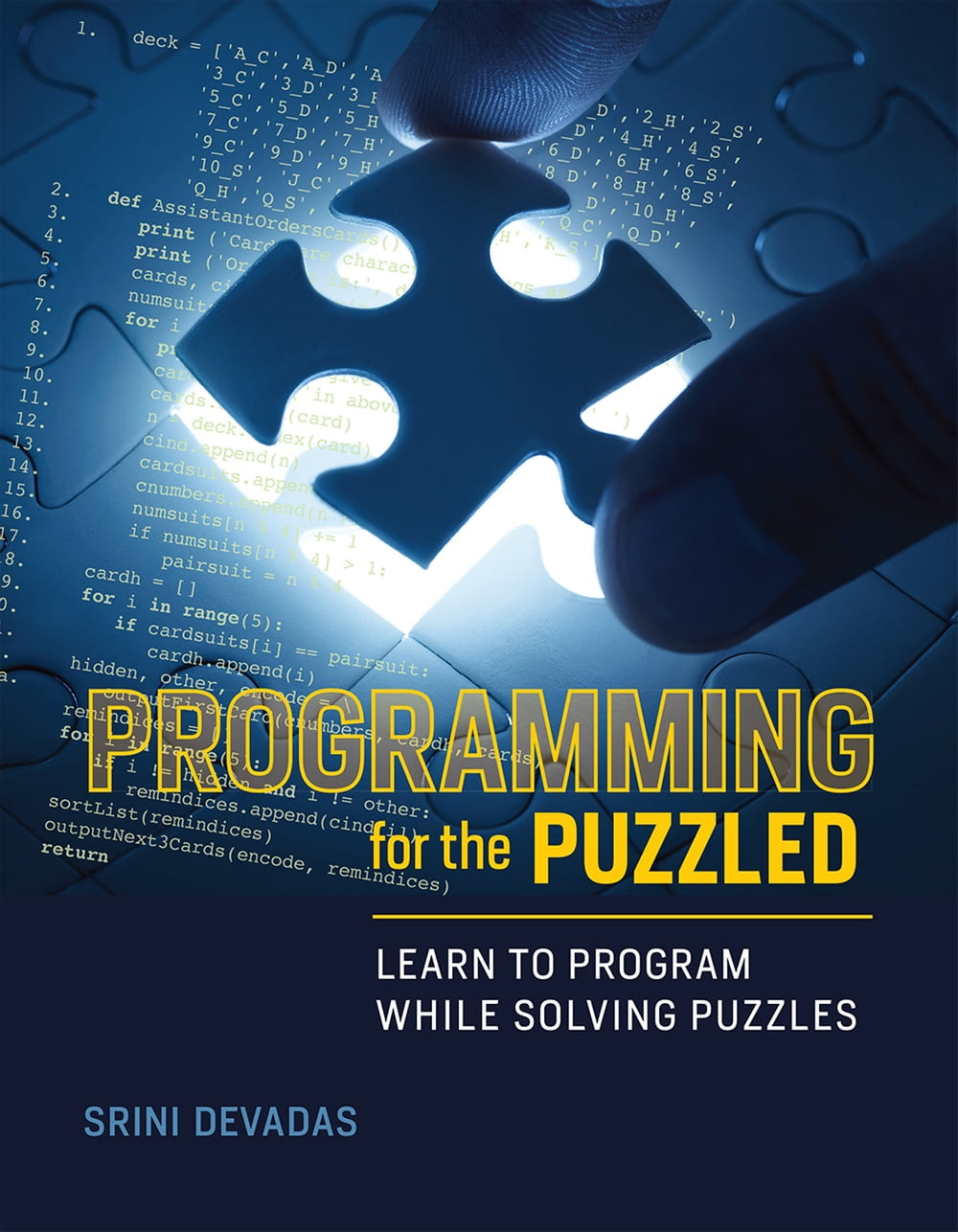



Learning programming with one of “the coolest applications around”: algorithmic puzzles ranging from scheduling selfie time to verifying the six degrees of separation hypothesis. This book builds a bridge between the recreational world of algorithmic puzzles (puzzles that can be solved by algorithms) and the pragmatic world of computer programming, teaching readers to program while solving puzzles. Few introductory students want to program for programming's sake. Puzzles are real-world applications that are attention grabbing, intriguing, and easy to describe. Each lesson starts with the description of a puzzle. After a failed attempt or two at solving the puzzle, the reader arrives at an Aha! moment—a search strategy, data structure, or mathematical fact—and the solution presents itself. The solution to the puzzle becomes the specification of the code to be written. Readers will thus know what the code is supposed to do before seeing the code itself. This represents a pedagogical philosophy that decouples understanding the functionality of the code from understanding programming language syntax and semantics. Python syntax and semantics required to understand the code are explained as needed for each puzzle. Readers need only the rudimentary grasp of programming concepts that can be obtained from introductory or AP computer science classes in high school. The book includes more than twenty puzzles and more than seventy programming exercises that vary in difficulty. Many of the puzzles are well known and have appeared in publications and on websites in many variations. They range from scheduling selfie time with celebrities to solving Sudoku problems in seconds to verifying the six degrees of separation hypothesis. The code for selected puzzle solutions is downloadable from the book's website; the code for all puzzle solutions is available to instructors.
-
Autore:
-
Anno edizione:2017
-
Editore:
-
Formato:
-
Lingua:Inglese
Compatibilità:
Tutti i dispositivi (eccetto Kindle) Scopri di più
Layout:
Reflowable
EAN:
9780262343190

Formato:
Gli eBook venduti da Feltrinelli.it sono in formato ePub e possono essere protetti da Adobe DRM. In caso di download di un file protetto da DRM si otterrà un file in formato .acs, (Adobe Content Server Message), che dovrà essere aperto tramite Adobe Digital Editions e autorizzato tramite un account Adobe, prima di poter essere letto su pc o trasferito su dispositivi compatibili.
Cloud:
Gli eBook venduti da Feltrinelli.it sono sincronizzati automaticamente su tutti i client di lettura Kobo successivamente all’acquisto. Grazie al Cloud Kobo i progressi di lettura, le note, le evidenziazioni vengono salvati e sincronizzati automaticamente su tutti i dispositivi e le APP di lettura Kobo utilizzati per la lettura.
Clicca qui per sapere come scaricare gli ebook utilizzando un pc con sistema operativo Windows
