









LIBRO INGLESE





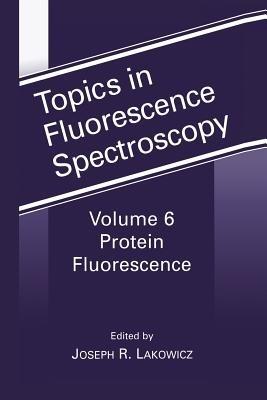
Protein Fluorescence

211,60 €
+2120
punti 
Venditore: Feltrinelli
Articolo acquistabile con Carta del Docente

Articolo acquistabile con Carta Cultura Giovani e Carta del Merito

Articolo acquistabile con Carta della Cultura

Paga con Klarna in 3 rate senza interessi per ordini superiori a 39 €

Dati e Statistiche
 Salvato in 0 liste dei desideri
Salvato in 0 liste dei desideri
Protein Fluorescence
Disponibilità in 2 settimane
211,60 €
211,60 €
Disponibilità in 2 settimane
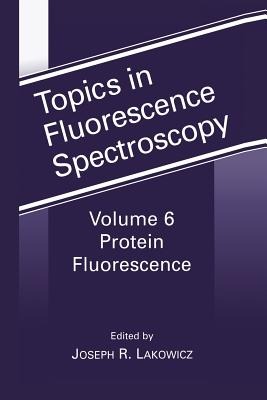


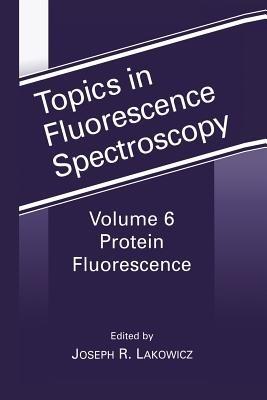
The intrinsic or natural fluorescence of proteins is perhaps the most complex area of biochemical fluorescence. Fortunately the fluorescent amino acids, phenylalanine, tyrosine and tryptophan are relatively rare in proteins. Tr- tophan is the dominant intrinsic fluorophore and is present at about one mole % in protein. As a result most proteins contain several tryptophan residues and even more tyrosine residues. The emission of each residue is affected by several excited state processes including spectral relaxation, proton loss for tyrosine, rotational motions and the presence of nearby quenching groups on the protein. Additionally, the tyrosine and tryptophan residues can interact with each other by resonance energy transfer (RET) decreasing the tyrosine emission. In this sense a protein is similar to a three-particle or mul- particle problem in quantum mechanics where the interaction between particles precludes an exact description of the system. In comparison, it has been easier to interpret the fluorescence data from labeled proteins because the fluorophore density and locations could be controlled so the probes did not interact with each other. From the origins of biochemical fluorescence in the 1950s with Prof- sor G. Weber until the mid-1980s, intrinsic protein fluorescence was more qualitative than quantitative. An early report in 1976 by A. Grindvald and I. Z. Steinberg described protein intensity decays to be multi-exponential. Attempts to resolve these decays into the contributions of individual tryp- phan residues were mostly unsuccessful due to the difficulties in resolving closely spaced lifetimes.
-
Curatore:
-
Editore:
-
Collana:Topics in Fluorescence Spectroscopy
-
Anno:2013
-
Rilegatura:Paperback / softback
Pagine:
310 p.
Testo in English
Dimensioni:
235 x 155 mm
EAN:
9781475781946

Informazioni e Contatti sulla Sicurezza dei Prodotti
Le schede prodotto sono aggiornate in conformità al Regolamento UE 988/2023. Laddove ci fossero taluni dati non disponibili per ragioni indipendenti da Feltrinelli, vi informiamo che stiamo compiendo ogni ragionevole sforzo per inserirli. Vi invitiamo a controllare periodicamente il sito www.lafeltrinelli.it per eventuali novità e aggiornamenti.
Per le vendite di prodotti da terze parti, ciascun venditore si assume la piena e diretta responsabilità per la commercializzazione del prodotto e per la sua conformità al Regolamento UE 988/2023, nonché alle normative nazionali ed europee vigenti.
Per informazioni sulla sicurezza dei prodotti, contattare productsafety@feltrinelli.it
