










LIBRO INGLESE





Resilience in the Digital Age


81,40 €
+810
punti 
Venditore: Feltrinelli
Articolo acquistabile con Carta del Docente

Articolo acquistabile con Carta Cultura Giovani e Carta del Merito

Articolo acquistabile con Carta della Cultura

Paga con Klarna in 3 rate senza interessi per ordini superiori a 39 €

Dati e Statistiche
 Salvato in 0 liste dei desideri
Salvato in 0 liste dei desideri
Resilience in the Digital Age
Disponibilità in 2 settimane
81,40 €
81,40 €
Disponibilità in 2 settimane

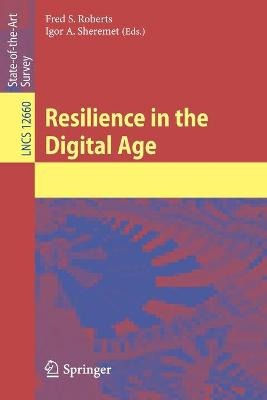



The growth of a global digital economy has enabled rapid communication, instantaneous movement of funds, and availability of vast amounts of information. With this come challenges such as the vulnerability of digitalized sociotechnological systems (STSs) to destructive events (earthquakes, disease events, terrorist attacks). Similar issues arise for disruptions to complex linked natural and social systems (from changing climates, evolving urban environments, etc.). This book explores new approaches to the resilience of sociotechnological and natural-social systems in a digital world of big data, extraordinary computing capacity, and rapidly developing methods of Artificial Intelligence. Most of the book’s papers were presented at the Workshop on Big Data and Systems Analysis held at the International Institute for Applied Systems Analysis in Laxenburg, Austria in February, 2020. Their authors are associated with the Task Group “Advanced mathematical tools for data-driven applied systems analysis” created and sponsored by CODATA in November, 2018. The world-wide COVID-19 pandemic illustrates the vulnerability of our healthcare systems, supply chains, and social infrastructure, and confronts our notions of what makes a system resilient. We have found that use of AI tools can lead to problems when unexpected events occur. On the other hand, the vast amounts of data available from sensors, satellite images, social media, etc. can also be used to make modern systems more resilient. Papers in the book explore disruptions of complex networks and algorithms that minimize departure from a previous state after a disruption; introduce a multigrammatical framework for the technological and resource bases of today’s large-scale industrial systems and the transformations resulting from disruptive events; and explain how robotics can enhance pre-emptive measures or post-disaster responses to increase resiliency. Other papers explore current directions in data processing and handling and principles of FAIRness in data; how the availability of large amounts of data can aid in the development of resilient STSs and challenges to overcome in doing so. The book also addresses interactions between humans and built environments, focusing on how AI can inform today’s smart and connected buildings and make them resilient, and how AI tools can increase resilience to misinformation and its dissemination.
-
Curatore:
-
Editore:
-
Collana:Information Systems and Applications, incl. Internet/Web, and HCI
-
Anno:2021
-
Rilegatura:Paperback / softback
Pagine:
199 p.
Testo in English
Dimensioni:
235 x 155 mm
EAN:
9783030703691

Informazioni e Contatti sulla Sicurezza dei Prodotti
Le schede prodotto sono aggiornate in conformità al Regolamento UE 988/2023. Laddove ci fossero taluni dati non disponibili per ragioni indipendenti da Feltrinelli, vi informiamo che stiamo compiendo ogni ragionevole sforzo per inserirli. Vi invitiamo a controllare periodicamente il sito www.lafeltrinelli.it per eventuali novità e aggiornamenti.
Per le vendite di prodotti da terze parti, ciascun venditore si assume la piena e diretta responsabilità per la commercializzazione del prodotto e per la sua conformità al Regolamento UE 988/2023, nonché alle normative nazionali ed europee vigenti.
Per informazioni sulla sicurezza dei prodotti, contattare productsafety@feltrinelli.it
