









LIBRO INGLESE





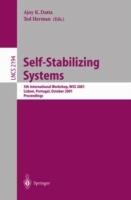
Self-Stabilizing Systems: 5th International Workshop, WSS 2001, Lisbon, Portugal, October 1-2, 2001 Proceedings


68,50 €
+690
punti 
Venditore: Feltrinelli
Articolo acquistabile con Carta del Docente

Articolo acquistabile con Carta Cultura Giovani e Carta del Merito

Articolo acquistabile con Carta della Cultura

Paga con Klarna in 3 rate senza interessi per ordini superiori a 39 €

Dati e Statistiche
 Salvato in 0 liste dei desideri
Salvato in 0 liste dei desideri
Self-Stabilizing Systems: 5th International Workshop, WSS 2001, Lisbon, Portugal, October 1-2, 2001 Proceedings
Disponibilità in 2 settimane
68,50 €
68,50 €
Disponibilità in 2 settimane


Physicalsystemswhichrightthemselvesafterbeingdisturbedevokeourcuriosity becausewe wantto understand howsuchsystemsareableto reactto unexpected stimuli. Themechanismsareallthe morefascinatingwhensystemsarecomposed of small, simple units, and the ability of the system to self-stabilize emerges out of its components. Faithful computer simulations of such physical systems exhibit the self-stabilizing property, but in the realm of computing, particularly for distributed systems, wehavegreaterambition. We imaginethat all manner of software, ranging from basic communication protocols to high-level applications, could enjoy self-corrective properties. Self-stabilizing software o?ers a unique, non-traditional approach to the c- cial problem of transient fault tolerance. Many successful instances of modern fault-tolerant networks are based on principles of self-stabilization. Surprisingly, the most widely accepted technical de?nition of a self-stabilizing system does not refer to faults: it is the property that the system can be started in any i- tial state, possibly an “illegal state,” and yet the system guarantees to behave properly in ?nite time. This, and similar de?nitions, break many traditional approaches to program design, in which the programmer by habit makes - sumptions about initial conditions. The composition of self-stabilizing systems, initially seen as a daunting challenge, has been transformed into a mana- able task, thanks to an accumulation of discoveries by many investigators. - search on various topics in self-stabilization continues to supply new methods for constructing self-stabilizing systems, determines limits and applicability of the paradigm of self-stabilization, and connects self-stabilization to related areas of fault tolerance anddistributed computing.
-
Curatore:
-
Editore:
-
Collana:Lecture Notes in Computer Science
-
Anno:2001
-
Rilegatura:Paperback / softback
Pagine:
236 p.
Testo in English
Dimensioni:
235 x 155 mm
EAN:
9783540426530

Informazioni e Contatti sulla Sicurezza dei Prodotti
Le schede prodotto sono aggiornate in conformità al Regolamento UE 988/2023. Laddove ci fossero taluni dati non disponibili per ragioni indipendenti da Feltrinelli, vi informiamo che stiamo compiendo ogni ragionevole sforzo per inserirli. Vi invitiamo a controllare periodicamente il sito www.lafeltrinelli.it per eventuali novità e aggiornamenti.
Per le vendite di prodotti da terze parti, ciascun venditore si assume la piena e diretta responsabilità per la commercializzazione del prodotto e per la sua conformità al Regolamento UE 988/2023, nonché alle normative nazionali ed europee vigenti.
Per informazioni sulla sicurezza dei prodotti, contattare productsafety@feltrinelli.it
