










AUDIOLIBRO IN LINGUA STRANIERA





Space's Hidden Forces

3,56 €
+40
punti 
Venditore: Feltrinelli

Acquista online
Disponibile su APP ed eReader Kobo
Articolo acquistabile con Carta del Docente

Articolo acquistabile con Carta Cultura Giovani e Carta del Merito

Articolo acquistabile con Carta della Cultura

Abbonati a Kobo plus per avere accesso illimitato a questo contenuto

Dati e Statistiche
 Salvato in 0 liste dei desideri
Salvato in 0 liste dei desideri
Space's Hidden Forces
Disponibile su APP ed eReader Kobo
3,56 €
3,56 €
Disponibile su APP ed eReader Kobo

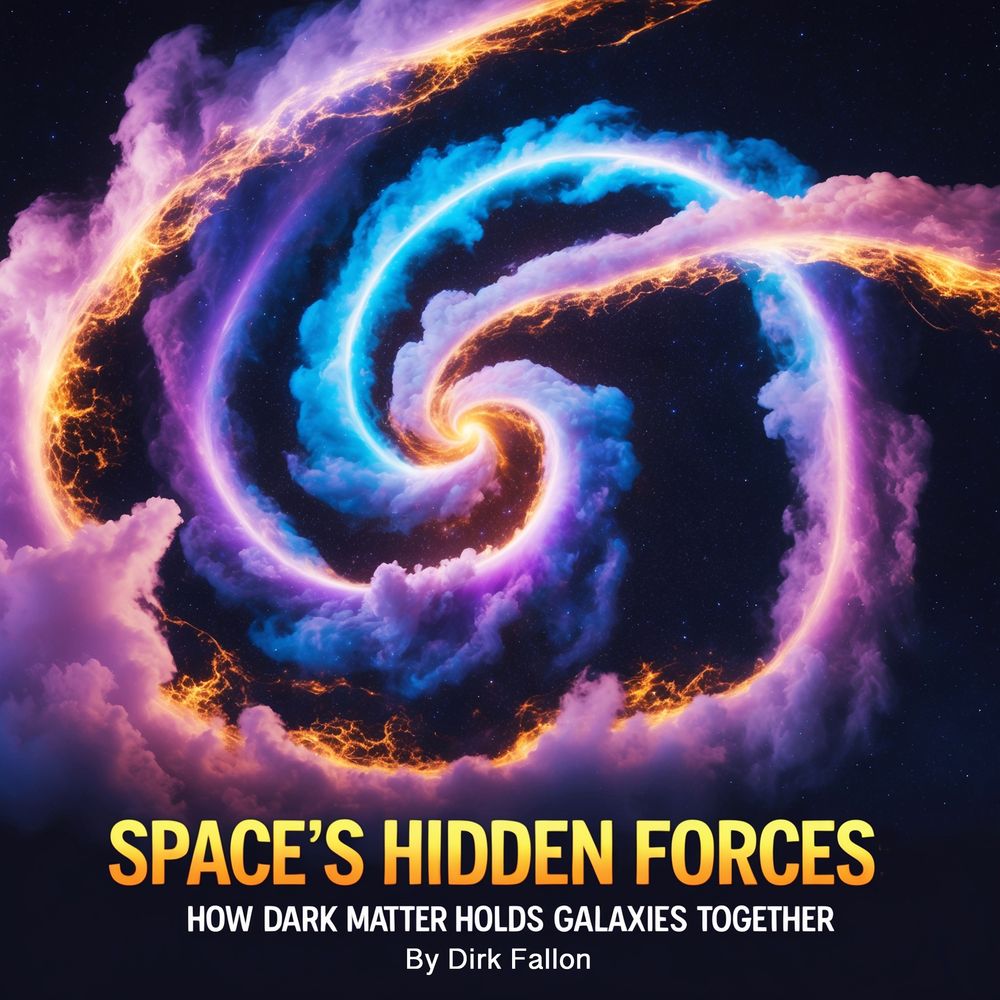



For centuries, humans have gazed up at the night sky in awe, wondering what lies beyond the stars. With the invention of powerful telescopes, astronomers began mapping galaxies, studying their motion, and uncovering patterns in how they moved through space. But something strange started to appear in the data. Galaxies were spinning in ways that defied the known laws of gravity. Based on what could be seen—the stars, dust, and gas—the galaxies should have been flying apart. The visible mass simply wasn’t enough to account for the gravitational pull holding everything together. This marked the beginning of a great cosmic mystery. In the 1930s, Swiss-American astronomer Fritz Zwicky made one of the first observations that hinted at this invisible force. He studied a cluster of galaxies and noticed that they were moving too fast to be held together by the visible matter alone. He proposed the existence of “dunkle Materie,” or dark matter—an unknown substance that made up the missing mass. At the time, his ideas were largely ignored or dismissed as speculative. But in the decades that followed, more evidence began to emerge, and dark matter slowly gained credibility within the scientific community. Fast forward to the 1970s, astronomer Vera Rubin provided some of the most convincing evidence that dark matter was real. By analyzing the rotation curves of spiral galaxies, she showed that stars far from the center of galaxies were moving just as quickly as those near the core. According to Newtonian physics, the stars on the edges should move slower, as the gravitational pull should weaken with distance from the center. But that wasn’t happening. Something unseen was holding these stars in orbit, acting like a glue that bound the galaxies together. This unseen substance, which does not emit, absorb, or reflect light, became known as dark matter.
-
Autore:
-
Durata in (hh:mm:ss):01:42:54
-
Anno edizione:2025
-
Editore:
Lingua:
Inglese
EAN:
9798318134043

Formato:
Gli Audiolibri venduti dal nostro sito sono in formato MP3 e protetti da un DRM proprietario Kobo.
Compatibilità:
Gli Audiolibri venduti dal nostro sito possono essere ascoltati sul tuo smartphone o tablet tramite la APP gratuita Kobo Books scaricabile da iOS o Android. Gli Audiolibri non possono essere scaricati in locale o trasferiti su un client di ascolto diverso da quello fornito tramite Kobo. Non è possibile ascoltare gli audiolibri con la Kobo APP Desktop. Puoi ascoltare gli Audiolibri tramite determinati eReader Kobo, utilizzando cuffie o casse con Bluetooth. Visita la pagina degli eReader per avere maggiori dettagli.
Cloud:
Gli Audiolibri venduti singolarmente dal nostro sito sono immediatamente sincronizzati sul tuo account personale in automatico. Successivamente all'acquisto, sono subito disponibili all'ascolto tramite i client di lettura Kobo compatibili.
Clicca qui servissero ulteriori informazioni
