










EBOOK IN LINGUA STRANIERA





The turtle who wasn't named Manuelita. Short story. And Dark

3,49 €
+30
punti 
Venditore: Feltrinelli

Acquista online
Scaricabile subito
Articolo acquistabile con Carta del Docente

Articolo acquistabile con Carta Cultura Giovani e Carta del Merito

Articolo acquistabile con Carta della Cultura

Abbonati a Kobo plus per avere accesso illimitato a questo contenuto

Dati e Statistiche
 Salvato in 0 liste dei desideri
Salvato in 0 liste dei desideri
The turtle who wasn't named Manuelita. Short story. And Dark
Scaricabile subito
3,49 €
3,49 €
Scaricabile subito

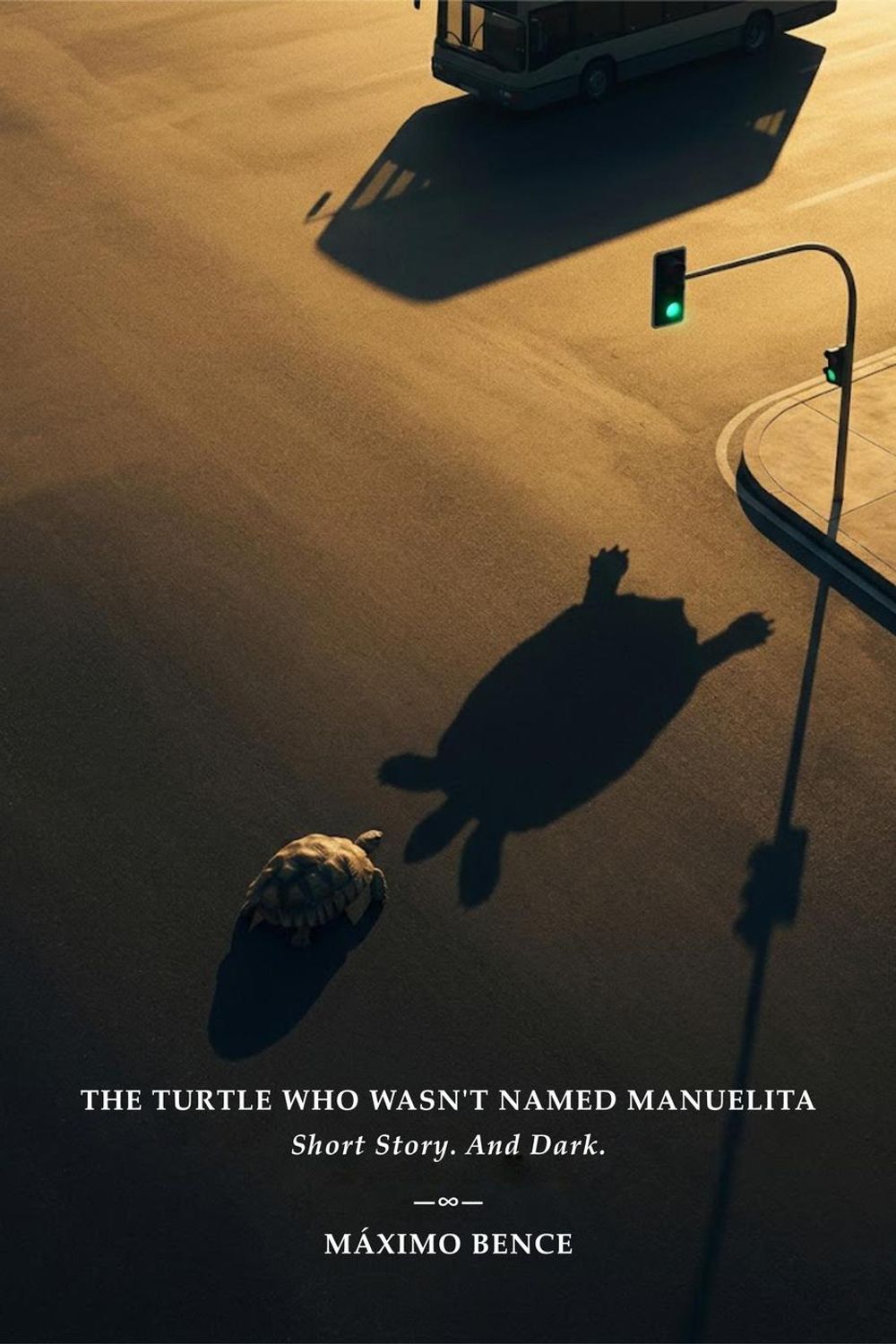



A turtle pushes through the gap in the gate on a golden, unhurried afternoon. Nobody sees her leave. Ahead of her lies one block. Her first block. Her only block. She does the only thing she knows how to do with any dignity: she walks. And as she walks, the world shows her — with the brutal indifference that large things have for small ones — everything she will never be. Scene after scene, creature after creature, something sharpens inside her. A slow, precise, irreversible awareness of what she is. And of what she isn't. She is ready for the journey. The light is green. The Turtle Who Wasn't Named Manuelita is a story about the consciousness of limits, about the difference between slowness as pace and slowness as fate, and about the cruel distance between recognizing yourself and being able to change. It is also an inverted tribute to Manuelita — the beloved turtle in María Elena Walsh's classic Argentine children's story, who dreamed of going to Paris, went, and came back as old and wrinkled as she'd left. She made it. This turtle doesn't. Argentine readers will recognize the title immediately. Now everyone else does too. Written in a deliberately literary and austere register, this short story is a departure for Máximo Bence — author of the autobiographical When the Wind Lumps Us Together, known for his digressive, humor-driven, emotionally unfiltered voice. Here, that voice goes quiet. The narrator knows everything and says little. The prose is unhurried, precise, and pitiless. Sentences stretch long in moments of longing and snap short when something closes. There are no jokes. There is no relief. There is only a turtle, one block, and an afternoon that was golden and indifferent and didn't care either way. This is a story about dreaming without moving. About the gap between having a shell and having wings. About the cruelest kind of self-knowledge: the kind that arrives too late to change anything. It is short. And dark.
-
Autore:
-
Anno edizione:2026
-
Editore:
-
Formato:
-
Lingua:Inglese
Compatibilità:
Tutti i dispositivi (eccetto Kindle) Scopri di più
Layout:
Reflowable
EAN:
9798233893018

Formato:
Gli eBook venduti da Feltrinelli.it sono in formato ePub e possono essere protetti da Adobe DRM. In caso di download di un file protetto da DRM si otterrà un file in formato .acs, (Adobe Content Server Message), che dovrà essere aperto tramite Adobe Digital Editions e autorizzato tramite un account Adobe, prima di poter essere letto su pc o trasferito su dispositivi compatibili.
Cloud:
Gli eBook venduti da Feltrinelli.it sono sincronizzati automaticamente su tutti i client di lettura Kobo successivamente all’acquisto. Grazie al Cloud Kobo i progressi di lettura, le note, le evidenziazioni vengono salvati e sincronizzati automaticamente su tutti i dispositivi e le APP di lettura Kobo utilizzati per la lettura.
Clicca qui per sapere come scaricare gli ebook utilizzando un pc con sistema operativo Windows
