









AUDIOLIBRO IN LINGUA STRANIERA





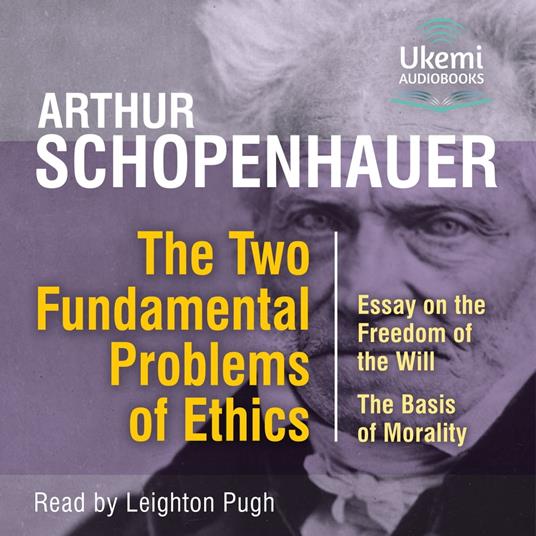
The Two Fundamental Problems of Ethics

12,94 €
+130
punti 
Venditore: Feltrinelli

Acquista online
Disponibile su APP ed eReader Kobo
Articolo acquistabile con Carta del Docente

Articolo acquistabile con Carta Cultura Giovani e Carta del Merito

Articolo acquistabile con Carta della Cultura

Dati e Statistiche
 Salvato in 0 liste dei desideri
Salvato in 0 liste dei desideri
The Two Fundamental Problems of Ethics
Disponibile su APP ed eReader Kobo
12,94 €
12,94 €
Disponibile su APP ed eReader Kobo





The essays in The Two Fundamental Problems of Ethics have a rather special place in Schopenhauer’s work, both being written as entries to Scandinavian philosophy competitions, one in Norway and one in Sweden. 'Essay on the Freedom of the Will' was Schopenhauer’s response to the question posed by the Royal Norwegian Society of Sciences in 1839: ‘Is it possible to demonstrate human free will from self-consciousness?’ In a clear and confident response, the 51-year-old philosopher, then living in Frankfurt, laid out his views, under headlines such as ‘What is Freedom’, ‘The Will and the Self-Conscious’, ‘The Will and the Consciousness of Other Things’, ‘Predecessors’, ‘Conclusion' and 'A Higher View'. The essay won. The following year, Schopenhauer produced a second work on ethics. The Royal Danish Academy of Sciences proposed the question: ‘Is the fountain and basis of Morals to be sought for in an idea of morality which lies directly in the consciousness (or conscience), and in the analysis of the other leading ethical conceptions which arise from it? Or is it to be found in some other source of knowledge?’ In answer Schopenhauer presented ‘The Basis of Morality’, arguing that morality stems from compassion, but it was denied the prize, though his was the only entry! Despite this unexpected result, Schopenhauer published both works in 1841 under the present title - with characteristic bombast declaring that one had won and the other had not! Together, these two works offer a compact and accessible account of Schopenhauer’s approach to ethics. 'Essay on Freedom' is translated by Konstantin Kolenda. 'The Basis of Morality' is translated by Arthur Broderick Bullock.
-
Autore:
-
Durata in (hh:mm:ss):11:14:20
-
Anno edizione:2019
-
Editore:
Lingua:
Inglese
EAN:
9781004133642

Formato:
Gli Audiolibri venduti dal nostro sito sono in formato MP3 e protetti da un DRM proprietario Kobo.
Compatibilità:
Gli Audiolibri venduti dal nostro sito possono essere ascoltati sul tuo smartphone o tablet tramite la APP gratuita Kobo Books scaricabile da iOS o Android. Gli Audiolibri non possono essere scaricati in locale o trasferiti su un client di ascolto diverso da quello fornito tramite Kobo. Non è possibile ascoltare gli audiolibri con la Kobo APP Desktop. Puoi ascoltare gli Audiolibri tramite determinati eReader Kobo, utilizzando cuffie o casse con Bluetooth. Visita la pagina degli eReader per avere maggiori dettagli.
Cloud:
Gli Audiolibri venduti singolarmente dal nostro sito sono immediatamente sincronizzati sul tuo account personale in automatico. Successivamente all'acquisto, sono subito disponibili all'ascolto tramite i client di lettura Kobo compatibili.
Clicca qui servissero ulteriori informazioni
