










LIBRO INGLESE





Vibe Coding Architecture at Scale: Scale AI-assisted coding with specs, guardrails, and system design discipline


32,99 €
+330
punti 
Venditore: Feltrinelli
Articolo acquistabile con Carta del Docente

Articolo acquistabile con Carta Cultura Giovani e Carta del Merito

Articolo acquistabile con Carta della Cultura

Dati e Statistiche
 Salvato in 0 liste dei desideri
Salvato in 0 liste dei desideri
Vibe Coding Architecture at Scale: Scale AI-assisted coding with specs, guardrails, and system design discipline
Disponibilità in 3 settimane
32,99 €
32,99 €
Disponibilità in 3 settimane

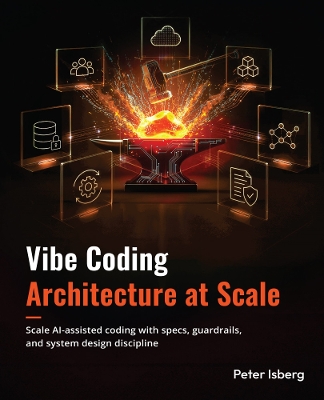



Turn vibe coding into reliable software delivery by using specs, guardrails, tests, and workflows that keep AI-generated systems coherent Key Features Turn fast AI coding into scalable software architecture Use specs, tests, and guardrails to control generated code Apply workflows for agents, reviews, CI/CD, and team adoption Book DescriptionAI-assisted coding can help teams move faster, but speed without structure creates brittle systems, hidden dependencies, weak tests, and decisions that are difficult to trace. This book reframes vibe coding as a disciplined engineering workflow for turning prompts, generated code, and agent output into systems that can be reviewed, tested, and scaled. Based on Peter Isberg’s experience across defense, automotive, online travel, and logistics, the book shows how to bring architectural intent into AI-assisted software development. You’ll learn how to manage context, use specs as guardrails, design architectural tests, visualize system behavior, build prompt and review workflows, and apply practices for multi-agent orchestration, CI/CD, prompt lineage, model routing, and secure handling of untrusted context. By the end of this book, you’ll be able to move beyond ad hoc prompting and use vibe coding architecture to guide AI-generated software with clearer structure, stronger feedback loops, and better engineering control.What you will learn Use specs to guide AI-assisted software delivery Manage context to reduce prompt entropy and drift Design guardrails for generated code and agents Build tests that check architectural intent Apply review workflows for AI-generated changes Handle prompt injection and untrusted context safely Use CI/CD and orchestration for multi-agent work Track prompts, model choices, and intent in Git Who this book is forThis book is for developers, product managers, engineers, architects, and technical leads who are already using or evaluating AI-assisted coding and need stronger control over architecture, quality, security, and team workflow. Familiarity with software delivery, code review, testing, and modern development tools will help readers get the most from the book.
-
Autore:
-
Editore:
-
Anno:2026
-
Rilegatura:Paperback / softback
-
Pagine:566 p.
Testo in English
Dimensioni:
235 x 191 mm
EAN:
9781808654916

Informazioni e Contatti sulla Sicurezza dei Prodotti
Le schede prodotto sono aggiornate in conformità al Regolamento UE 988/2023. Laddove ci fossero taluni dati non disponibili per ragioni indipendenti da Feltrinelli, vi informiamo che stiamo compiendo ogni ragionevole sforzo per inserirli. Vi invitiamo a controllare periodicamente il sito www.lafeltrinelli.it per eventuali novità e aggiornamenti.
Per le vendite di prodotti da terze parti, ciascun venditore si assume la piena e diretta responsabilità per la commercializzazione del prodotto e per la sua conformità al Regolamento UE 988/2023, nonché alle normative nazionali ed europee vigenti.
Per informazioni sulla sicurezza dei prodotti, contattare productsafety@feltrinelli.it
