










EBOOK IN LINGUA STRANIERA





Virtual and Remote Control Tower

84,23 €
+840
punti 
Venditore: Feltrinelli

Acquista online
Scaricabile subito
Articolo acquistabile con Carta del Docente

Articolo acquistabile con Carta Cultura Giovani e Carta del Merito

Articolo acquistabile con Carta della Cultura

Dati e Statistiche
 Salvato in 0 liste dei desideri
Salvato in 0 liste dei desideri
Virtual and Remote Control Tower
Scaricabile subito
84,23 €
84,23 €
Scaricabile subito

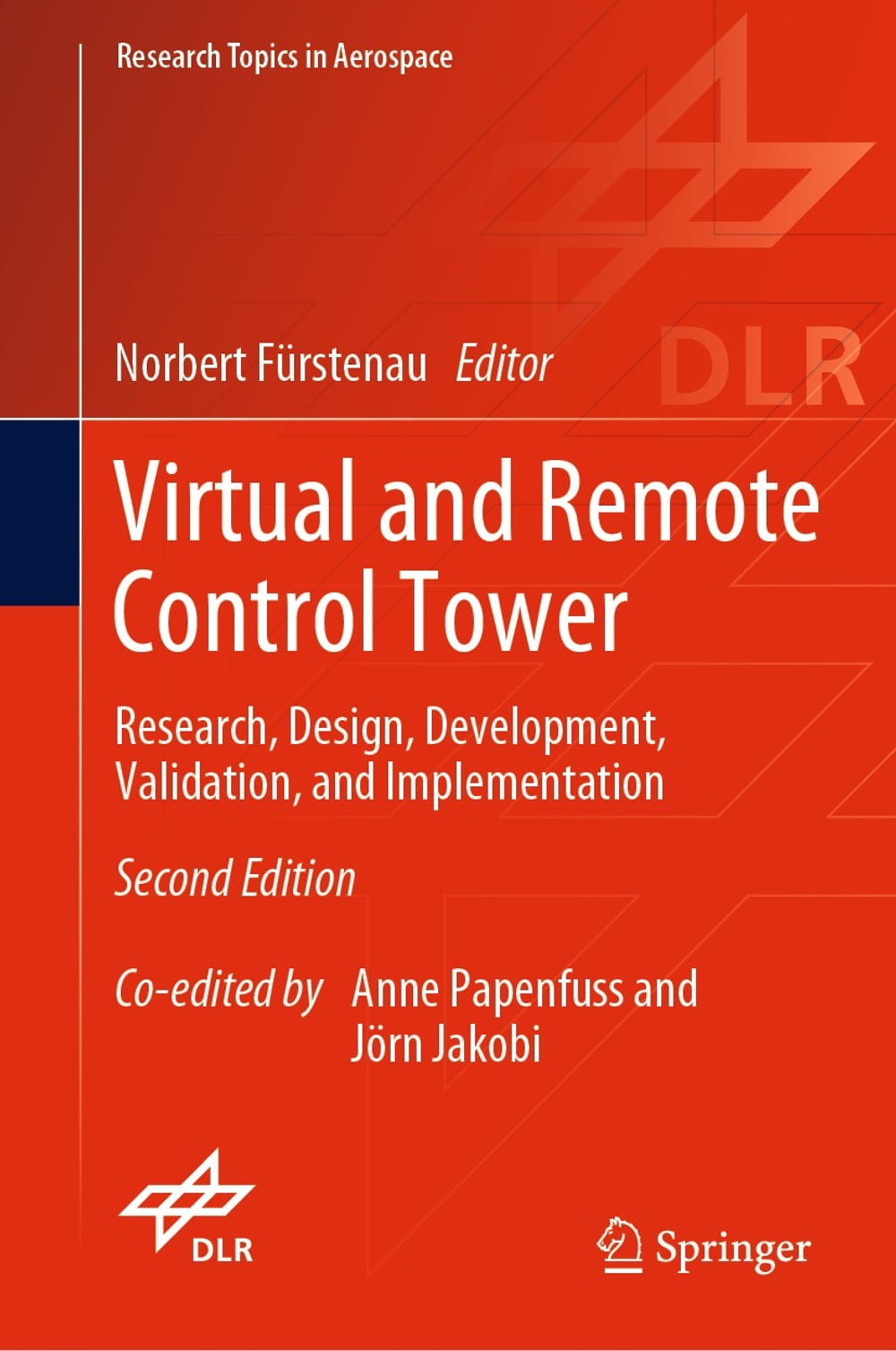



This book presents the interdisciplinary and international “Virtual and Remote Tower” research and development work. It has been carried out since nearly twenty years with the goal of replacing the conventional aerodrome control tower by a new “Remote Tower Operation” (RTO) work environment for enhancing work efficiency and safety and reducing cost. The revolutionary human–system interface replaces the out-of-windows view by an augmented vision video panorama that allows for remote aerodrome traffic control without a physical tower building. It enables the establishment of a (multiple) remote control center (MRTO, RTC) that may serve several airports from a central location. The first (2016) edition of this book covered all aspects from preconditions over basic research and prototype development to initial validation experiments with field testing. Co-edited and -authored by DLR RTO-team members Dr. Anne Papenfuss and Jörn Jakobi, this second extended edition with nearly doubled numberof chapters includes further important aspects of the international follow-up work towards the RTO-deployment. Focus of the extension with new contributions from ENRI/Japan and IAA/Dublin with Cranfield University, is on MRTO, workload, implementation, and standardization. Specifically, the two revised and nine new Chapters put the focus on inclusion of augmented vision and virtual reality technologies, human-in-the-loop simulation for quantifying workload and deriving minimum (technical) requirements according to standards of the European Organization for Civil Aviation Equipment (EUROCAE), and MRTO implementation and certification. Basics of optical / video design, workload measures, and advanced psychophysical data analysis are presented in four appendices.
-
Curatore:
-
Anno edizione:2022
-
Editore:
-
Formato:
Lingua:
Inglese
Compatibilità:
Tutti i dispositivi (eccetto Kindle) Scopri di più
Layout:
Reflowable
EAN:
9783030936501

Formato:
Gli eBook venduti da Feltrinelli.it sono in formato ePub e possono essere protetti da Adobe DRM. In caso di download di un file protetto da DRM si otterrà un file in formato .acs, (Adobe Content Server Message), che dovrà essere aperto tramite Adobe Digital Editions e autorizzato tramite un account Adobe, prima di poter essere letto su pc o trasferito su dispositivi compatibili.
Cloud:
Gli eBook venduti da Feltrinelli.it sono sincronizzati automaticamente su tutti i client di lettura Kobo successivamente all’acquisto. Grazie al Cloud Kobo i progressi di lettura, le note, le evidenziazioni vengono salvati e sincronizzati automaticamente su tutti i dispositivi e le APP di lettura Kobo utilizzati per la lettura.
Clicca qui per sapere come scaricare gli ebook utilizzando un pc con sistema operativo Windows
