










EBOOK IN LINGUA STRANIERA





Water Diplomacy in Action

22,35 €
+220
punti 
Venditore: Feltrinelli

Acquista online
Scaricabile subito
Articolo acquistabile con Carta del Docente

Articolo acquistabile con Carta Cultura Giovani e Carta del Merito

Articolo acquistabile con Carta della Cultura

Abbonati a Kobo plus per avere accesso illimitato a questo contenuto

Dati e Statistiche
 Salvato in 0 liste dei desideri
Salvato in 0 liste dei desideri
Water Diplomacy in Action
Scaricabile subito
22,35 €
22,35 €
Scaricabile subito




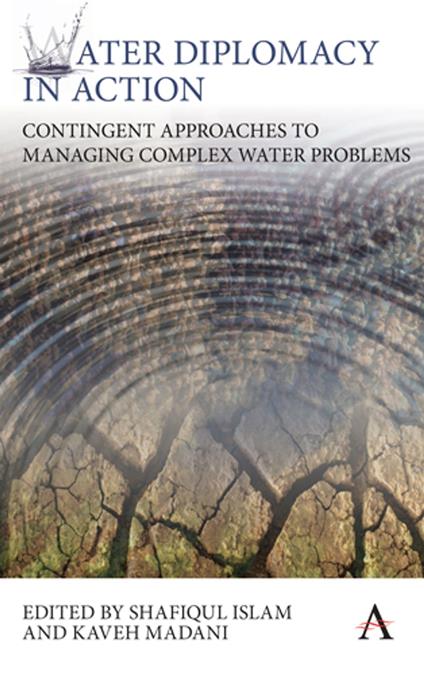
Today we face an incredibly complex array of interconnected water issues that cross multiple boundaries: Is water a property or a human right? How do we prioritize between economic utility and environmental sustainability? Do fish have more rights to water than irrigated grain? Can we reconcile competing cultural and religious values associated with water? How much water do people actually need? These questions share two key defining characteristics: (a) competing values, interests and information to frame the problem; and (b) differing views - of how to resolve a problem - are related more to uncertainty and ambiguity of perception than accuracy of scientific information. These problems - known as complex problems - are ill-defined, ambiguous, and often associated with strong moral, political and professional values and issues. For complex water problems, certainty of solutions and degree of consensus varies widely. In fact, there is often little consensus about what the problem is, let alone how to resolve it. Furthermore, complex problems are constantly changing because of interactions among the natural, societal and political forces involved. The nature of complexity is contingent on a variety of contextual characteristics of the interactions among variables, processes, actors, and institutions. Understanding interactions and feedback loops between and within human and natural systems is critical for managing complex water problems. [NP] This edited volume synthesizes insights from theory and practice to address complex water problems through contingent and adaptive management using water diplomacy framework (WDF). This emerging framework diagnoses water problems, identifies intervention points, and proposes sustainable solutions that are sensitive to diverse viewpoints and uncertainty as well as changing and competing needs. The WDF actively seeks value-creation opportunities by blending science, policy, and politics through a contingent negotiated approach.
-
Curatore:
-
Anno edizione:2017
-
Editore:
-
Formato:
Lingua:
Inglese
Compatibilità:
Tutti i dispositivi (eccetto Kindle) Scopri di più
Layout:
Reflowable
EAN:
9781783084920

Formato:
Gli eBook venduti da Feltrinelli.it sono in formato ePub e possono essere protetti da Adobe DRM. In caso di download di un file protetto da DRM si otterrà un file in formato .acs, (Adobe Content Server Message), che dovrà essere aperto tramite Adobe Digital Editions e autorizzato tramite un account Adobe, prima di poter essere letto su pc o trasferito su dispositivi compatibili.
Cloud:
Gli eBook venduti da Feltrinelli.it sono sincronizzati automaticamente su tutti i client di lettura Kobo successivamente all’acquisto. Grazie al Cloud Kobo i progressi di lettura, le note, le evidenziazioni vengono salvati e sincronizzati automaticamente su tutti i dispositivi e le APP di lettura Kobo utilizzati per la lettura.
Clicca qui per sapere come scaricare gli ebook utilizzando un pc con sistema operativo Windows
