










EBOOK IN LINGUA STRANIERA





What Is Meaning?

26,61 €
+270
punti 
Venditore: Feltrinelli

Acquista online
Scaricabile subito
Articolo acquistabile con Carta del Docente

Articolo acquistabile con Carta Cultura Giovani e Carta del Merito

Articolo acquistabile con Carta della Cultura

Dati e Statistiche
 Salvato in 0 liste dei desideri
Salvato in 0 liste dei desideri
What Is Meaning?
Scaricabile subito
26,61 €
26,61 €
Scaricabile subito

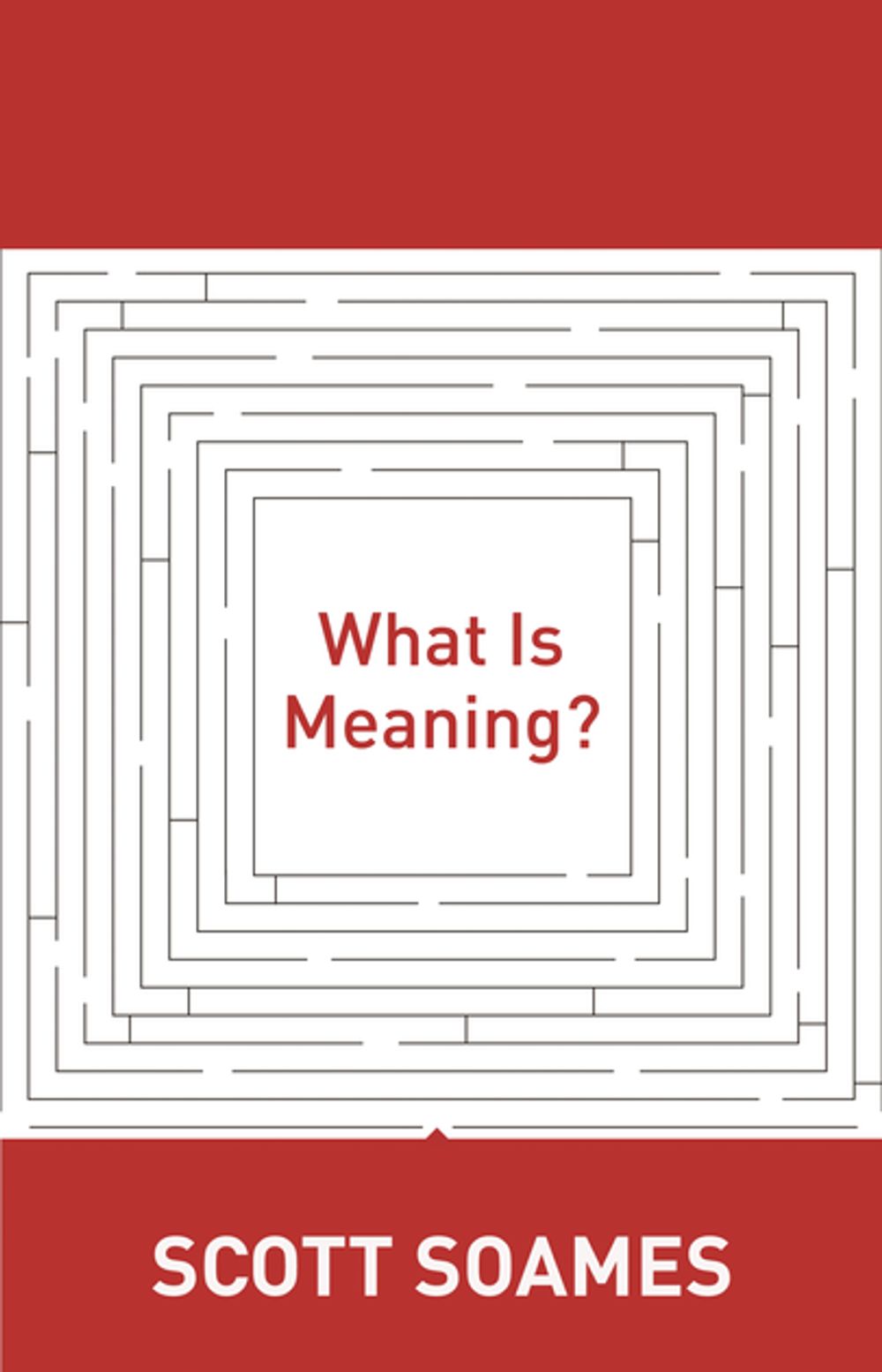



The tradition descending from Frege and Russell has typically treated theories of meaning either as theories of meanings (propositions expressed), or as theories of truth conditions. However, propositions of the classical sort don't exist, and truth conditions can't provide all the information required by a theory of meaning. In this book, one of the world's leading philosophers of language offers a way out of this dilemma. Traditionally conceived, propositions are denizens of a "third realm" beyond mind and matter, "grasped" by mysterious Platonic intuition. As conceived here, they are cognitive-event types in which agents predicate properties and relations of things--in using language, in perception, and in nonlinguistic thought. Because of this, one's acquaintance with, and knowledge of, propositions is acquaintance with, and knowledge of, events of one's cognitive life. This view also solves the problem of "the unity of the proposition" by explaining how propositions can be genuinely representational, and therefore bearers of truth. The problem, in the traditional conception, is that sentences, utterances, and mental states are representational because of the relations they bear to inherently representational Platonic complexes of universals and particulars. Since we have no way of understanding how such structures can be representational, independent of interpretations placed on them by agents, the problem is unsolvable when so conceived. However, when propositions are taken to be cognitive-event types, the order of explanation is reversed and a natural solution emerges. Propositions are representational because they are constitutively related to inherently representational cognitive acts. Strikingly original, What Is Meaning? is a major advance.
-
Autore:
-
Anno edizione:2010
-
Editore:
-
Formato:
-
Lingua:Inglese
Compatibilità:
Tutti i dispositivi (eccetto Kindle) Scopri di più
Layout:
Reflowable
EAN:
9781400833948

Formato:
Gli eBook venduti da Feltrinelli.it sono in formato ePub e possono essere protetti da Adobe DRM. In caso di download di un file protetto da DRM si otterrà un file in formato .acs, (Adobe Content Server Message), che dovrà essere aperto tramite Adobe Digital Editions e autorizzato tramite un account Adobe, prima di poter essere letto su pc o trasferito su dispositivi compatibili.
Cloud:
Gli eBook venduti da Feltrinelli.it sono sincronizzati automaticamente su tutti i client di lettura Kobo successivamente all’acquisto. Grazie al Cloud Kobo i progressi di lettura, le note, le evidenziazioni vengono salvati e sincronizzati automaticamente su tutti i dispositivi e le APP di lettura Kobo utilizzati per la lettura.
Clicca qui per sapere come scaricare gli ebook utilizzando un pc con sistema operativo Windows
