










EBOOK IN LINGUA STRANIERA





THE WORLD IS CHANGING ITS RULES

8,99 €
+90
punti 
Venditore: Feltrinelli

Acquista online
Scaricabile subito
Articolo acquistabile con Carta del Docente

Articolo acquistabile con Carta Cultura Giovani e Carta del Merito

Articolo acquistabile con Carta della Cultura

Abbonati a Kobo plus per avere accesso illimitato a questo contenuto

Dati e Statistiche
 Salvato in 0 liste dei desideri
Salvato in 0 liste dei desideri
THE WORLD IS CHANGING ITS RULES
Scaricabile subito
8,99 €
8,99 €
Scaricabile subito

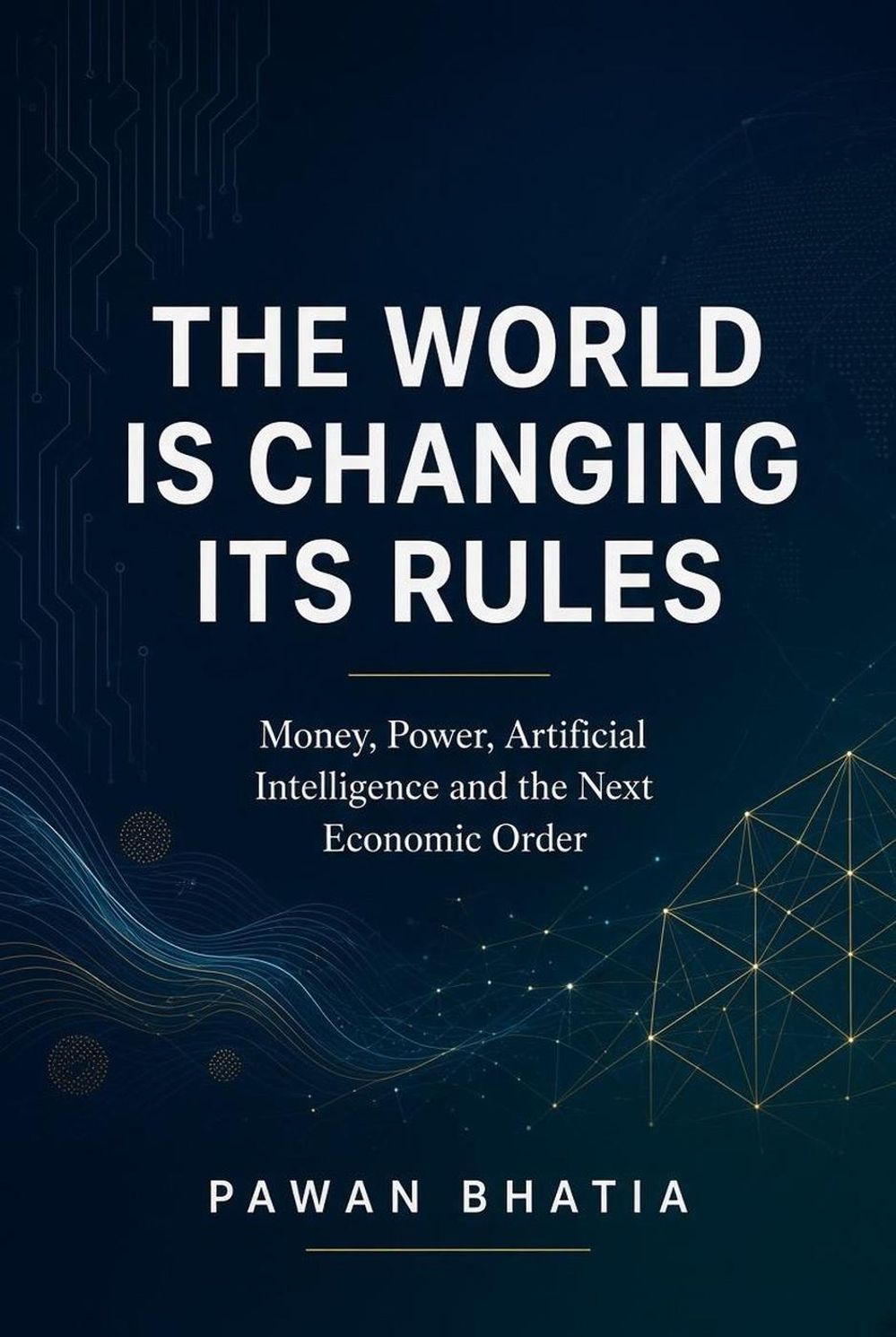



Pawan Bhatia's The World Is Changing Its Rules (2026) argues that the rules organising economic life are being rewritten, partly by design and partly by accident, and most people are living through this without a clear view of what is being written. The book is not a prediction or manifesto but a guided walk through five connected developments: money, artificial intelligence, markets, power, and human purpose. Part I, The Old Order, traces how we arrived here. Money evolved from ledgers and coins into a system where banks create money through lending, making money and debt two sides of one coin. Bretton Woods and the 1971 Nixon shock ended gold convertibility, creating pure fiat money. Debt became both engine and anchor—growing to levels that limit fiscal room. Capital markets allocate resources effectively but suffer short horizons, unpriced externalities, herding, and distributional blindness. The Great Moderation gave way to crisis, unusual policy, pandemic, and inflation's return. Institutions built for another era now lag. Bhatia fairly presents the strongest case for the old order: it has worked historically, shown resilience, and evolution often beats design. Part II, The Great Transition, examines converging forces. Cheap intelligence reshapes firms, work, and value, with gains flowing to what remains scarce: data, distribution, physical assets, trust, and complementary skills. Robotics advances more slowly than software due to Moravec's paradox. Energy is the master constraint. New digital rails—instant payments, stablecoins, CBDCs, tokenisation—rebuild money's infrastructure. Sovereign money proposals raise questions about who creates money and for whom. Geopolitics fragments integration into strategic competition over chips, minerals, and finance. Ownership of productive capacity may concentrate further, though open models and competition push back. Bhatia ends with the strongest objections to his own thesis. Part III, Designing What Comes Next, proposes ten principles: preserve productivity, share gains, provide security, ensure accountability, prefer reversibility, build resilience, protect freedom, respect knowledge, consider the long term, and sustain legitimacy. He offers a menu of monetary possibilities from modest to radical, principles for responsible investment, mechanisms for distributing technological wealth, ethical frameworks for ownership and data, and institutional reforms for competition, labour, education, and taxation. He then presents the strongest objections to design itself—Hayek's knowledge problem, public choice, unintended consequences, high modernism, and legitimacy—concluding that humility, experiment, and legitimacy must guide reform. The epilogue offers questions rather than answers: Is this time different? Who should own the future? What do we owe those who lose from change? The core claim is that outcomes remain open, and where outcomes are open, choices matter. Technology sets possibilities; institutions determine who benefits.
-
Autore:
-
Anno edizione:2026
-
Editore:
-
Formato:
-
Lingua:Inglese
Compatibilità:
Tutti i dispositivi (eccetto Kindle) Scopri di più
Layout:
Reflowable
EAN:
9798237851243

Formato:
Gli eBook venduti da Feltrinelli.it sono in formato ePub e possono essere protetti da Adobe DRM. In caso di download di un file protetto da DRM si otterrà un file in formato .acs, (Adobe Content Server Message), che dovrà essere aperto tramite Adobe Digital Editions e autorizzato tramite un account Adobe, prima di poter essere letto su pc o trasferito su dispositivi compatibili.
Cloud:
Gli eBook venduti da Feltrinelli.it sono sincronizzati automaticamente su tutti i client di lettura Kobo successivamente all’acquisto. Grazie al Cloud Kobo i progressi di lettura, le note, le evidenziazioni vengono salvati e sincronizzati automaticamente su tutti i dispositivi e le APP di lettura Kobo utilizzati per la lettura.
Clicca qui per sapere come scaricare gli ebook utilizzando un pc con sistema operativo Windows
