









LIBRO INGLESE





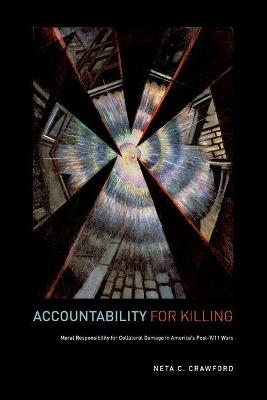
Accountability for Killing: Moral Responsibility for Collateral Damage in America's Post-9/11 Wars

62,10 €
+620
punti 
Venditore: Feltrinelli
Articolo acquistabile con Carta del Docente

Articolo acquistabile con Carta Cultura Giovani e Carta del Merito

Articolo acquistabile con Carta della Cultura

Paga con Klarna in 3 rate senza interessi per ordini superiori a 39 €

Dati e Statistiche
 Salvato in 0 liste dei desideri
Salvato in 0 liste dei desideri
Accountability for Killing: Moral Responsibility for Collateral Damage in America's Post-9/11 Wars
Disponibilità in 2 settimane
62,10 €
62,10 €
Disponibilità in 2 settimane
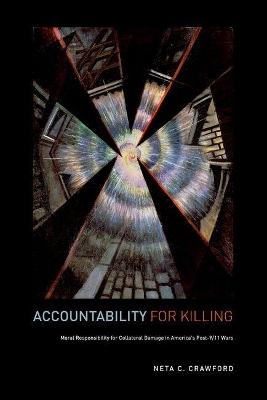


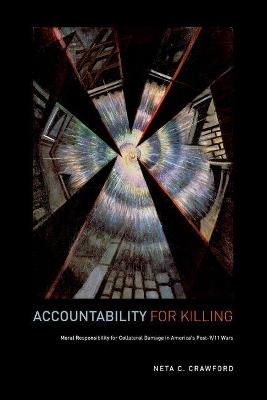
The unintended deaths of civilians in war are too often dismissed as unavoidable, inevitable, and accidental. And despite the best efforts of the U.S. to avoid them, civilian casualties in Afghanistan, Iraq, and Pakistan have been a regular feature of the United States' wars after 9/11. In Accountability for Killing, Neta C. Crawford focuses on the causes of these many episodes of foreseeable collateral damage and the moral responsibility for them. The dominant paradigm of legal and moral responsibility in war today stresses both intention and individual accountability. Deliberate killing of civilians is outlawed and international law blames individual soldiers and commanders for such killing. An individual soldier may be sentenced life in prison or death for deliberately killing even a small number of civilians, but the large scale killing of dozens or even hundreds of civilians may be forgiven if it was unintentional--"incidental"--to a military operation. The very law that protects noncombatants from deliberate killing may allow many episodes of unintended killing. Under international law, civilian killing may be forgiven if it was unintended and incidental to a militarily necessary operation. Given the nature of contemporary war, where military organizations-training, and the choice of weapons, doctrine, and tactics-create the conditions for systemic collateral damage, Crawford contends that placing moral responsibility for systemic collateral damage on individuals is misplaced. She develops a new theory of organizational moral agency and responsibility, and shows how the US military exercised moral agency and moral responsibility to reduce the incidence of collateral damage in America's most recent wars. Indeed, when the U.S. military and its allies saw that the perception of collateral damage killing was causing it to lose support in the war zones, it moved to a "population centric" doctrine, putting civilian protection at heart of its strategy. Trenchant, original, and ranging across security studies, international law, ethics, and international relations, Accountability for Killing will reshape our understanding of the ethics of contemporary war.
-
Autore:
-
Editore:
-
Anno:2017
-
Rilegatura:Paperback / softback
-
Pagine:504 p.
Testo in English
Dimensioni:
150 x 234 mm
Peso:
721 gr.
EAN:
9780190686147

Informazioni e Contatti sulla Sicurezza dei Prodotti
Le schede prodotto sono aggiornate in conformità al Regolamento UE 988/2023. Laddove ci fossero taluni dati non disponibili per ragioni indipendenti da Feltrinelli, vi informiamo che stiamo compiendo ogni ragionevole sforzo per inserirli. Vi invitiamo a controllare periodicamente il sito www.lafeltrinelli.it per eventuali novità e aggiornamenti.
Per le vendite di prodotti da terze parti, ciascun venditore si assume la piena e diretta responsabilità per la commercializzazione del prodotto e per la sua conformità al Regolamento UE 988/2023, nonché alle normative nazionali ed europee vigenti.
Per informazioni sulla sicurezza dei prodotti, contattare productsafety@feltrinelli.it
