










EBOOK IN LINGUA STRANIERA





Big Data, Little Data, No Data

18,92 €
+190
punti 
Venditore: Feltrinelli

Acquista online
Scaricabile subito
Articolo acquistabile con Carta del Docente

Articolo acquistabile con Carta Cultura Giovani e Carta del Merito

Articolo acquistabile con Carta della Cultura

Dati e Statistiche
 Salvato in 0 liste dei desideri
Salvato in 0 liste dei desideri
Big Data, Little Data, No Data
Scaricabile subito
18,92 €
18,92 €
Scaricabile subito

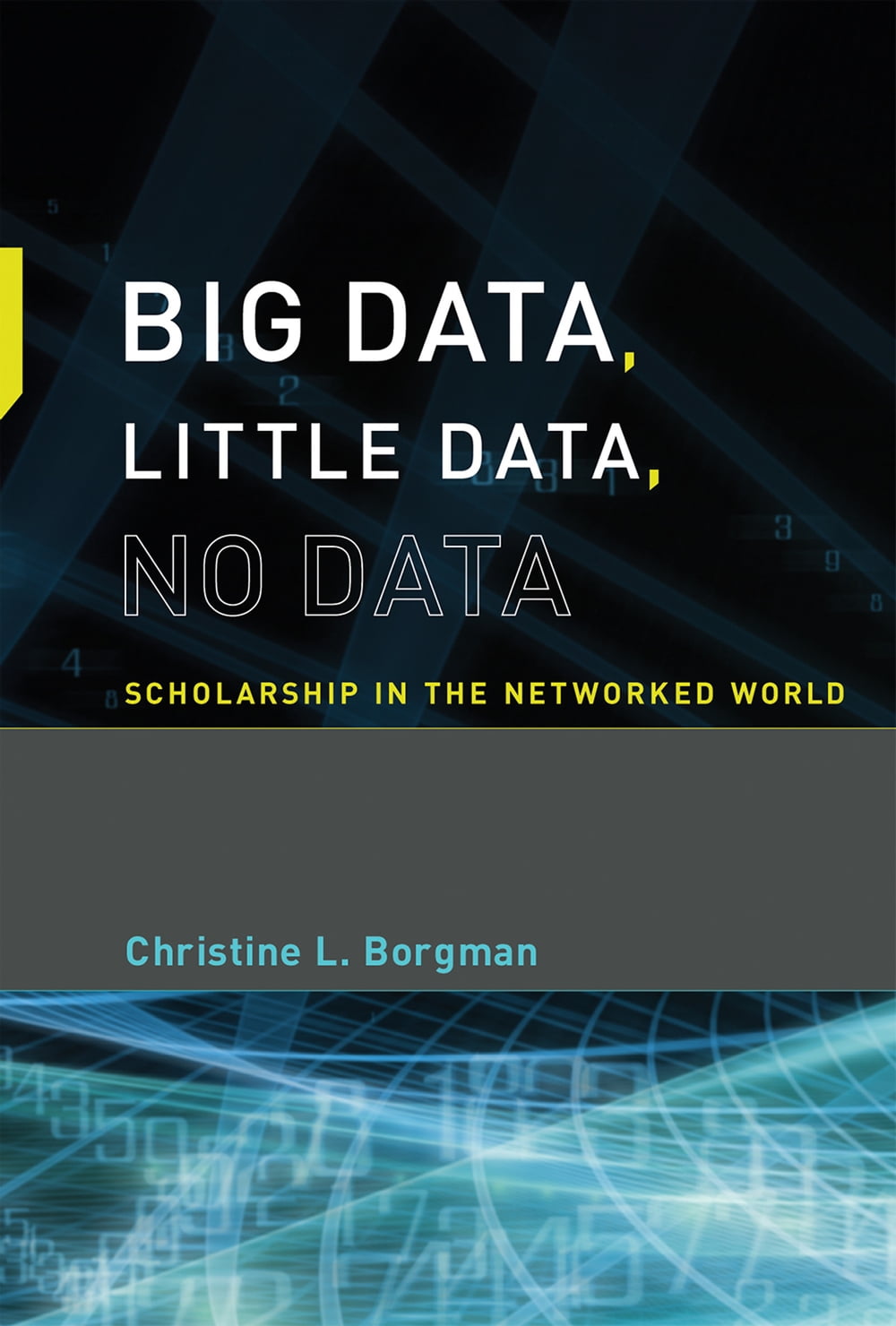



An examination of the uses of data within a changing knowledge infrastructure, offering analysis and case studies from the sciences, social sciences, and humanities. “Big Data” is on the covers of Science, Nature, the Economist, and Wired magazines, on the front pages of the Wall Street Journal and the New York Times. But despite the media hyperbole, as Christine Borgman points out in this examination of data and scholarly research, having the right data is usually better than having more data; little data can be just as valuable as big data. In many cases, there are no data—because relevant data don't exist, cannot be found, or are not available. Moreover, data sharing is difficult, incentives to do so are minimal, and data practices vary widely across disciplines. Borgman, an often-cited authority on scholarly communication, argues that data have no value or meaning in isolation; they exist within a knowledge infrastructure—an ecology of people, practices, technologies, institutions, material objects, and relationships. After laying out the premises of her investigation—six “provocations” meant to inspire discussion about the uses of data in scholarship—Borgman offers case studies of data practices in the sciences, the social sciences, and the humanities, and then considers the implications of her findings for scholarly practice and research policy. To manage and exploit data over the long term, Borgman argues, requires massive investment in knowledge infrastructures; at stake is the future of scholarship.
-
Autore:
-
Anno edizione:2015
-
Editore:
-
Formato:
-
Lingua:Inglese
Compatibilità:
Tutti i dispositivi (eccetto Kindle) Scopri di più
Layout:
Reflowable
EAN:
9780262327879

Formato:
Gli eBook venduti da Feltrinelli.it sono in formato ePub e possono essere protetti da Adobe DRM. In caso di download di un file protetto da DRM si otterrà un file in formato .acs, (Adobe Content Server Message), che dovrà essere aperto tramite Adobe Digital Editions e autorizzato tramite un account Adobe, prima di poter essere letto su pc o trasferito su dispositivi compatibili.
Cloud:
Gli eBook venduti da Feltrinelli.it sono sincronizzati automaticamente su tutti i client di lettura Kobo successivamente all’acquisto. Grazie al Cloud Kobo i progressi di lettura, le note, le evidenziazioni vengono salvati e sincronizzati automaticamente su tutti i dispositivi e le APP di lettura Kobo utilizzati per la lettura.
Clicca qui per sapere come scaricare gli ebook utilizzando un pc con sistema operativo Windows
