










EBOOK IN LINGUA STRANIERA





Consciousness Paradox

6,49 €
+60
punti 
Venditore: Feltrinelli

Acquista online
Scaricabile subito
Articolo acquistabile con Carta del Docente

Articolo acquistabile con Carta Cultura Giovani e Carta del Merito

Articolo acquistabile con Carta della Cultura

Abbonati a Kobo plus per avere accesso illimitato a questo contenuto

Dati e Statistiche
 Salvato in 0 liste dei desideri
Salvato in 0 liste dei desideri
Consciousness Paradox
Scaricabile subito
6,49 €
6,49 €
Scaricabile subito

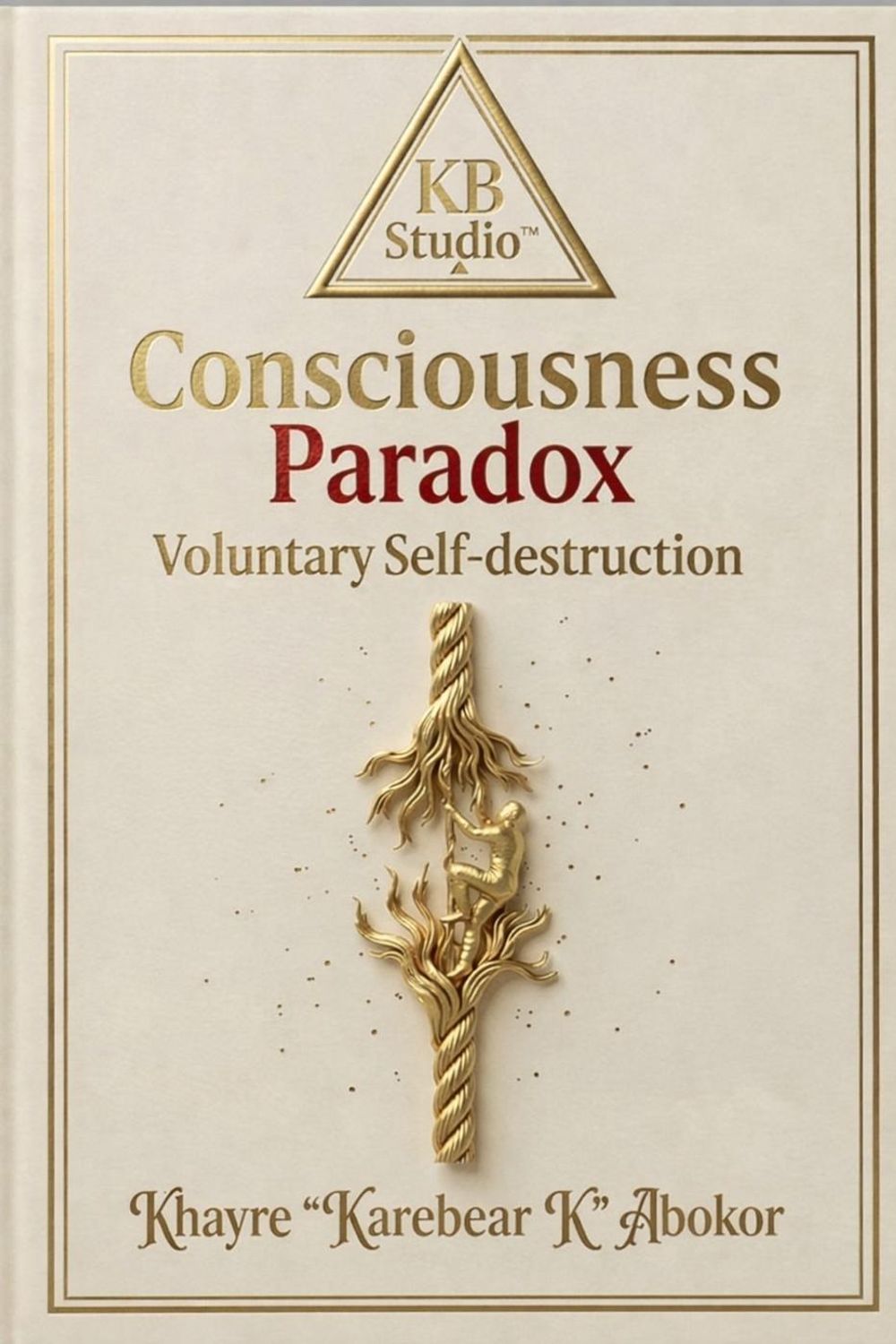



Consciousness Paradox: Voluntary Self Destruction studies humanity as a single organism moving through its own creations. The work observes the long movement of civilization as it builds structures, systems, and beliefs that eventually turn back toward the species that produced them. It is a cinematic examination of a world shaped by ambition, conflict, invention, and the quiet forces that guide human behavior across centuries. The narrative unfolds like a global film. Continents shift in mood. Cities rise with intention and fall with consequence. Cultures merge, fracture, and reform. Technology accelerates beyond the imagination of its makers. The human world becomes a vast network of communication, desire, memory, and power. The book places the reader inside this movement, watching humanity behave as a living field rather than a collection of individuals. The central theme is the tension between creation and consequence. Humanity builds systems to survive, then becomes shaped by those same systems. Every advancement carries a shadow. Every structure creates pressure. The book explores these forces with the tone of a world scale drama, showing how civilizations reach moments where they must choose between continuation and self destruction, between expansion and restraint, between instinct and awareness. The text examines the architecture of humanity from multiple angles. It studies communication, belief, collective memory, and the repeating patterns that echo across eras. It treats civilization as a dynamic organism that evolves through pressure and reinvention. The writing moves with the weight of history and the atmosphere of a documentary that spans generations. This volume expands the Paradox series by shifting the lens from the personal to the collective. Voluntary self destruction is presented as a species level phenomenon, a moment when humanity sees its own reflection in the systems it built and must decide what to preserve and what to release. The book does not offer comfort. It offers perspective. It offers the experience of watching a civilization confront itself. Consciousness Paradox is written for readers who sense that the human story is entering a new chapter. It is for those who understand that the future of the species depends on its ability to recognize its own patterns. The work carries the tone of a global narrative, a cinematic study of a civilization standing at the edge of its own design.
-
Autore:
-
Anno edizione:2026
-
Editore:
-
Formato:
-
Lingua:Inglese
Compatibilità:
Tutti i dispositivi (eccetto Kindle) Scopri di più
Layout:
Reflowable
EAN:
9798235631458

Formato:
Gli eBook venduti da Feltrinelli.it sono in formato ePub e possono essere protetti da Adobe DRM. In caso di download di un file protetto da DRM si otterrà un file in formato .acs, (Adobe Content Server Message), che dovrà essere aperto tramite Adobe Digital Editions e autorizzato tramite un account Adobe, prima di poter essere letto su pc o trasferito su dispositivi compatibili.
Cloud:
Gli eBook venduti da Feltrinelli.it sono sincronizzati automaticamente su tutti i client di lettura Kobo successivamente all’acquisto. Grazie al Cloud Kobo i progressi di lettura, le note, le evidenziazioni vengono salvati e sincronizzati automaticamente su tutti i dispositivi e le APP di lettura Kobo utilizzati per la lettura.
Clicca qui per sapere come scaricare gli ebook utilizzando un pc con sistema operativo Windows
