










EBOOK IN LINGUA STRANIERA





Construction Microeconomics

75,99 €
+760
punti 
Venditore: Feltrinelli

Acquista online
Scaricabile subito
Articolo acquistabile con Carta del Docente

Articolo acquistabile con Carta Cultura Giovani e Carta del Merito

Articolo acquistabile con Carta della Cultura

Dati e Statistiche
 Salvato in 0 liste dei desideri
Salvato in 0 liste dei desideri
Construction Microeconomics
Scaricabile subito
75,99 €
75,99 €
Scaricabile subito

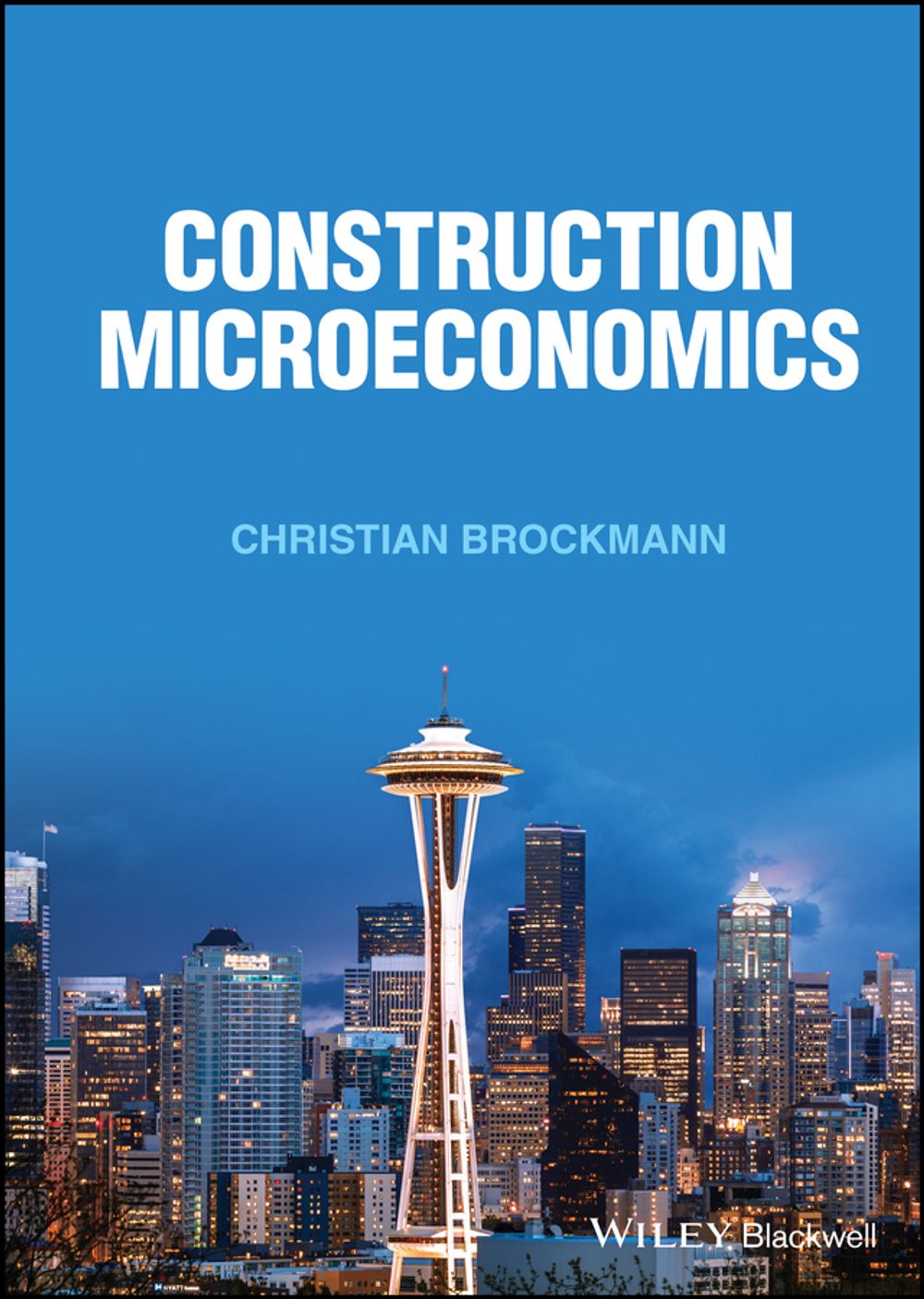



CONSTRUCTION MICROECONOMICS Unique and comprehensive reference describing microeconomic approaches, theories, and models adapted to and developed for the construction industry Construction Microeconomics provides comprehensive coverage of microeconomics applied to the construction industry, focusing on construction clients, who initiate construction projects, and on contractors who transform the ideas and plans of clients into infrastructure and buildings. With the help of microeconomic theory, it tries to answer questions about decision-making by clients, contractors, and governments with respect to projects in the built environment. It includes discussions of alternative theories to mainstream microeconomics, such as new institutional economics, behavioral economics, and the capability approach. Applications from the construction sector including land supply, sustainability, industrialization, and lean construction are provided to ground the theory in practical construction. In Construction Microeconomics, readers will learn: How microeconomic theory relies heavily on assumptions for modeling and the nuances of adjusting those assumptions How heterogenous contract goods affect supply and demand, markets, information, technology, and accordingly, the theories of contractors and owners How interaction influences the production process and how land as a production factor changes the production function How ex-ante costs determine the cost theory of the contractor and why contracting is more akin to the service sector than the goods sector Advanced undergraduate and masters students, lecturers and academics in construction and related disciplines, and professionals in the construction industry looking for expert analysis into a unique facet of the field will find Construction Microeconomics to be a valuable, complete, and authoritative reference on the subject.
-
Autore:
-
Anno edizione:2023
-
Editore:
-
Formato:
-
Lingua:Inglese
Compatibilità:
Tutti i dispositivi (eccetto Kindle) Scopri di più
Layout:
Reflowable
EAN:
9781119831921

Formato:
Gli eBook venduti da Feltrinelli.it sono in formato ePub e possono essere protetti da Adobe DRM. In caso di download di un file protetto da DRM si otterrà un file in formato .acs, (Adobe Content Server Message), che dovrà essere aperto tramite Adobe Digital Editions e autorizzato tramite un account Adobe, prima di poter essere letto su pc o trasferito su dispositivi compatibili.
Cloud:
Gli eBook venduti da Feltrinelli.it sono sincronizzati automaticamente su tutti i client di lettura Kobo successivamente all’acquisto. Grazie al Cloud Kobo i progressi di lettura, le note, le evidenziazioni vengono salvati e sincronizzati automaticamente su tutti i dispositivi e le APP di lettura Kobo utilizzati per la lettura.
Clicca qui per sapere come scaricare gli ebook utilizzando un pc con sistema operativo Windows
