










LIBRO INGLESE





Discrete Gambling and Stochastic Games

137,40 €
+1370
punti 

Venditore: Feltrinelli
Articolo acquistabile con Carta del Docente

Articolo acquistabile con Carta Cultura Giovani e Carta del Merito

Paga con Klarna in 3 rate senza interessi per ordini superiori a 39 €

Dati e Statistiche
 Salvato in 0 liste dei desideri
Salvato in 0 liste dei desideri
Discrete Gambling and Stochastic Games
Disponibilità in 2 settimane
137,40 €
137,40 €
Disponibilità in 2 settimane
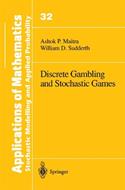





The theory of probability began in the seventeenth century with attempts to calculate the odds of winning in certain games of chance. However, it was not until the middle of the twentieth century that mathematicians de veloped general techniques for maximizing the chances of beating a casino or winning against an intelligent opponent. These methods of finding op timal strategies for a player are at the heart of the modern theories of stochastic control and stochastic games. There are numerous applications to engineering and the social sciences, but the liveliest intuition still comes from gambling. The now classic work How to Gamble If You Must: Inequalities for Stochastic Processes by Dubins and Savage (1965) uses gambling termi nology and examples to develop an elegant, deep, and quite general theory of discrete-time stochastic control. A gambler "controls" the stochastic pro cess of his or her successive fortunes by choosing which games to play and what bets to make.
-
Autore:
-
Editore:
-
Collana:Stochastic Modelling and Applied Probability
-
Anno:2011
-
Rilegatura:Paperback / softback
Pagine:
244 p.
Testo in English
Dimensioni:
235 x 155 mm
EAN:
9781461284673
Informazioni e Contatti sulla Sicurezza dei Prodotti
Le schede prodotto sono aggiornate in conformità al Regolamento UE 988/2023. Laddove ci fossero taluni dati non disponibili per ragioni indipendenti da Feltrinelli, vi informiamo che stiamo compiendo ogni ragionevole sforzo per inserirli. Vi invitiamo a controllare periodicamente il sito www.lafeltrinelli.it per eventuali novità e aggiornamenti.
Per le vendite di prodotti da terze parti, ciascun venditore si assume la piena e diretta responsabilità per la commercializzazione del prodotto e per la sua conformità al Regolamento UE 988/2023, nonché alle normative nazionali ed europee vigenti.
Per informazioni sulla sicurezza dei prodotti, contattare productsafety@feltrinelli.it
