










LIBRO INGLESE





Exergy Analysis of the Air Handling Unit at Variable Reference Temperature: Methodology and Results


169,10 €
+1690
punti 
Venditore: Feltrinelli
Articolo acquistabile con Carta del Docente

Articolo acquistabile con Carta Cultura Giovani e Carta del Merito

Articolo acquistabile con Carta della Cultura

Paga con Klarna in 3 rate senza interessi per ordini superiori a 39 €

Dati e Statistiche
 Salvato in 0 liste dei desideri
Salvato in 0 liste dei desideri
Exergy Analysis of the Air Handling Unit at Variable Reference Temperature: Methodology and Results
Disponibilità in 2 settimane
169,10 €
169,10 €
Disponibilità in 2 settimane

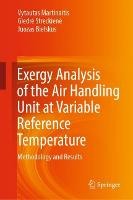



This book explore how exergy analysis can be an important tool for assessing the sustainability of buildings. Building's account or around 40 percent of total energy conditions depending on local climatic conditions. Due to its nature, exergy analysis should become a valuable tool for the assessment of building sustainability, first of all considering their scope and the dependence of their energy demands on the local environmental and climatic conditions. Nonetheless, methodological bottlenecks do exist and a solution to some of them is proposed in this monograph. First and foremost, there is the still-missing thermodynamically viable method to apply the variable reference environment temperature in exergy analysis. The monograph demonstrates that a correct approach to the directions of heat exergy flows, when the reference temperature is considered variable, allows reflecting the specifics of energy transformation processes in heating, ventilation, and air conditioningsystems in a thermodynamically viable way. The outcome of the case analysis, which involved coordinated application of methodologies based on the Carnot factor and coenthalpies, was exergy analysis indicators – exergy efficiency and exergy destroyed – obtained for air handling units and their components. These methods can be used for the purposes of analysing and improving building technical systems that, as a rule, operate at a variable environment temperature. Exergy analysis becomes more reliable in designing dynamic models of such systems and their exergy-based control algorithms. This would improve the possibility to deploy them in building information modelling (BIM) technologies and the application of life cycle analysis (LCA) principles in designing buildings, thus improving the quality of the decision-making process. Furthermore, this would benefit other systems where variable reference environment plays a key role. This book is relevant to academics, students and researchers in the field of thermodynamic analysis considering HVAC equipment, building energy systems, energy efficiency, sustainable development of technical systems of energy, mechanics, and construction, as well as preservation of natural resources. Planners, designers, engineers of HVAC equipment, building energy systems, and developers of appropriate simulation tools (e.g., BIM) will also find it of use.
-
Autore:
-
Editore:
-
Anno:2022
-
Rilegatura:Hardback
-
Pagine:178 p.
Testo in English
Dimensioni:
235 x 155 mm
EAN:
9783030978402

Informazioni e Contatti sulla Sicurezza dei Prodotti
Le schede prodotto sono aggiornate in conformità al Regolamento UE 988/2023. Laddove ci fossero taluni dati non disponibili per ragioni indipendenti da Feltrinelli, vi informiamo che stiamo compiendo ogni ragionevole sforzo per inserirli. Vi invitiamo a controllare periodicamente il sito www.lafeltrinelli.it per eventuali novità e aggiornamenti.
Per le vendite di prodotti da terze parti, ciascun venditore si assume la piena e diretta responsabilità per la commercializzazione del prodotto e per la sua conformità al Regolamento UE 988/2023, nonché alle normative nazionali ed europee vigenti.
Per informazioni sulla sicurezza dei prodotti, contattare productsafety@feltrinelli.it
