










EBOOK IN LINGUA STRANIERA





Forensic Accounting: Finding the Truth in Numbers

2,99 €
+30
punti 
Venditore: Feltrinelli

Acquista online
Scaricabile subito
Articolo acquistabile con Carta del Docente

Articolo acquistabile con Carta Cultura Giovani e Carta del Merito

Articolo acquistabile con Carta della Cultura

Abbonati a Kobo plus per avere accesso illimitato a questo contenuto

Dati e Statistiche
 Salvato in 0 liste dei desideri
Salvato in 0 liste dei desideri
Forensic Accounting: Finding the Truth in Numbers
Scaricabile subito
2,99 €
2,99 €
Scaricabile subito

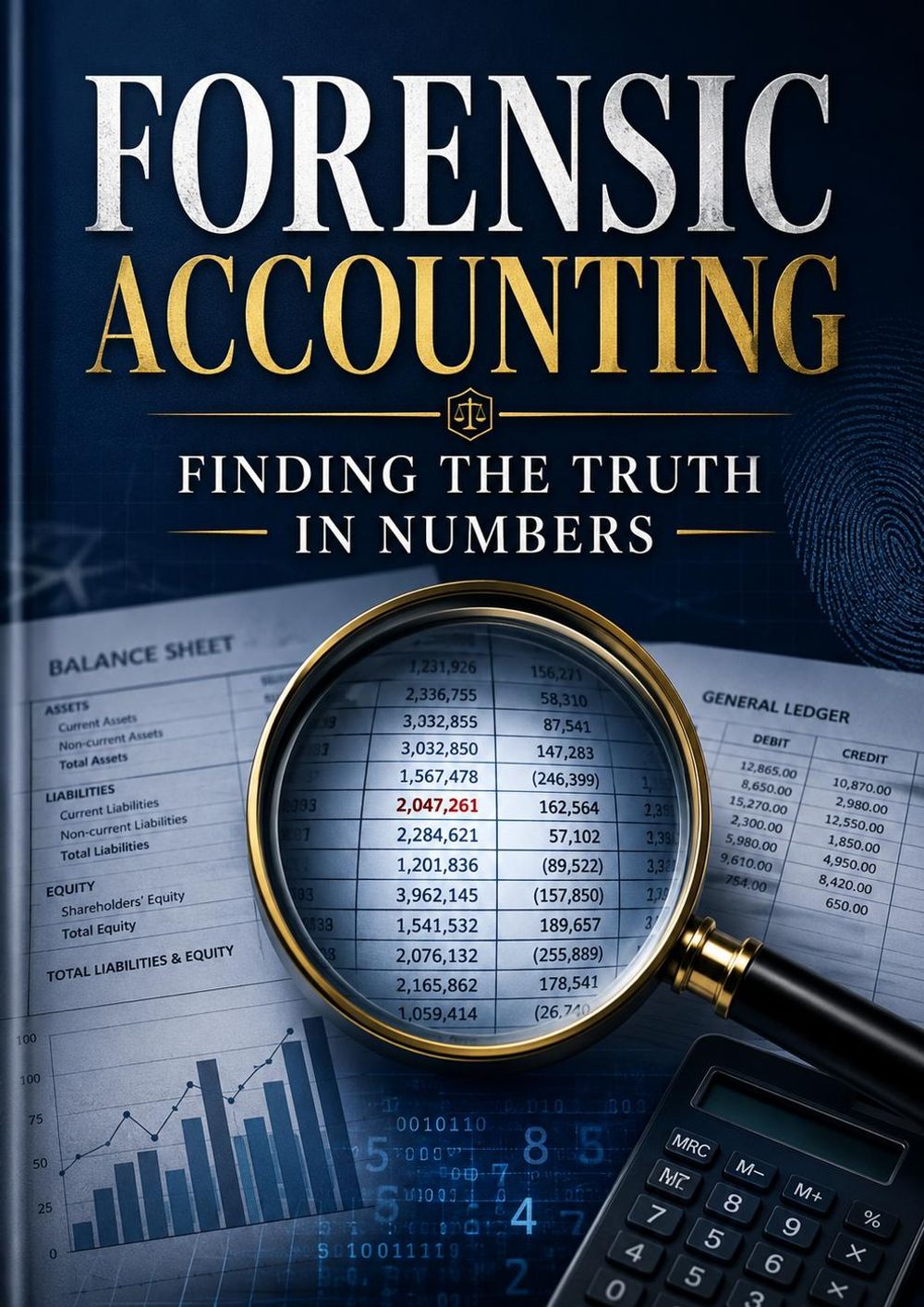



Forensic Accounting: Finding the Truth in Numbers is a comprehensive and insightful book that explores the powerful role of accounting as an instrument of investigation, justice, and financial truth. In the modern world, numbers are often trusted as symbols of accuracy and honesty, yet they can also be manipulated, concealed, and misrepresented. This book reveals how forensic accounting goes beyond ordinary bookkeeping and auditing to examine financial records with a questioning mind, an investigative spirit, and a commitment to evidence. The book introduces readers to the nature, history, and purpose of forensic accounting, explaining how this specialized field has grown in importance as businesses, governments, courts, investors, and institutions face increasing risks of fraud and financial deception. It highlights the unique mindset required of a forensic accountant—professional skepticism, patience, objectivity, ethical strength, and the courage to follow evidence wherever it leads. Through its carefully structured chapters, the book examines major areas of financial misconduct, including fraud, financial statement manipulation, asset misappropriation, embezzlement, bribery, corruption, conflict of interest, money laundering, and cyber-financial crime. It explains how fraud may be hidden inside ordinary transactions, false invoices, improper journal entries, shell vendors, payroll schemes, digital payments, and complex business structures. At the same time, it shows that every deceptive act usually leaves a trace, and that a skilled forensic accountant can follow those traces to uncover the truth. A major strength of this book is its practical explanation of evidence collection and documentation. Readers learn why suspicion alone is never enough and why every conclusion must be supported by reliable records, data, interviews, calculations, and analysis. The book discusses documentary evidence, electronic evidence, testimonial evidence, analytical evidence, chain of custody, working papers, and forensic reporting in a clear and organized manner. The book also explores the growing importance of technology in financial investigations. It discusses data analysis, digital forensics, cyber fraud, cryptocurrency, cloud records, system logs, metadata, and artificial intelligence. As financial systems become more digital and complex, forensic accountants must combine traditional accounting wisdom with modern technological awareness. This book prepares readers to understand that changing landscape. In addition, Forensic Accounting: Finding the Truth in Numbers explains the role of forensic accountants in litigation support and expert witness work. It shows how they assist courts, lawyers, businesses, insurers, and regulators by calculating damages, tracing assets, valuing businesses, reviewing claims, and presenting financial facts in a clear and credible way. The book further emphasizes the importance of internal controls and fraud prevention. It explains how organizations can reduce fraud risk through segregation of duties, authorization systems, reconciliations, vendor verification, payroll review, whistleblower channels, cybersecurity measures, ethical leadership, and strong governance. Written in a clear, bookish, and informative style, this book is suitable for students, accounting professionals, business owners, managers, legal professionals, auditors, investigators, and anyone interested in financial truth. It is not merely a book about numbers; it is a book about trust, responsibility, evidence, and justice. It reminds readers that financial records are not silent when examined carefully—they can reveal hidden stories, expose wrongdoing, and restore accountability.
-
Autore:
-
Anno edizione:2026
-
Editore:
-
Formato:
-
Lingua:Inglese
Compatibilità:
Tutti i dispositivi (eccetto Kindle) Scopri di più
Layout:
Reflowable
EAN:
9798235852426

Formato:
Gli eBook venduti da Feltrinelli.it sono in formato ePub e possono essere protetti da Adobe DRM. In caso di download di un file protetto da DRM si otterrà un file in formato .acs, (Adobe Content Server Message), che dovrà essere aperto tramite Adobe Digital Editions e autorizzato tramite un account Adobe, prima di poter essere letto su pc o trasferito su dispositivi compatibili.
Cloud:
Gli eBook venduti da Feltrinelli.it sono sincronizzati automaticamente su tutti i client di lettura Kobo successivamente all’acquisto. Grazie al Cloud Kobo i progressi di lettura, le note, le evidenziazioni vengono salvati e sincronizzati automaticamente su tutti i dispositivi e le APP di lettura Kobo utilizzati per la lettura.
Clicca qui per sapere come scaricare gli ebook utilizzando un pc con sistema operativo Windows
