










EBOOK IN LINGUA STRANIERA





Hinduism Before Reform

35,35 €
+350
punti 
Venditore: Feltrinelli

Acquista online
Scaricabile subito
Articolo acquistabile con Carta del Docente

Articolo acquistabile con Carta Cultura Giovani e Carta del Merito

Articolo acquistabile con Carta della Cultura

Dati e Statistiche
 Salvato in 0 liste dei desideri
Salvato in 0 liste dei desideri
Hinduism Before Reform
Scaricabile subito
35,35 €
35,35 €
Scaricabile subito

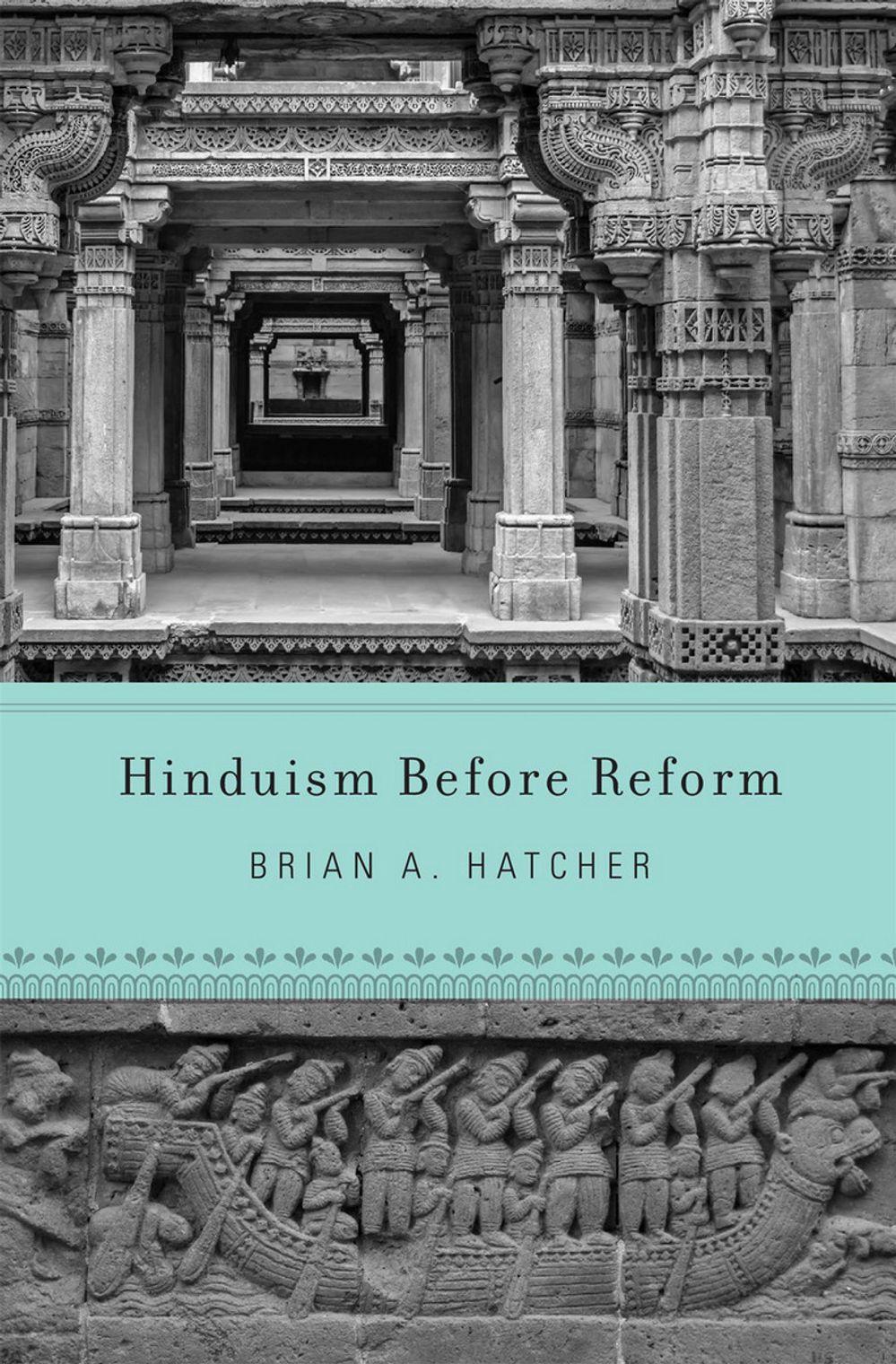



A bold retelling of the origins of contemporary Hinduism, and an argument against the long-established notion of religious reform. By the early eighteenth century, the Mughal Empire was in decline, and the East India Company was making inroads into the subcontinent. A century later Christian missionaries, Hindu teachers, Muslim saints, and Sikh rebels formed the colorful religious fabric of colonial India. Focusing on two early nineteenth-century Hindu communities, the Brahmo Samaj and the Swaminarayan Sampraday, and their charismatic figureheads—the “cosmopolitan” Rammohun Roy and the “parochial” Swami Narayan—Brian Hatcher explores how urban and rural people thought about faith, ritual, and gods. Along the way he sketches a radical new view of the origins of contemporary Hinduism and overturns the idea of religious reform. Hinduism Before Reform challenges the rigid structure of revelation-schism-reform-sect prevalent in much history of religion. Reform, in particular, plays an important role in how we think about influential Hindu movements and religious history at large. Through the lens of reform, one doctrine is inevitably backward-looking while another represents modernity. From this comparison flows a host of simplistic conclusions. Instead of presuming a clear dichotomy between backward and modern, Hatcher is interested in how religious authority is acquired and projected. Hinduism Before Reform asks how religious history would look if we eschewed the obfuscating binary of progress and tradition. There is another way to conceptualize the origins and significance of these two Hindu movements, one that does not trap them within the teleology of a predetermined modernity.
-
Autore:
-
Anno edizione:2020
-
Editore:
-
Formato:
-
Lingua:Inglese
Compatibilità:
Tutti i dispositivi (eccetto Kindle) Scopri di più
Layout:
Reflowable
EAN:
9780674247116

Formato:
Gli eBook venduti da Feltrinelli.it sono in formato ePub e possono essere protetti da Adobe DRM. In caso di download di un file protetto da DRM si otterrà un file in formato .acs, (Adobe Content Server Message), che dovrà essere aperto tramite Adobe Digital Editions e autorizzato tramite un account Adobe, prima di poter essere letto su pc o trasferito su dispositivi compatibili.
Cloud:
Gli eBook venduti da Feltrinelli.it sono sincronizzati automaticamente su tutti i client di lettura Kobo successivamente all’acquisto. Grazie al Cloud Kobo i progressi di lettura, le note, le evidenziazioni vengono salvati e sincronizzati automaticamente su tutti i dispositivi e le APP di lettura Kobo utilizzati per la lettura.
Clicca qui per sapere come scaricare gli ebook utilizzando un pc con sistema operativo Windows
