









LIBRO INGLESE





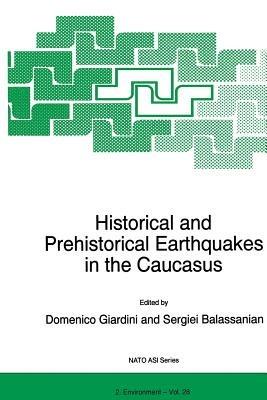
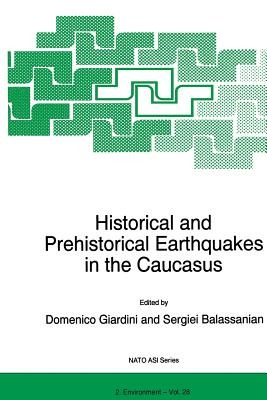
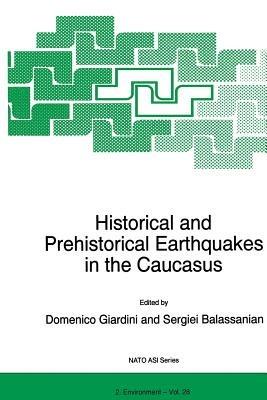
Historical and Prehistorical Earthquakes in the Caucasus: Proceedings of the NATO Advanced Research Workshop on Historical and Prehistorical Earthquakes in the Caucasus Yerevan, Armenia July 11–15, 1996

410,10 €
+4100
punti 
Venditore: Feltrinelli
Articolo acquistabile con Carta del Docente

Articolo acquistabile con Carta Cultura Giovani e Carta del Merito

Articolo acquistabile con Carta della Cultura

Paga con Klarna in 3 rate senza interessi per ordini superiori a 39 €

Dati e Statistiche
 Salvato in 0 liste dei desideri
Salvato in 0 liste dei desideri
Historical and Prehistorical Earthquakes in the Caucasus: Proceedings of the NATO Advanced Research Workshop on Historical and Prehistorical Earthquakes in the Caucasus Yerevan, Armenia July 11–15, 1996
Disponibilità in 2 settimane
410,10 €
410,10 €
Disponibilità in 2 settimane


Earthquakes are the expression of the continuing evolution of the Earth planet and of the deformation of its crust and occur worldwide; while the largest events (M>7. 5) concentrate on plate boundary areas and active plate interiors, moderate earthquakes may take place, if rarely, in all continental areas and may turn catastrophic in areas with poor building construction practice, as tragically shown by the sequence of earthquakes striking the Caucasus region in recent years (Spitak, Armenia, 1988; Rutbar, W. Iran, 1990; Ratcha, Georgia, 1991; Erzincan, E. Turkey, 1992). Vulnerability to disaster is increasing as urbanisation and development occupy more areas that are prone to the effects of significant earthquakes. In order to minimize the loss of life, property damage and social and economic disruption caused by earthquakes, it is essential that reliable estimates of seismic hazard be available to national decision makers and engineers for land use planning and improved building design and construction. While short- and mid-term earthquake prediction may one day be able to reduce significantly the death toll of earthquakes, the environmental effects (collapse of buildings and infrastructures, disruption of the productive chain, human resettlement) can be reduced only through a long-term prevention policy in earthquake-prone areas based on the assessment of seismic hazard and risk, the implementation of safe building construction codes, the increased public awareness on natural disasters, a strategy of land-use planning taking into account the seismic hazard and the occurrence of other natural disasters.
-
Curatore:
-
Editore:
-
Collana:NATO Science Partnership Subseries: 2
-
Anno:2012
-
Rilegatura:Paperback / softback
Pagine:
545 p.
Testo in English
Dimensioni:
240 x 160 mm
EAN:
9789401062985

Informazioni e Contatti sulla Sicurezza dei Prodotti
Le schede prodotto sono aggiornate in conformità al Regolamento UE 988/2023. Laddove ci fossero taluni dati non disponibili per ragioni indipendenti da Feltrinelli, vi informiamo che stiamo compiendo ogni ragionevole sforzo per inserirli. Vi invitiamo a controllare periodicamente il sito www.lafeltrinelli.it per eventuali novità e aggiornamenti.
Per le vendite di prodotti da terze parti, ciascun venditore si assume la piena e diretta responsabilità per la commercializzazione del prodotto e per la sua conformità al Regolamento UE 988/2023, nonché alle normative nazionali ed europee vigenti.
Per informazioni sulla sicurezza dei prodotti, contattare productsafety@feltrinelli.it
