









EBOOK IN LINGUA STRANIERA





Image, Art and Virtuality

79,55 €
+800
punti 
Venditore: Feltrinelli

Acquista online
Scaricabile subito
Articolo acquistabile con Carta del Docente

Articolo acquistabile con Carta Cultura Giovani e Carta del Merito

Articolo acquistabile con Carta della Cultura

Dati e Statistiche
 Salvato in 0 liste dei desideri
Salvato in 0 liste dei desideri
Image, Art and Virtuality
Scaricabile subito
79,55 €
79,55 €
Scaricabile subito
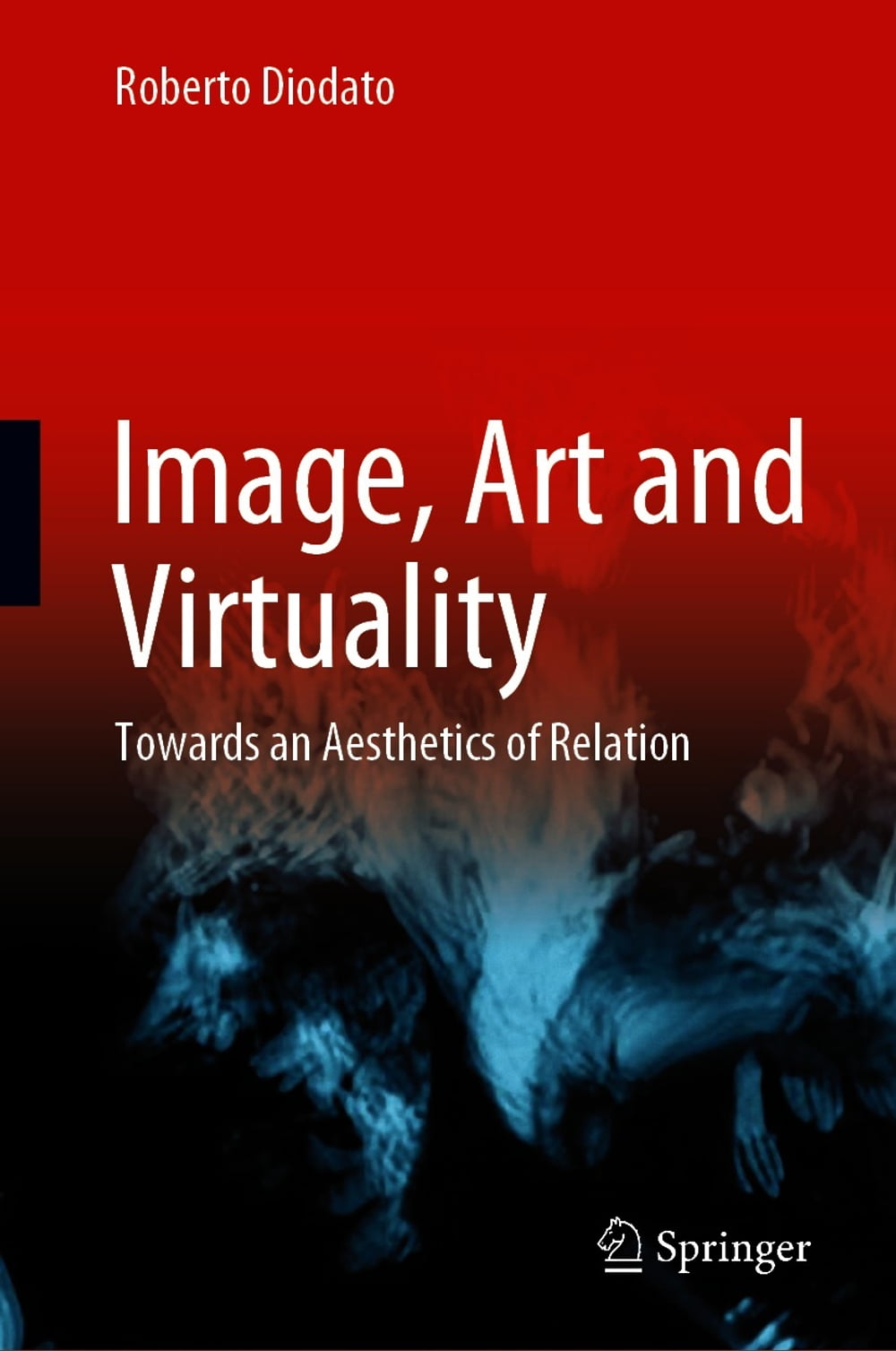


This book investigates the ontological state of relations in a unique way. Starting with the notion of system, it shows that the system can be understood as a relational structure, and that relations can be assessed within themselves, with no need to transform relations in elements. “Relations” are understood in contrast to “relational property”: without a relation there is no identity, therefore no existence. What allows us to do that without hypostatizing the relation, and without immediately taking it simply as a causal relation, can be better grasped, possibly, in reference to a few entities that make best display of their systemic nature, for example images, works of art, and virtual bodies. This book shows how virtual bodies are ontological hybrids representing a type of entity that has never appeared in the world before. This entity becomes a phenomenon in interactivity and evades the dichotomy between “external” and “internal”; it is neither a cognitive product of theconsciousness, nor an image of the mind. The user is well aware of experiencing anotherreality, also in the sense of a paradoxical reduplication of perceptual synthesis. The virtual body-environment is therefore simultaneously external and internal, with virtual bodies-environments to be seen as artificial windows to an intermediary world. In this intermediary world, the space itself is the result of interactivity; the world takes place in the sense or feeling of immersion experienced by the user; and the body, perceived as “other”, takes upon itself the sense of its reality, of its effectiveness, as an imaginary and pathic incision, as a production of desire and emotion, to the point that the feeling of reality conveyed by a virtual environment will rely significantly on how this environment produces emotions in the users.
-
Autore:
-
Anno edizione:2021
-
Editore:
-
Formato:
-
Lingua:Inglese
Compatibilità:
Tutti i dispositivi (eccetto Kindle) Scopri di più
Layout:
Reflowable
EAN:
9783030677848

Formato:
Gli eBook venduti da Feltrinelli.it sono in formato ePub e possono essere protetti da Adobe DRM. In caso di download di un file protetto da DRM si otterrà un file in formato .acs, (Adobe Content Server Message), che dovrà essere aperto tramite Adobe Digital Editions e autorizzato tramite un account Adobe, prima di poter essere letto su pc o trasferito su dispositivi compatibili.
Cloud:
Gli eBook venduti da Feltrinelli.it sono sincronizzati automaticamente su tutti i client di lettura Kobo successivamente all’acquisto. Grazie al Cloud Kobo i progressi di lettura, le note, le evidenziazioni vengono salvati e sincronizzati automaticamente su tutti i dispositivi e le APP di lettura Kobo utilizzati per la lettura.
Clicca qui per sapere come scaricare gli ebook utilizzando un pc con sistema operativo Windows
