










EBOOK IN LINGUA STRANIERA





Implementing Polytope Projects for Smart Systems

84,23 €
+840
punti 
Venditore: Feltrinelli

Acquista online
Scaricabile subito
Articolo acquistabile con Carta del Docente

Articolo acquistabile con Carta Cultura Giovani e Carta del Merito

Articolo acquistabile con Carta della Cultura

Dati e Statistiche
 Salvato in 0 liste dei desideri
Salvato in 0 liste dei desideri
Implementing Polytope Projects for Smart Systems
Scaricabile subito
84,23 €
84,23 €
Scaricabile subito
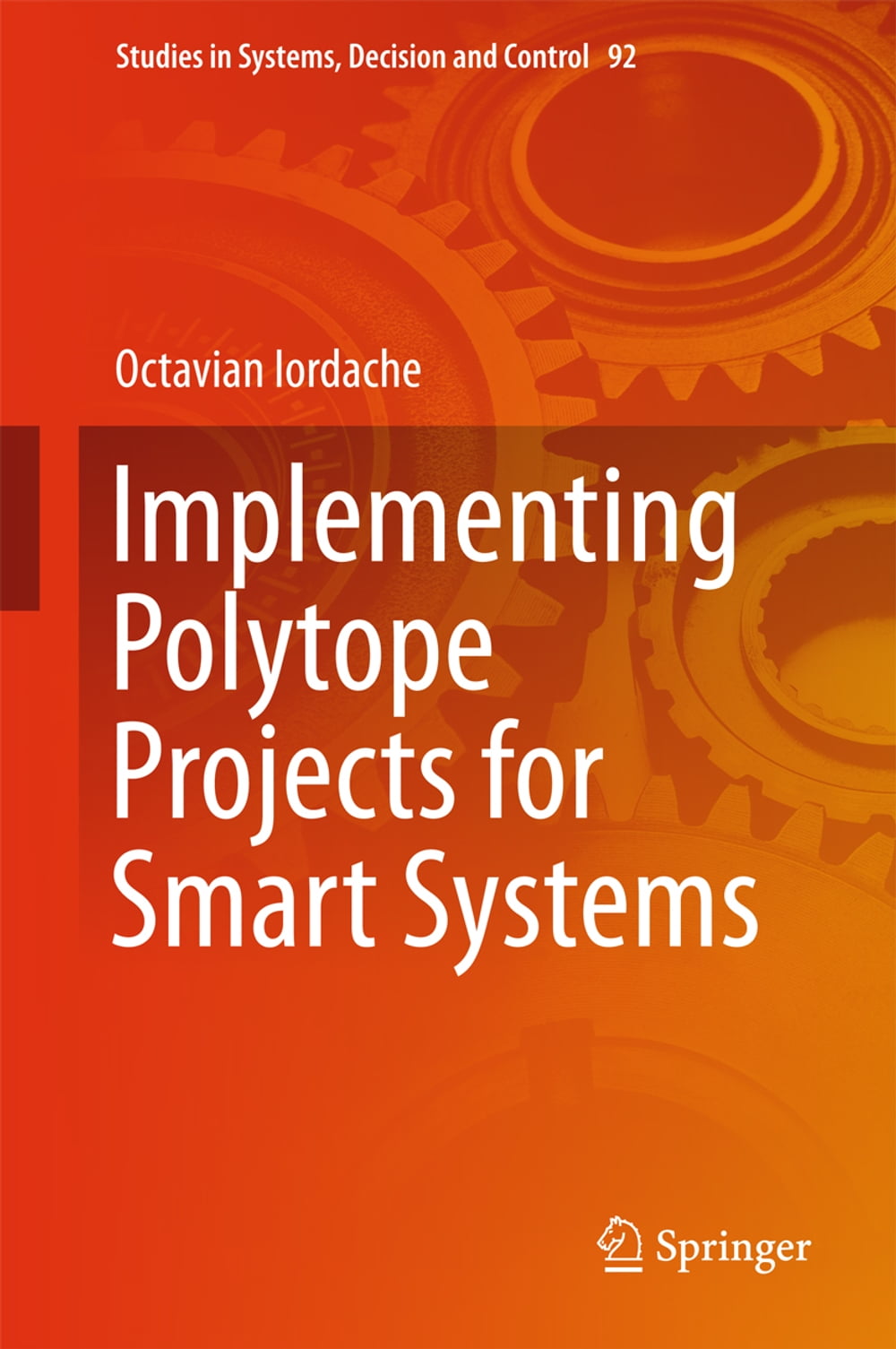


This book presents a domain of extreme industrial and scientific interest: the study of smart systems and structures. It presents polytope projects as comprehensive physical and cognitive architectures that support the investigation, fabrication and implementation of smart systems and structures. These systems feature multifunctional components that can perform sensing, control, and actuation. In light of the fact that devices, tools, methodologies and organizations based on electronics and information technology for automation, specific to the third industrial revolution, are increasingly reaching their limits, it is essential that smart systems be implemented in industry. Polytope projects facilitate the utilization of smart systems and structures as key elements of the fourth industrial revolution. The book begins by presenting polytope projects as a reference architecture for cyber-physical systems and smart systems, before addressing industrial process synthesis inChapter 2. Flow-sheet trees, cyclic separations and smart configurations for multi-component separations are discussed here. In turn, Chapter 3 highlights periodic features for drug delivery systems and networks of chemical reactions, while Chapter 4 applies conditioned random walks to polymers and smart materials structures. Chapter 5 examines self-assembly and self-reconfiguration at different scales from molecular to micro systems. Smart devices and technologies are the focus of chapter 6. Modular micro reactor systems and timed automata are examined in selected case studies. Chapter 7 focuses on inferential engineering designs, concept-knowledge, relational concept analysis and model driven architecture, while Chapter 8 puts the spotlight on smart manufacturing, industry 4.0, reference architectures and models for new product development and testing. Lastly, Chapter 9 highlights the polytope projects methodology and the prospects for smart systems and structures. Focusing onprocess engineering and mathematical modeling for the fourth industrial revolution, the book offers a unique resource for engineers, scientists and entrepreneurs working in chemical, biochemical, pharmaceutical, materials science or systems chemistry, students in various domains of production and engineering, and applied mathematicians.
-
Autore:
-
Anno edizione:2017
-
Editore:
-
Formato:
-
Lingua:Inglese
Compatibilità:
Tutti i dispositivi (eccetto Kindle) Scopri di più
Layout:
Reflowable
EAN:
9783319525518

Formato:
Gli eBook venduti da Feltrinelli.it sono in formato ePub e possono essere protetti da Adobe DRM. In caso di download di un file protetto da DRM si otterrà un file in formato .acs, (Adobe Content Server Message), che dovrà essere aperto tramite Adobe Digital Editions e autorizzato tramite un account Adobe, prima di poter essere letto su pc o trasferito su dispositivi compatibili.
Cloud:
Gli eBook venduti da Feltrinelli.it sono sincronizzati automaticamente su tutti i client di lettura Kobo successivamente all’acquisto. Grazie al Cloud Kobo i progressi di lettura, le note, le evidenziazioni vengono salvati e sincronizzati automaticamente su tutti i dispositivi e le APP di lettura Kobo utilizzati per la lettura.
Clicca qui per sapere come scaricare gli ebook utilizzando un pc con sistema operativo Windows
