









LIBRO INGLESE





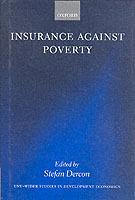
Insurance Against Poverty

313,60 €
+3140
punti 
Venditore: Feltrinelli
Articolo acquistabile con Carta del Docente

Articolo acquistabile con Carta Cultura Giovani e Carta del Merito

Articolo acquistabile con Carta della Cultura

Paga con Klarna in 3 rate senza interessi per ordini superiori a 39 €

Dati e Statistiche
 Salvato in 0 liste dei desideri
Salvato in 0 liste dei desideri
Insurance Against Poverty
Disponibilità in 2 settimane
313,60 €
313,60 €
Disponibilità in 2 settimane




Poor people in developing countries are often affected by droughts, floods, illness, crop failure, job loss, and economic downturns. Much of their energy goes into coping with these shocks and into day-to-day survival. While insurance and credit markets, combined with widespread social security, provide an important cushion against poverty in rich countries, the need for immediate survival may lock the poor into persistent poverty in developing countries. The poor in developing countries do have informal mechanisms to cope with risk and misfortune. These are based on income diversification, risk avoidance, self-insurance by saving together with family, and community-based mutual assistance. Nevertheless, the scope of these mechanisms remains limited. Repeated individual-specific shocks such as illness or pests, or covariate risks associated with drought, flood, or recession, undermine the ability of individuals and their families to cope with risk. We now know much more about vulnerability to risk and how poor people cope. Even more importantly, we have learned much about the large long-term consequences of these risks, which condemns many to persistent poverty and excludes them from economic growth. But there is much that can be done. The micro-level studies that underpin this book offer new insights on how effective public action could be more effective in protecting the vulnerable against persistent poverty. Policy should focus on providing a comprehensive menu of ex-ante and post-crisis protection mechanisms, including new forms of insurance, savings, safety nets, and the means to strengthen the poor's asset base. Local communities have a big role to play: public funds should not be used to replace indigenous community-based support networks; rather they should be used to build on the strengths of these networks to ensure broader and more effective protection. With numerous thematic chapters and case studies of both best practice and of failure, from a mix of low-income and middle-income countries across the developing world, this book evaluates alternatives in widening insurance and protection provision, and makes an important contribution to the topical field of insurance and risk.
-
Curatore:
-
Editore:
-
Collana:WIDER Studies in Development Economics
-
Anno:2004
-
Rilegatura:Hardback
Pagine:
488 p.
Testo in English
Dimensioni:
240 x 162 mm
Peso:
869 gr.
EAN:
9780199276837

Informazioni e Contatti sulla Sicurezza dei Prodotti
Le schede prodotto sono aggiornate in conformità al Regolamento UE 988/2023. Laddove ci fossero taluni dati non disponibili per ragioni indipendenti da Feltrinelli, vi informiamo che stiamo compiendo ogni ragionevole sforzo per inserirli. Vi invitiamo a controllare periodicamente il sito www.lafeltrinelli.it per eventuali novità e aggiornamenti.
Per le vendite di prodotti da terze parti, ciascun venditore si assume la piena e diretta responsabilità per la commercializzazione del prodotto e per la sua conformità al Regolamento UE 988/2023, nonché alle normative nazionali ed europee vigenti.
Per informazioni sulla sicurezza dei prodotti, contattare productsafety@feltrinelli.it
