









AUDIOLIBRO IN LINGUA STRANIERA





Introduction to Quantum Mechanics

3,56 €
+40
punti 
Venditore: Feltrinelli

Acquista online
Disponibile su APP ed eReader Kobo
Articolo acquistabile con Carta del Docente

Articolo acquistabile con Carta Cultura Giovani e Carta del Merito

Articolo acquistabile con Carta della Cultura

Abbonati a Kobo plus per avere accesso illimitato a questo contenuto

Dati e Statistiche
 Salvato in 0 liste dei desideri
Salvato in 0 liste dei desideri
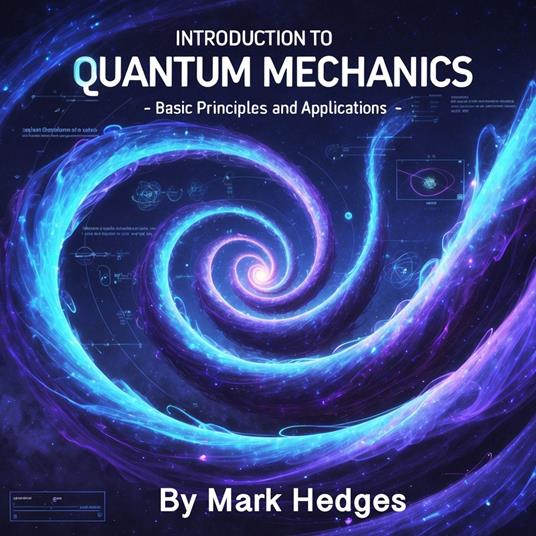
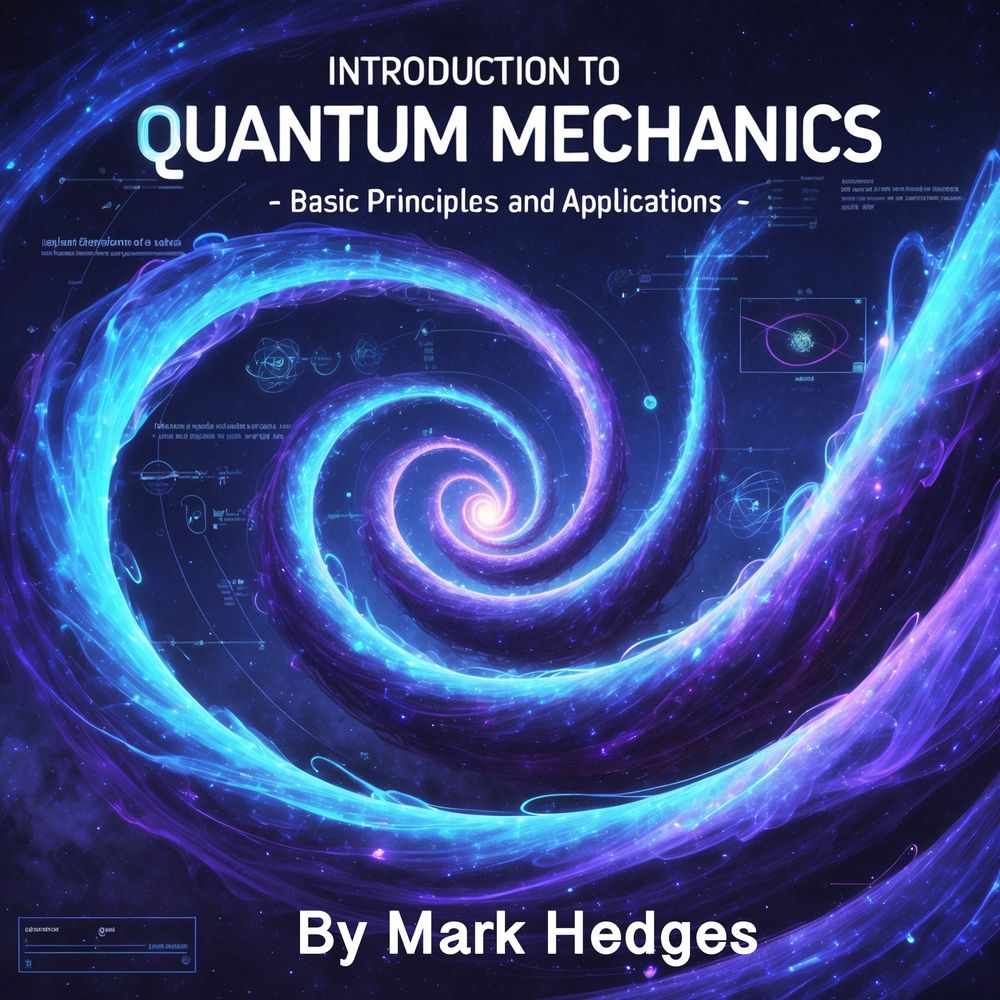
Introduction to Quantum Mechanics
Disponibile su APP ed eReader Kobo
3,56 €
3,56 €
Disponibile su APP ed eReader Kobo


Quantum mechanics arose in the early 20th century to explain phenomena that classical physics could not. Observations at the atomic scale revealed that matter and energy exhibit discrete and probabilistic behaviors, leading to the development of a new theoretical framework. The necessity for quantum mechanics became evident through several key experiments and discoveries. One of the earliest quantum breakthroughs came from Max Planck’s study of blackbody radiation. Classical physics predicted an infinite energy output at short wavelengths, known as the ultraviolet catastrophe. Planck resolved this by proposing that energy is emitted in discrete packets called quanta, introducing the idea that energy levels are not continuous. This marked the birth of quantum theory. Albert Einstein extended this concept with his explanation of the photoelectric effect, where light ejects electrons from a metal surface. Classical wave theory could not explain why light below a certain frequency fails to release electrons, regardless of intensity. Einstein proposed that light consists of photons, with energy proportional to their frequency. This established the particle-like nature of light and won him the Nobel Prize in 1921. Louis de Broglie later proposed wave-particle duality, suggesting that particles like electrons also behave as waves. His hypothesis was experimentally confirmed by the Davisson-Germer experiment, which demonstrated electron diffraction. This showed that matter exhibits both wave and particle properties, depending on how it is measured.
-
Autore:
-
Durata in (hh:mm:ss):01:44:41
-
Anno edizione:2025
-
Editore:
Lingua:
Inglese
EAN:
9798318289910

Formato:
Gli Audiolibri venduti dal nostro sito sono in formato MP3 e protetti da un DRM proprietario Kobo.
Compatibilità:
Gli Audiolibri venduti dal nostro sito possono essere ascoltati sul tuo smartphone o tablet tramite la APP gratuita Kobo Books scaricabile da iOS o Android. Gli Audiolibri non possono essere scaricati in locale o trasferiti su un client di ascolto diverso da quello fornito tramite Kobo. Non è possibile ascoltare gli audiolibri con la Kobo APP Desktop. Puoi ascoltare gli Audiolibri tramite determinati eReader Kobo, utilizzando cuffie o casse con Bluetooth. Visita la pagina degli eReader per avere maggiori dettagli.
Cloud:
Gli Audiolibri venduti singolarmente dal nostro sito sono immediatamente sincronizzati sul tuo account personale in automatico. Successivamente all'acquisto, sono subito disponibili all'ascolto tramite i client di lettura Kobo compatibili.
Clicca qui servissero ulteriori informazioni
