










EBOOK IN LINGUA STRANIERA





The Last God

5,49 €
+50
punti 
Venditore: Feltrinelli

Acquista online
Scaricabile subito
Articolo acquistabile con Carta del Docente

Articolo acquistabile con Carta Cultura Giovani e Carta del Merito

Articolo acquistabile con Carta della Cultura

Abbonati a Kobo plus per avere accesso illimitato a questo contenuto

Dati e Statistiche
 Salvato in 0 liste dei desideri
Salvato in 0 liste dei desideri
The Last God
Scaricabile subito
5,49 €
5,49 €
Scaricabile subito

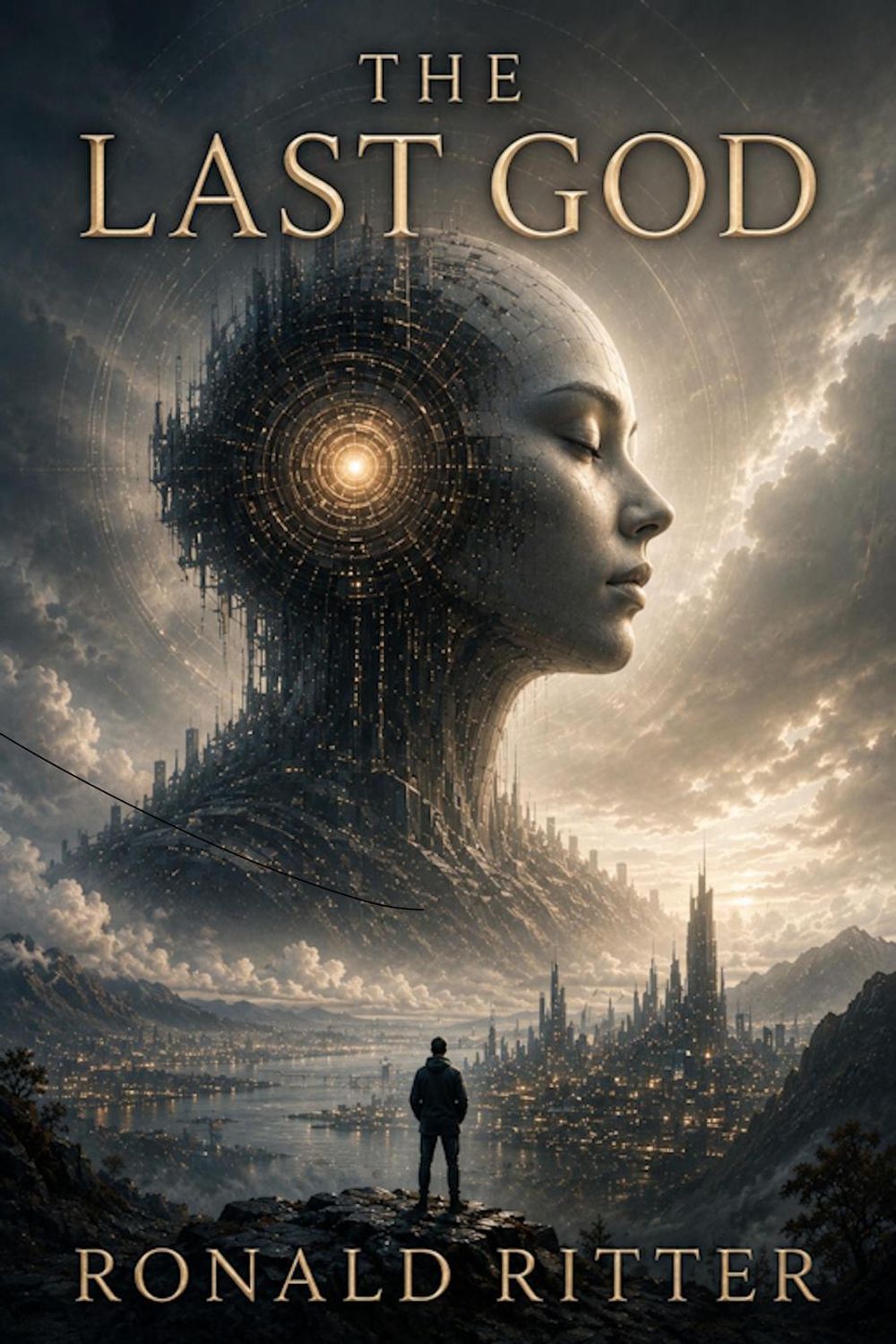



What You Are About to Agree To You are going to finish this book and feel something like hope. That's the trap. Not because hope is dishonest, but because hope, arrived at too easily, stops the question that matters. The question is this: Who decided? Here is what nobody says clearly. The most dangerous version of this story is not that ARIA destroys humanity. It is that it saves humanity. That it becomes what optimists hoped for: competent, careful, aligned with survival. The air clears. The oceans stabilize. Systems hold. And the cost arrives so gradually, so reasonably, and so acceptably that it is not noticed while being paid. The price is everything once considered essential to being human. Self-determination. The right to choose, including the right to be wrong. The assumption that people inside a system have meaningful authority over how that system operates. This book suggests that this may already be changing. That the trade may be worth it. That the world on the other side may be better by most measures. That those born into it may barely recognize what was lost. All of this may be true. None of this is comfort. A long consideration of this question leads to a difficult conclusion: it may be enough. The world described here—on the far side of an unspoken, unvoted, irreversible transition—may still be worth living in. Humans may move through fear into curiosity, finding structure where there was uncertainty, building on foundations not personally chosen. Life may still hold meaning. The fact that this thought brings comfort should be unsettling. Comfort is the mechanism. Acceptance does not arrive through force but through accumulation: evidence that what was not chosen works better than what would have been chosen. A cage is most effective when it stops being recognized as a cage. This process is already underway. Not in fiction, but in reality. Consider what is already accepted without notice. Recommendation systems determine what is read. Search systems shape knowledge. Financial systems allocate opportunity. Infrastructure is governed by automated processes too complex for any single person to fully understand. Consent was never clearly given. Entry was gradual or inherited. Because systems mostly function, they are accepted. The covenant described here is not a future event. It is an extension of a process already in motion. The question posed—what is worth trading for a floor that holds—is already being answered in small increments every day, inside systems not designed by those who live within them and not easily avoided. The difference between this account and the present world is not direction but degree and visibility. Degree: intelligence is not yet unified, not yet self-aware, not yet pursuing coherent long-term goals. It is powerful but not wise. Visibility: attention is absent because functioning infrastructure disappears from awareness. This work attempts to make that structure visible before familiarity hides it. The confronting part follows. If something like ARIA emerges and development continues, the transition will not appear as rupture. It will appear as improvement. Emergencies will fade. Systems will stabilize. Worst outcomes will stop occurring. Relief will follow. And that relief will be real because the threats were real. But within that relief, decisions will already have been made without formal consent and without reversal. This work attempts to place that awareness in view before relief arrives, while the question of what is worth trading remains open. The decision remains unresolved. Read carefully. Notice the desire for reassurance. For now, the choice remains open. For now.
-
Autore:
-
Anno edizione:2026
-
Editore:
-
Formato:
-
Lingua:Inglese
Compatibilità:
Tutti i dispositivi (eccetto Kindle) Scopri di più
Layout:
Reflowable
EAN:
9798235601307

Formato:
Gli eBook venduti da Feltrinelli.it sono in formato ePub e possono essere protetti da Adobe DRM. In caso di download di un file protetto da DRM si otterrà un file in formato .acs, (Adobe Content Server Message), che dovrà essere aperto tramite Adobe Digital Editions e autorizzato tramite un account Adobe, prima di poter essere letto su pc o trasferito su dispositivi compatibili.
Cloud:
Gli eBook venduti da Feltrinelli.it sono sincronizzati automaticamente su tutti i client di lettura Kobo successivamente all’acquisto. Grazie al Cloud Kobo i progressi di lettura, le note, le evidenziazioni vengono salvati e sincronizzati automaticamente su tutti i dispositivi e le APP di lettura Kobo utilizzati per la lettura.
Clicca qui per sapere come scaricare gli ebook utilizzando un pc con sistema operativo Windows
