









EBOOK IN LINGUA STRANIERA





Methods and Applications of Sample Size Calculation and Recalculation in Clinical Trials

84,23 €
+840
punti 
Venditore: Feltrinelli

Acquista online
Scaricabile subito
Articolo acquistabile con Carta del Docente

Articolo acquistabile con Carta Cultura Giovani e Carta del Merito

Articolo acquistabile con Carta della Cultura

Dati e Statistiche
 Salvato in 0 liste dei desideri
Salvato in 0 liste dei desideri
Methods and Applications of Sample Size Calculation and Recalculation in Clinical Trials
Scaricabile subito
84,23 €
84,23 €
Scaricabile subito
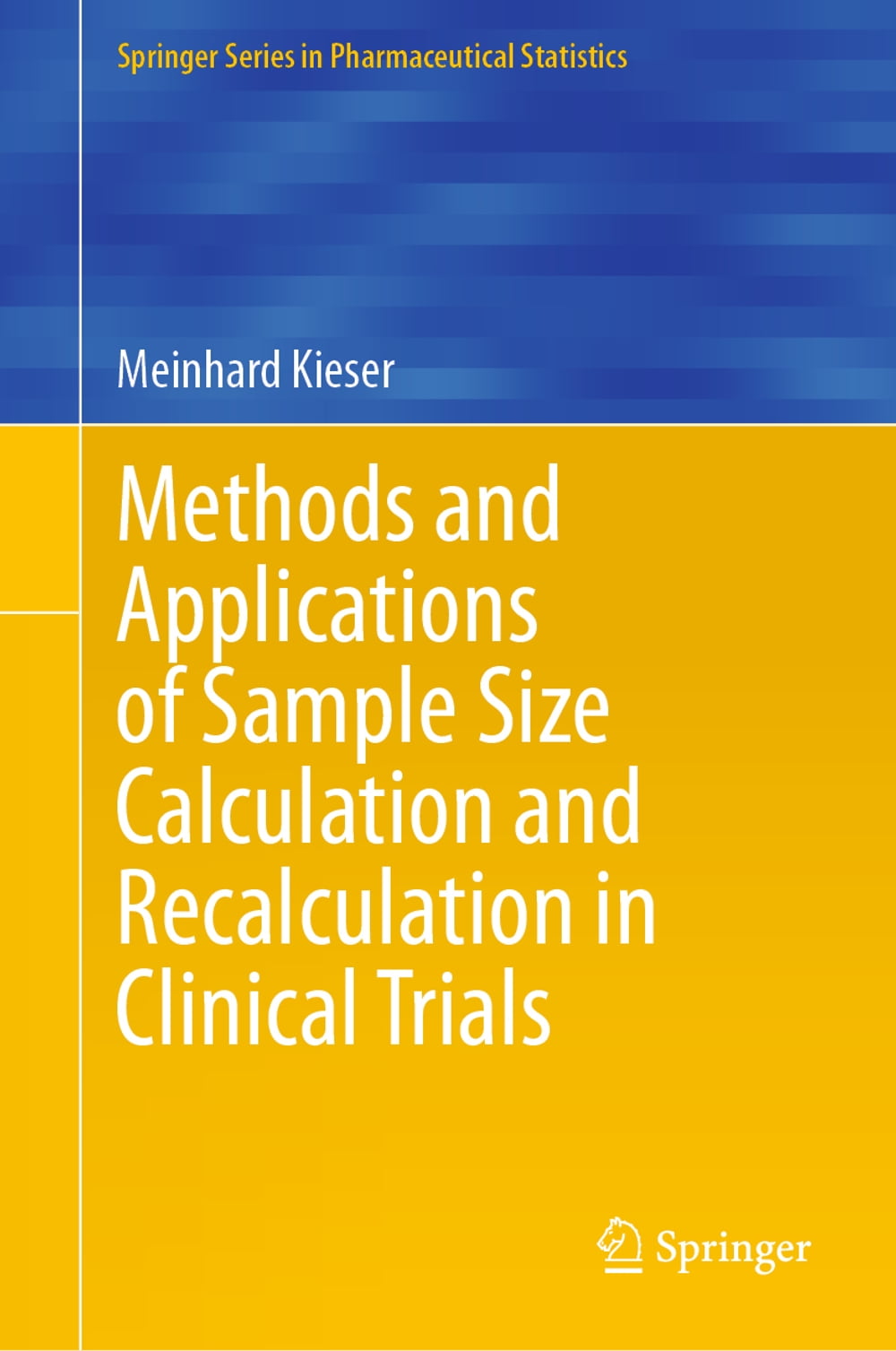


This book provides an extensive overview of the principles and methods of sample size calculation and recalculation in clinical trials. Appropriate calculation of the required sample size is crucial for the success of clinical trials. At the same time, a sample size that is too small or too large is problematic due to ethical, scientific, and economic reasons. Therefore, state-of-the art methods are required when planning clinical trials. Part I describes a general framework for deriving sample size calculation procedures. This enables an understanding of the common principles underlying the numerous methods presented in the following chapters. Part II addresses the fixed sample size design, where the required sample size is determined in the planning stage and is not changed afterwards. It covers sample size calculation methods for superiority, non-inferiority, and equivalence trials, as well as comparisons between two and more than two groups. A wide range of further topics is discussed, including sample size calculation for multiple comparisons, safety assessment, and multi-regional trials. There is often some uncertainty about the assumptions to be made when calculating the sample size upfront. Part III presents methods that allow to modify the initially specified sample size based on new information that becomes available during the ongoing trial. Blinded sample size recalculation procedures for internal pilot study designs are considered, as well as methods for sample size reassessment in adaptive designs that use unblinded data from interim analyses. The application is illustrated using numerous clinical trial examples, and software code implementing the methods is provided. The book offers theoretical background and practical advice for biostatisticians and clinicians from the pharmaceutical industry and academia who are involved in clinical trials. Covering basic as well as more advanced and recently developed methods, it is suitable forbeginners, experienced applied statisticians, and practitioners. To gain maximum benefit, readers should be familiar with introductory statistics. The content of this book has been successfully used for courses on the topic.
-
Autore:
-
Anno edizione:2020
-
Editore:
-
Formato:
-
Lingua:Inglese
Compatibilità:
Tutti i dispositivi (eccetto Kindle) Scopri di più
Layout:
Reflowable
EAN:
9783030495282

Formato:
Gli eBook venduti da Feltrinelli.it sono in formato ePub e possono essere protetti da Adobe DRM. In caso di download di un file protetto da DRM si otterrà un file in formato .acs, (Adobe Content Server Message), che dovrà essere aperto tramite Adobe Digital Editions e autorizzato tramite un account Adobe, prima di poter essere letto su pc o trasferito su dispositivi compatibili.
Cloud:
Gli eBook venduti da Feltrinelli.it sono sincronizzati automaticamente su tutti i client di lettura Kobo successivamente all’acquisto. Grazie al Cloud Kobo i progressi di lettura, le note, le evidenziazioni vengono salvati e sincronizzati automaticamente su tutti i dispositivi e le APP di lettura Kobo utilizzati per la lettura.
Clicca qui per sapere come scaricare gli ebook utilizzando un pc con sistema operativo Windows
