










EBOOK IN LINGUA STRANIERA





Modern Mathematics

140,39 €
+1400
punti 
Venditore: Feltrinelli

Acquista online
Scaricabile subito
Articolo acquistabile con Carta del Docente

Articolo acquistabile con Carta Cultura Giovani e Carta del Merito

Articolo acquistabile con Carta della Cultura

Dati e Statistiche
 Salvato in 0 liste dei desideri
Salvato in 0 liste dei desideri
Modern Mathematics
Scaricabile subito
140,39 €
140,39 €
Scaricabile subito

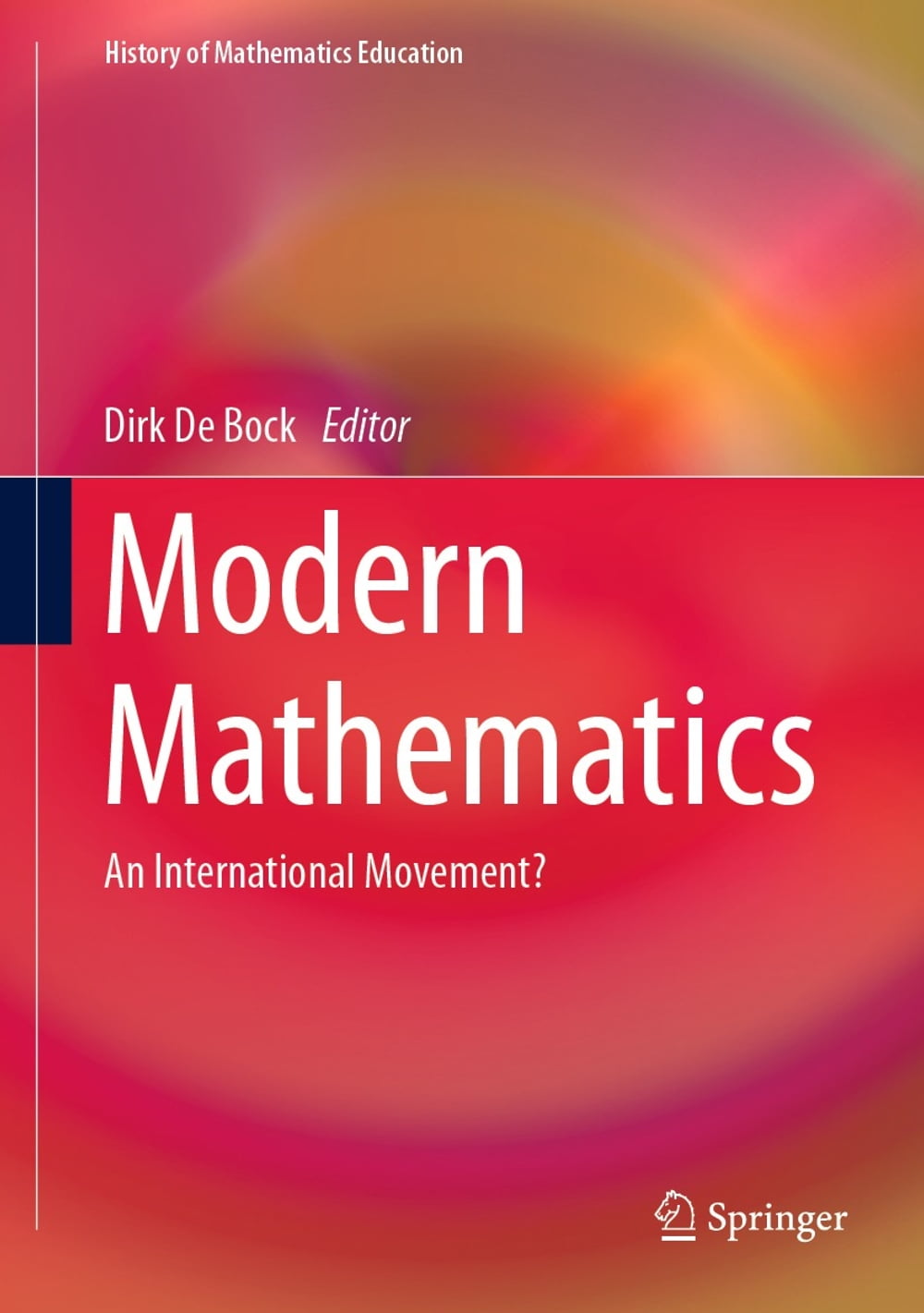


The international New Math developments between about 1950 through 1980, are regarded by many mathematics educators and education historians as the most historically important development in curricula of the twentieth century. It attracted the attention of local and international politicians, of teachers, and of parents, and influenced the teaching and learning of mathematics at all levels—kindergarten to college graduate—in many nations. After garnering much initial support it began to attract criticism. But, as Bill Jacob and the late Jerry Becker show in Chapter 17, some of the effects became entrenched. This volume, edited by Professor Dirk De Bock, of Belgium, provides an outstanding overview of the New Math/modern mathematics movement. Chapter authors provide exceptionally high-quality analyses of the rise of the movement, and of subsequent developments, within a range of nations.The first few chapters show how the initial leadership came from mathematicians in European nations and in the United States of America. The background leaders in Europe were Caleb Gattegno and members of a mysterious group of mainly French pure mathematicians, who since the 1930s had published under the name of (a fictitious) “Nicolas Bourbaki.” In the United States, there emerged, during the 1950s various attempts to improve U.S. mathematics curricula and teaching, especially in secondary schools and colleges. This side of the story climaxed in 1957 when the Soviet Union succeeded in launching “Sputnik,” the first satellite. Undoubtedly, this is a landmark publication in education. The foreword was written by Professor Bob Moon, one of a few other scholars to have written on the New Math from an international perspective. The final “epilogue” chapter, by Professor Geert Vanpaemel, a historian, draws together the overall thrust of the volume, and makes links with the general history of curriculum development, especially in science education, including recent globalization trends.
-
Curatore:
-
Anno edizione:2023
-
Editore:
-
Formato:
Lingua:
Inglese
Compatibilità:
Tutti i dispositivi (eccetto Kindle) Scopri di più
Layout:
Reflowable
EAN:
9783031111662

Formato:
Gli eBook venduti da Feltrinelli.it sono in formato ePub e possono essere protetti da Adobe DRM. In caso di download di un file protetto da DRM si otterrà un file in formato .acs, (Adobe Content Server Message), che dovrà essere aperto tramite Adobe Digital Editions e autorizzato tramite un account Adobe, prima di poter essere letto su pc o trasferito su dispositivi compatibili.
Cloud:
Gli eBook venduti da Feltrinelli.it sono sincronizzati automaticamente su tutti i client di lettura Kobo successivamente all’acquisto. Grazie al Cloud Kobo i progressi di lettura, le note, le evidenziazioni vengono salvati e sincronizzati automaticamente su tutti i dispositivi e le APP di lettura Kobo utilizzati per la lettura.
Clicca qui per sapere come scaricare gli ebook utilizzando un pc con sistema operativo Windows
