










EBOOK IN LINGUA STRANIERA





Neoconstructivism

61,04 €
+610
punti 
Venditore: Feltrinelli

Acquista online
Scaricabile subito
Articolo acquistabile con Carta del Docente

Articolo acquistabile con Carta Cultura Giovani e Carta del Merito

Dati e Statistiche
 Salvato in 0 liste dei desideri
Salvato in 0 liste dei desideri
Neoconstructivism
Scaricabile subito
61,04 €
61,04 €
Scaricabile subito

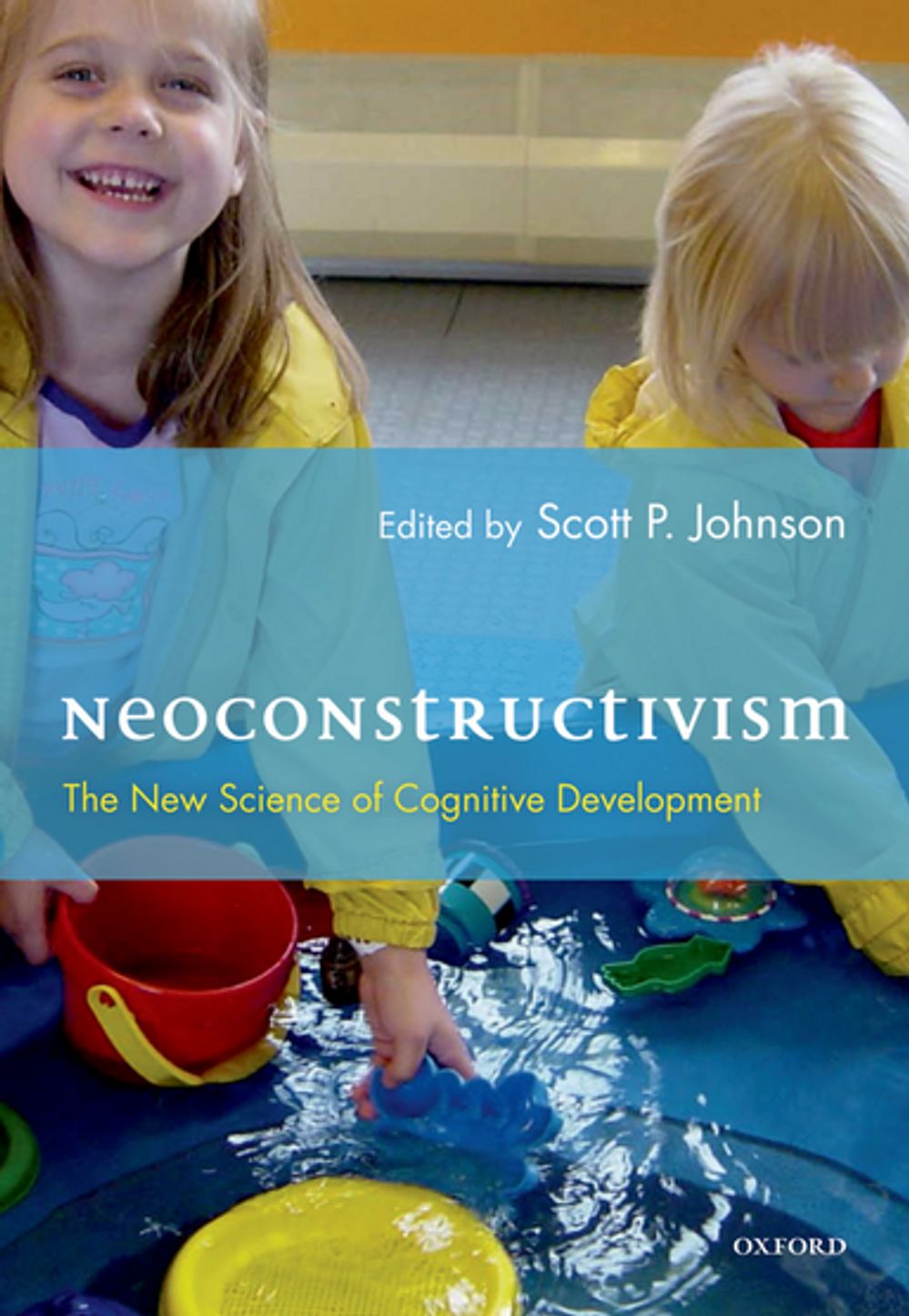



Arguments over the developmental origins of human knowledge are ancient, founded in the writings of Plato, Aristotle, Descartes, Hume, and Kant. They have also persisted long enough to become a core area of inquiry in cognitive and developmental science. Empirical contributions to these debates, however, appeared only in the last century, when Jean Piaget offered the first viable theory of knowledge acquisition that centered on the great themes discussed by Kant: object, space, time, and causality. The essence of Piaget's theory is constructivism: The building of concepts from simpler perceptual and cognitive precursors, in particular from experience gained through manual behaviors and observation. The constructivist view was disputed by a generation of researchers dedicated to the idea of the "competent infant," endowed with knowledge (say, of permanent objects) that emerged prior to facile manual behaviors. Taking this possibility further, it has been proposed that many fundamental cognitive mechanisms -- reasoning, event prediction, decision-making, hypothesis testing, and deduction -- operate independently of all experience, and are, in this sense, innate. The competent-infant view has an intuitive appeal, attested to by its widespread popularity, and it enjoys a kind of parsimony: It avoids the supposed philosophical pitfall posed by having to account for novel forms of knowledge in inductive learners. But this view leaves unaddressed a vital challenge: to understand the mechanisms by which new knowledge arises. This challenge has now been met. The neoconstructivist approach is rooted in Piaget's constructivist emphasis on developmental mechanisms, yet also reflects modern advances in our understanding of learning mechanisms, cortical development, and modeling. This book brings together, for the first time, theoretical views that embrace computational models and developmental neurobiology, and emphasize the interplay of time, experience, and cortical architecture to explain emergent knowledge, with an empirical line of research identifying a set of general-purpose sensory, perceptual, and learning mechanisms that guide knowledge acquisition across different domains and through development.
-
Autore:
-
Anno edizione:2009
-
Editore:
-
Formato:
-
Lingua:Inglese
Compatibilità:
Tutti i dispositivi (eccetto Kindle) Scopri di più
Layout:
Reflowable
EAN:
9780190450205
Formato:
Gli eBook venduti da Feltrinelli.it sono in formato ePub e possono essere protetti da Adobe DRM. In caso di download di un file protetto da DRM si otterrà un file in formato .acs, (Adobe Content Server Message), che dovrà essere aperto tramite Adobe Digital Editions e autorizzato tramite un account Adobe, prima di poter essere letto su pc o trasferito su dispositivi compatibili.
Cloud:
Gli eBook venduti da Feltrinelli.it sono sincronizzati automaticamente su tutti i client di lettura Kobo successivamente all’acquisto. Grazie al Cloud Kobo i progressi di lettura, le note, le evidenziazioni vengono salvati e sincronizzati automaticamente su tutti i dispositivi e le APP di lettura Kobo utilizzati per la lettura.
Clicca qui per sapere come scaricare gli ebook utilizzando un pc con sistema operativo Windows
