









AUDIOLIBRO IN LINGUA STRANIERA





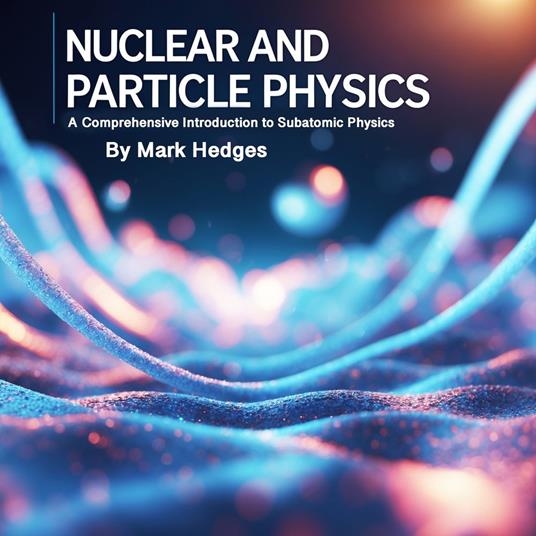
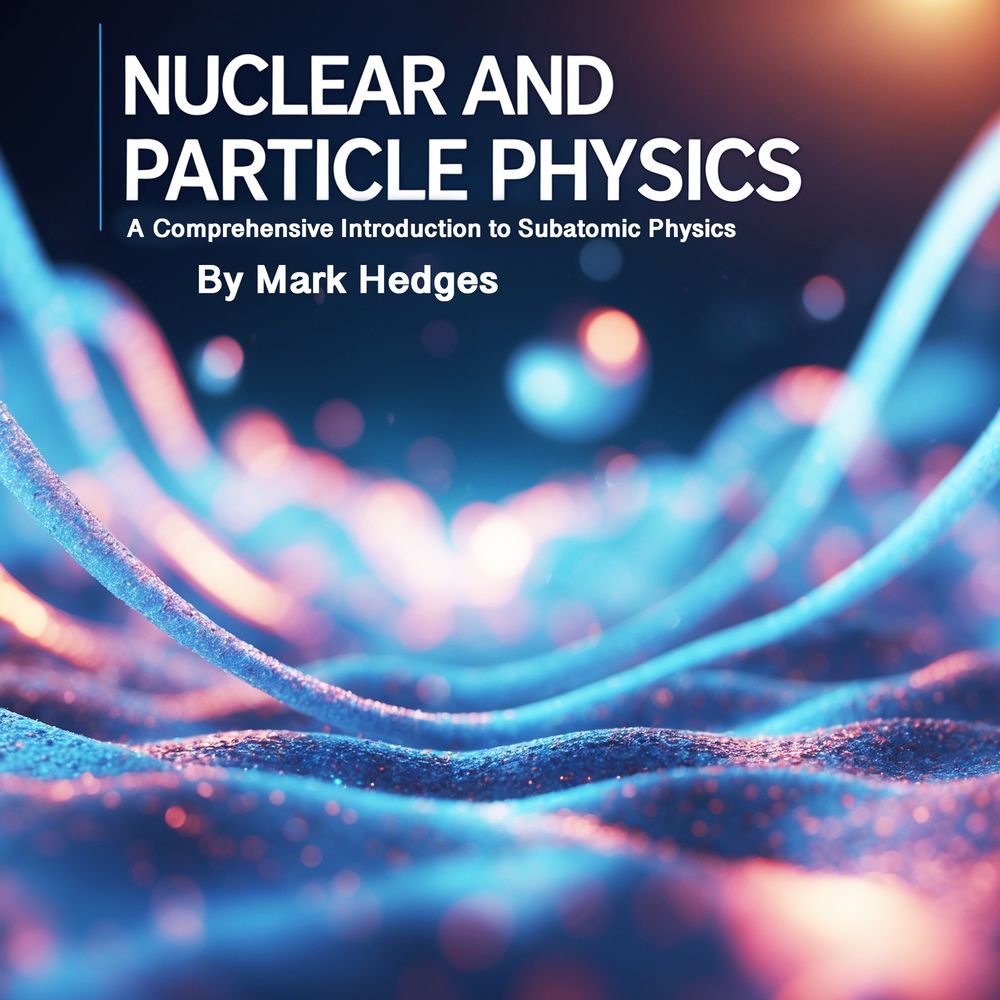
Nuclear and Particle Physics

3,56 €
+40
punti 
Venditore: Feltrinelli

Acquista online
Disponibile su APP ed eReader Kobo
Articolo acquistabile con Carta del Docente

Articolo acquistabile con Carta Cultura Giovani e Carta del Merito

Articolo acquistabile con Carta della Cultura

Abbonati a Kobo plus per avere accesso illimitato a questo contenuto

Dati e Statistiche
 Salvato in 0 liste dei desideri
Salvato in 0 liste dei desideri
Nuclear and Particle Physics
Disponibile su APP ed eReader Kobo
3,56 €
3,56 €
Disponibile su APP ed eReader Kobo


Subatomic physics is the branch of physics that studies the fundamental particles and forces that constitute the universe at the smallest scales. It explores the nature of matter and energy at the level of atomic nuclei and beyond, delving into the complex interactions that govern the behavior of elementary particles. The study of subatomic physics emerged from the broader field of nuclear physics, which initially focused on the structure and properties of atomic nuclei. Over time, discoveries of new particles and interactions led to the expansion of the field into what is now known as particle physics. The foundation of subatomic physics was laid with the discovery of the electron by J.J. Thomson in 1897, which provided the first evidence that atoms were composed of smaller constituent particles. This was followed by the discovery of the proton by Ernest Rutherford in 1917 and the neutron by James Chadwick in 1932, establishing the basic structure of the atomic nucleus. The development of quantum mechanics in the early 20th century provided a theoretical framework for understanding the behavior of these particles, revealing that their properties could only be accurately described through probabilistic wave functions and discrete energy levels. In the mid-20th century, the discovery of a wide variety of new particles, including mesons, baryons, and leptons, suggested that protons and neutrons themselves were composed of more fundamental constituents. This led to the development of the quark model by Murray Gell-Mann and George Zweig in 1964, which proposed that protons and neutrons are made up of combinations of quarks held together by the strong nuclear force, mediated by gluons. The quark model became a central component of the Standard Model of particle physics, which describes the known elementary particles and the fundamental forces—excluding gravity—that govern their interactions.
-
Autore:
-
Durata in (hh:mm:ss):01:52:18
-
Anno edizione:2025
-
Editore:
Lingua:
Inglese
EAN:
9798318312571

Formato:
Gli Audiolibri venduti dal nostro sito sono in formato MP3 e protetti da un DRM proprietario Kobo.
Compatibilità:
Gli Audiolibri venduti dal nostro sito possono essere ascoltati sul tuo smartphone o tablet tramite la APP gratuita Kobo Books scaricabile da iOS o Android. Gli Audiolibri non possono essere scaricati in locale o trasferiti su un client di ascolto diverso da quello fornito tramite Kobo. Non è possibile ascoltare gli audiolibri con la Kobo APP Desktop. Puoi ascoltare gli Audiolibri tramite determinati eReader Kobo, utilizzando cuffie o casse con Bluetooth. Visita la pagina degli eReader per avere maggiori dettagli.
Cloud:
Gli Audiolibri venduti singolarmente dal nostro sito sono immediatamente sincronizzati sul tuo account personale in automatico. Successivamente all'acquisto, sono subito disponibili all'ascolto tramite i client di lettura Kobo compatibili.
Clicca qui servissero ulteriori informazioni
