










LIBRO INGLESE





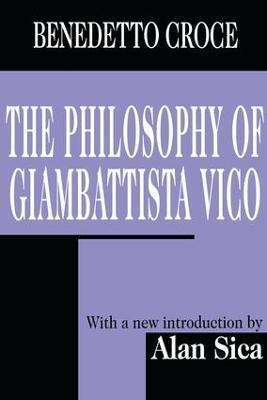
The Philosophy of Giambattista Vico

80,40 €
+800
punti 
Venditore: Feltrinelli
Articolo acquistabile con Carta del Docente

Articolo acquistabile con Carta Cultura Giovani e Carta del Merito

Paga con Klarna in 3 rate senza interessi per ordini superiori a 39 €

Dati e Statistiche
 Salvato in 0 liste dei desideri
Salvato in 0 liste dei desideri
The Philosophy of Giambattista Vico
Disponibilità in 2 settimane
80,40 €
80,40 €
Disponibilità in 2 settimane



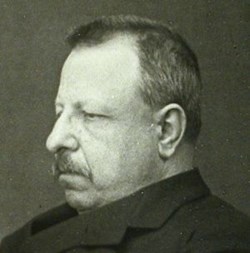
With a new introduction by Alan Sica. Giambattista Vico (1668-1744) is often regarded as the beleaguered, neglected genius of pre-Enlightenment Naples. His work-though known to Herder, Coleridge, Matthew Arnold, and Michelet-widely and deeply appreciated only during the twentieth century. Although Vico may be best known for the use James Joyce made of his theories in Finnegans Wake, Croce's insightful analysis of Vico's ideas played a large role in alerting readers to his unique voice. Croce's volume preceded Joyce's creation of "Mr. John Baptister Vickar" by a quarter century. During the last 25 years Vico's ideas about history, language, anti-Cartesian epistemology, and rhetoric have begun to receive the recognition their admirers have long claimed they deserve. Increasing numbers of publications appear annually which bear the stamp of Vico's thinking. Even if he is not yet so renowned as some of his contemporaries, such as Locke, Voltaire, or Montesquieu, there are good reasons to believe that in the future he will be equally honored as a cultural theorist. As a theorist of historical process and its language, there is no more innovative voice than his until the twentieth century-which explains in part why such figures as Joyce and R.G. Collingwood freely drew on Vico's work, particularly his New Science, while creating their own. If Vico was Naples' most brilliant, if uncelebrated, citizen prior to the Enlightenment taking hold in Southern Italy, then Croce (1866-1952) is surely the city's most important thinker of modern times, and the single indispensable Italian philosopher since Vico's death. When a genius of Croce's interpretative prowess, evaluates the work of another, it is inevitable that an explosive mixture will result. A great virtue of this book is its fusion of Croce's unique brand of idealism and aesthetic philosophy with Vico's epistemological, ethical, and historical theories. If Vico's theory of cyclical changes in history, the corsi e ricorsi, remains fruitful, it might be argued that Croce's evaluation of his countryman' ideas represented the next turn of the philosophical wheel toward enlightenment.
-
Autore:
-
Editore:
-
Anno:2001
-
Rilegatura:Paperback / softback
-
Pagine:356 p.
Testo in English
Dimensioni:
229 x 152 mm
Peso:
521 gr.
EAN:
9780765808691
Informazioni e Contatti sulla Sicurezza dei Prodotti
Le schede prodotto sono aggiornate in conformità al Regolamento UE 988/2023. Laddove ci fossero taluni dati non disponibili per ragioni indipendenti da Feltrinelli, vi informiamo che stiamo compiendo ogni ragionevole sforzo per inserirli. Vi invitiamo a controllare periodicamente il sito www.lafeltrinelli.it per eventuali novità e aggiornamenti.
Per le vendite di prodotti da terze parti, ciascun venditore si assume la piena e diretta responsabilità per la commercializzazione del prodotto e per la sua conformità al Regolamento UE 988/2023, nonché alle normative nazionali ed europee vigenti.
Per informazioni sulla sicurezza dei prodotti, contattare productsafety@feltrinelli.it
