










LIBRO INGLESE





Plato and Pythagoreanism

181,20 €
+1810
punti 
Venditore: Feltrinelli
Articolo acquistabile con Carta del Docente

Articolo acquistabile con Carta Cultura Giovani e Carta del Merito

Articolo acquistabile con Carta della Cultura

Paga con Klarna in 3 rate senza interessi per ordini superiori a 39 €

Dati e Statistiche
 Salvato in 0 liste dei desideri
Salvato in 0 liste dei desideri
Plato and Pythagoreanism
Disponibilità in 2 settimane
181,20 €
181,20 €
Disponibilità in 2 settimane

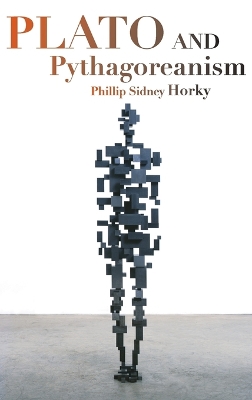



Was Plato a Pythagorean? Plato's students and earliest critics thought so, but scholars since the 19th century have been more skeptical. In Plato and Pythagoreanism, Phillip Sidney Horky argues that a specific type of Pythagorean philosophy, called "mathematical" Pythagoreanism, exercised a decisive influence on fundamental aspects of Plato's philosophy. The progenitor of mathematical Pythagoreanism was the infamous Pythagorean heretic and political revolutionary Hippasus of Metapontum, a student of Pythagoras who is credited with experiments in harmonics that led to innovations in mathematics. The innovations of Hippasus and other mathematical Pythagoreans, including Empedocles of Agrigentum, Epicharmus of Syracuse, Philolaus of Croton, and Archytas of Tarentum, presented philosophers like Plato with new approaches to science that sought to reconcile empirical knowledge with abstract mathematical theories. Plato and Pythagoreanism shows how mathematical Pythagoreanism established many of the fundamental philosophical questions Plato dealt with in his central dialogues, including Cratylus, Phaedo, Republic, Timaeus, and Philebus. In the process, it also illuminates the historical significance of the mathematical Pythagoreans, a group whose influence over the development of philosophical and scientific methods have been obscured since late antiquity. The picture that results is one in which Plato inherits mathematical Pythagorean method only to transform it into a powerful philosophical argument concerning the essential relationships between the cosmos and the human being.
-
Autore:
-
Editore:
-
Anno:2013
-
Rilegatura:Hardback
-
Pagine:336 p.
Testo in English
Dimensioni:
163 x 236 mm
Peso:
584 gr.
EAN:
9780199898220

Informazioni e Contatti sulla Sicurezza dei Prodotti
Le schede prodotto sono aggiornate in conformità al Regolamento UE 988/2023. Laddove ci fossero taluni dati non disponibili per ragioni indipendenti da Feltrinelli, vi informiamo che stiamo compiendo ogni ragionevole sforzo per inserirli. Vi invitiamo a controllare periodicamente il sito www.lafeltrinelli.it per eventuali novità e aggiornamenti.
Per le vendite di prodotti da terze parti, ciascun venditore si assume la piena e diretta responsabilità per la commercializzazione del prodotto e per la sua conformità al Regolamento UE 988/2023, nonché alle normative nazionali ed europee vigenti.
Per informazioni sulla sicurezza dei prodotti, contattare productsafety@feltrinelli.it
