










EBOOK IN LINGUA STRANIERA





Practical OpenTelemetry

49,91 €
+500
punti 
Venditore: Feltrinelli

Acquista online
Scaricabile subito
Articolo acquistabile con Carta del Docente

Articolo acquistabile con Carta Cultura Giovani e Carta del Merito

Articolo acquistabile con Carta della Cultura

Dati e Statistiche
 Salvato in 0 liste dei desideri
Salvato in 0 liste dei desideri
Practical OpenTelemetry
Scaricabile subito
49,91 €
49,91 €
Scaricabile subito

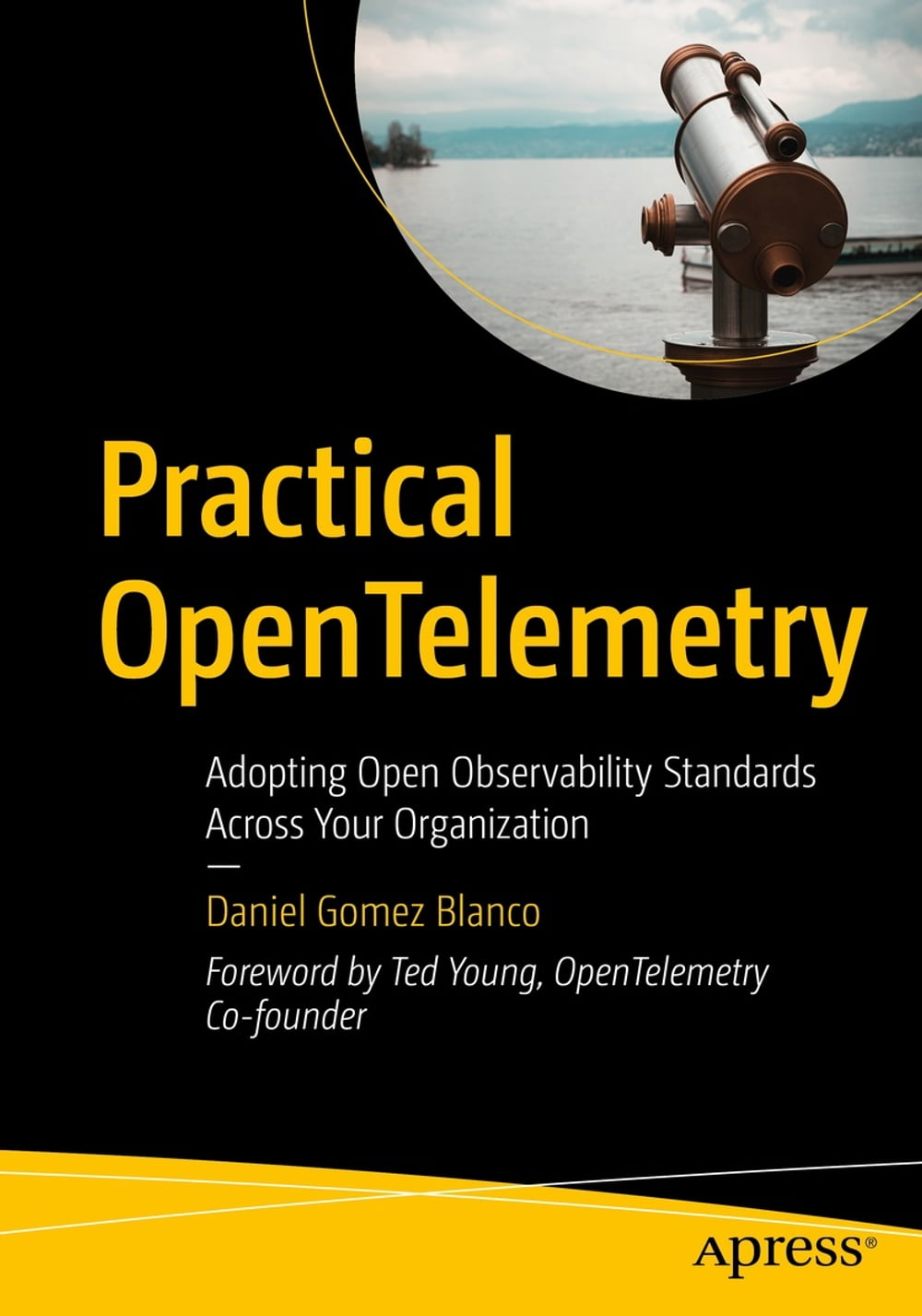



Learn the value that OpenTelemetry can bring to organizations that aim to implement observability best practices, and gain a deeper understanding of how different building blocks interact with each other to bring out-of-the-box, vendor-neutral instrumentation to your stack. With examples in Java, this book shows how to use OpenTelemetry APIs and configure plugins and SDKs to instrument services and produce valuable telemetry data. You’ll learn how to maximize adoption of OpenTelemetry and encourage the change needed in debugging workflows to reduce cognitive load for engineers troubleshooting production workloads. Adopting observability best practices across an organization is challenging. This book begins with a discussion of how operational monitoring processes widely followed for decades fall short at providing the insights needed for debugging cloud-native, distributed systems in production. The book goes on to show how the Cloud Native Computing Foundation’s OpenTelemetry project helps you standardize instrumentation and transport of telemetry signals, providing a common language for all observability tooling. You Will Learn Why observability is a necessity in modern distributed systems The value of OpenTelemetry for engineers and organizations OpenTelemetry component specification and general design Tracing, metrics, and logs APIs and SDKs, with examples in Java OpenTelemetry Collectors and recommended transport and processing pipelines How to adopt observability standards across an organization Who This Book Is For Software engineers familiar with cloud-native technologies and operational monitoring who want to instrument and export telemetry data from their services; observability leads who want to roll out OpenTelemetry standards and bestpractices across their organizations; and Java developers who want a book with OpenTelemetry examples in that language
-
Autore:
-
Anno edizione:2023
-
Editore:
-
Formato:
-
Lingua:Inglese
Compatibilità:
Tutti i dispositivi (eccetto Kindle) Scopri di più
Layout:
Reflowable
EAN:
9781484290750

Formato:
Gli eBook venduti da Feltrinelli.it sono in formato ePub e possono essere protetti da Adobe DRM. In caso di download di un file protetto da DRM si otterrà un file in formato .acs, (Adobe Content Server Message), che dovrà essere aperto tramite Adobe Digital Editions e autorizzato tramite un account Adobe, prima di poter essere letto su pc o trasferito su dispositivi compatibili.
Cloud:
Gli eBook venduti da Feltrinelli.it sono sincronizzati automaticamente su tutti i client di lettura Kobo successivamente all’acquisto. Grazie al Cloud Kobo i progressi di lettura, le note, le evidenziazioni vengono salvati e sincronizzati automaticamente su tutti i dispositivi e le APP di lettura Kobo utilizzati per la lettura.
Clicca qui per sapere come scaricare gli ebook utilizzando un pc con sistema operativo Windows
