









EBOOK IN LINGUA STRANIERA





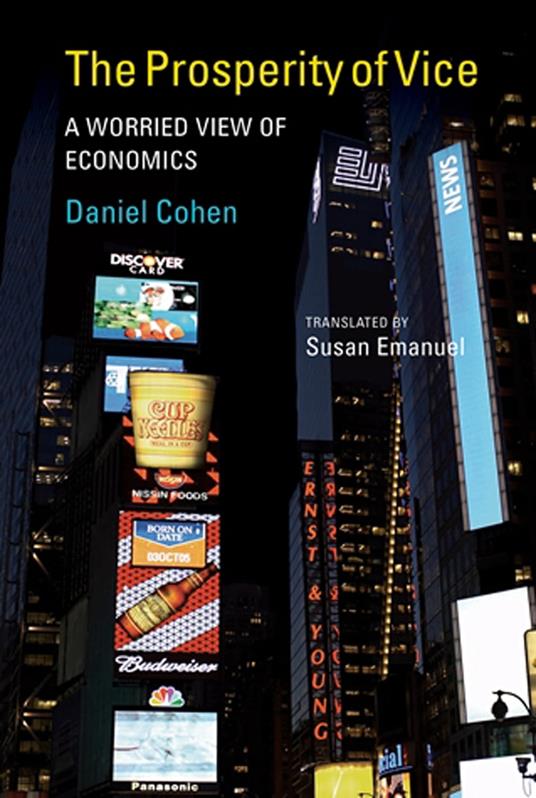
The Prosperity of Vice

19,33 €
+190
punti 
Venditore: Feltrinelli

Acquista online
Scaricabile subito
Articolo acquistabile con Carta del Docente

Articolo acquistabile con Carta Cultura Giovani e Carta del Merito

Dati e Statistiche
 Salvato in 0 liste dei desideri
Salvato in 0 liste dei desideri
The Prosperity of Vice
Scaricabile subito
19,33 €
19,33 €
Scaricabile subito





How violence, rather than peace, has historically accompanied prosperity; and why emerging nations seem poised to repeat the tragic history of the industrialized world. What happened yesterday in the West is today being repeated on a global scale. Industrial society is replacing rural society: millions of peasants in China, India, and elsewhere are leaving the countryside and going to the city. New powers are emerging and rivalries are exacerbated as competition increases for control of raw materials. Contrary to what believers in the “clash of civilizations” maintain, the great risk of the twenty-first century is not a confrontation between cultures but a repetition of history. In The Prosperity of Vice, the influential French economist Daniel Cohen shows that violence, rather than peace, has been the historical accompaniment to prosperity. Peace in Europe came only after the barbaric wars of the twentieth century, not as the outcome of economic growth. What will happen this time for today's eagerly Westernizing emerging nations? Cohen guides us through history, describing the European discovery of the “philosopher's stone”: the possibility of perpetual growth. But the consequences of addiction to growth are dire in an era of globalization. If a billion Chinese consume a billion cars, the future of the planet is threatened. But, Cohen points out, there is another kind of globalization: the immaterial globalization enabled by the Internet. It is still possible, he argues, that the cyber-world will create a new awareness of global solidarity. It even may help us accomplish a formidable cognitive task, as immense as that realized during the Industrial Revolution—one that would allow us learn to live within the limits of a solitary planet.
-
Autore:
-
Traduttore:
-
Anno edizione:2012
-
Editore:
-
Formato:
Lingua:
Inglese
Compatibilità:
Tutti i dispositivi (eccetto Kindle) Scopri di più
Layout:
Reflowable
EAN:
9780262300667

Formato:
Gli eBook venduti da Feltrinelli.it sono in formato ePub e possono essere protetti da Adobe DRM. In caso di download di un file protetto da DRM si otterrà un file in formato .acs, (Adobe Content Server Message), che dovrà essere aperto tramite Adobe Digital Editions e autorizzato tramite un account Adobe, prima di poter essere letto su pc o trasferito su dispositivi compatibili.
Cloud:
Gli eBook venduti da Feltrinelli.it sono sincronizzati automaticamente su tutti i client di lettura Kobo successivamente all’acquisto. Grazie al Cloud Kobo i progressi di lettura, le note, le evidenziazioni vengono salvati e sincronizzati automaticamente su tutti i dispositivi e le APP di lettura Kobo utilizzati per la lettura.
Clicca qui per sapere come scaricare gli ebook utilizzando un pc con sistema operativo Windows
