









EBOOK IN LINGUA STRANIERA





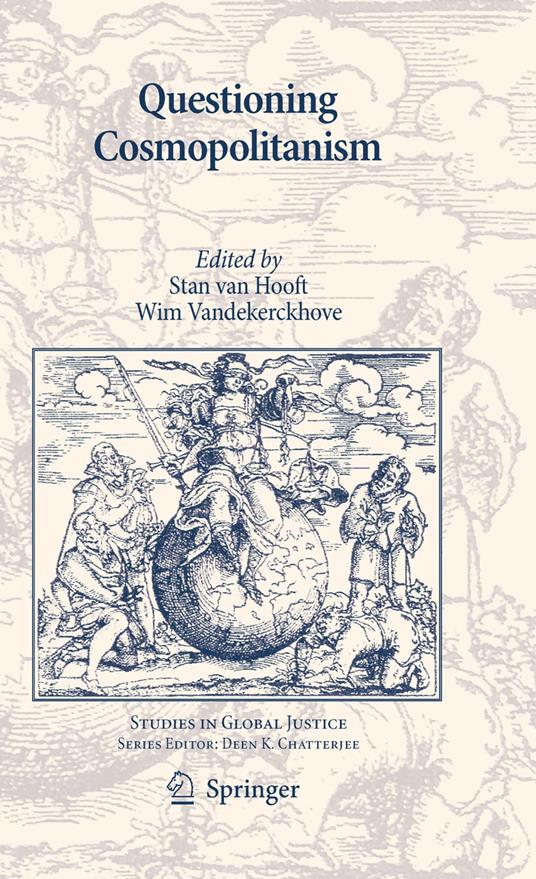
Questioning Cosmopolitanism

84,23 €
+840
punti 
Venditore: Feltrinelli

Acquista online
Scaricabile subito
Articolo acquistabile con Carta del Docente

Articolo acquistabile con Carta Cultura Giovani e Carta del Merito

Articolo acquistabile con Carta della Cultura

Dati e Statistiche
 Salvato in 0 liste dei desideri
Salvato in 0 liste dei desideri
Questioning Cosmopolitanism
Scaricabile subito
84,23 €
84,23 €
Scaricabile subito



Wim Vandekerckhove and Stan van Hooft The philosopher, Diogenes the Cynic, in the fourth century BCE, was asked where he came from and where he felt he belonged. He answered that he was a “citi- 1 zen of the world” (kosmopolitês) . This made him the rst person known to have described himself as a cosmopolitan. A century later, the Stoics had developed that concept further, stating that the whole cosmos was but one polis, of which the order was logos or right reason. Living according to that right reason implied showing goodness to all of human kind. Through early Christianity, cosmopolitanism was given various interpretations, sometimes quite contrary to the inclusive notion of the Stoics. Augustine’s interpretation, for example, suggested that only those who love God can live in the universal and borderless “City of God”. Later, the red- covery of Stoic writings during the European Renaissance inspired thinkers like Erasmus, Grotius and Pufendorf to draw on cosmopolitanism to advocate world peace through religious tolerance and a society of states. That same inspiration can be noted in the American and French revolutions. In the eighteenth century, enlig- enment philosophers such as Bentham (through utilitarianism) and Kant (through universal reason) developed new and very different versions of cosmopolitanism that serve today as key sources of cosmopolitan philosophy. The nineteenth century saw the development of new forms of transnational ideals, including that of Marx’s critique of capitalism on behalf of an international working class.
-
Curatore:
-
Anno edizione:2010
-
Editore:
-
Formato:
Lingua:
Inglese
Compatibilità:
Tutti i dispositivi (eccetto Kindle) Scopri di più
Layout:
Reflowable
EAN:
9789048187041

Formato:
Gli eBook venduti da Feltrinelli.it sono in formato ePub e possono essere protetti da Adobe DRM. In caso di download di un file protetto da DRM si otterrà un file in formato .acs, (Adobe Content Server Message), che dovrà essere aperto tramite Adobe Digital Editions e autorizzato tramite un account Adobe, prima di poter essere letto su pc o trasferito su dispositivi compatibili.
Cloud:
Gli eBook venduti da Feltrinelli.it sono sincronizzati automaticamente su tutti i client di lettura Kobo successivamente all’acquisto. Grazie al Cloud Kobo i progressi di lettura, le note, le evidenziazioni vengono salvati e sincronizzati automaticamente su tutti i dispositivi e le APP di lettura Kobo utilizzati per la lettura.
Clicca qui per sapere come scaricare gli ebook utilizzando un pc con sistema operativo Windows
