










EBOOK IN LINGUA STRANIERA





The Right to Do Wrong

40,65 €
+410
punti 
Venditore: Feltrinelli

Acquista online
Scaricabile subito
Articolo acquistabile con Carta del Docente

Articolo acquistabile con Carta Cultura Giovani e Carta del Merito

Articolo acquistabile con Carta della Cultura

Dati e Statistiche
 Salvato in 0 liste dei desideri
Salvato in 0 liste dei desideri
The Right to Do Wrong
Scaricabile subito
40,65 €
40,65 €
Scaricabile subito

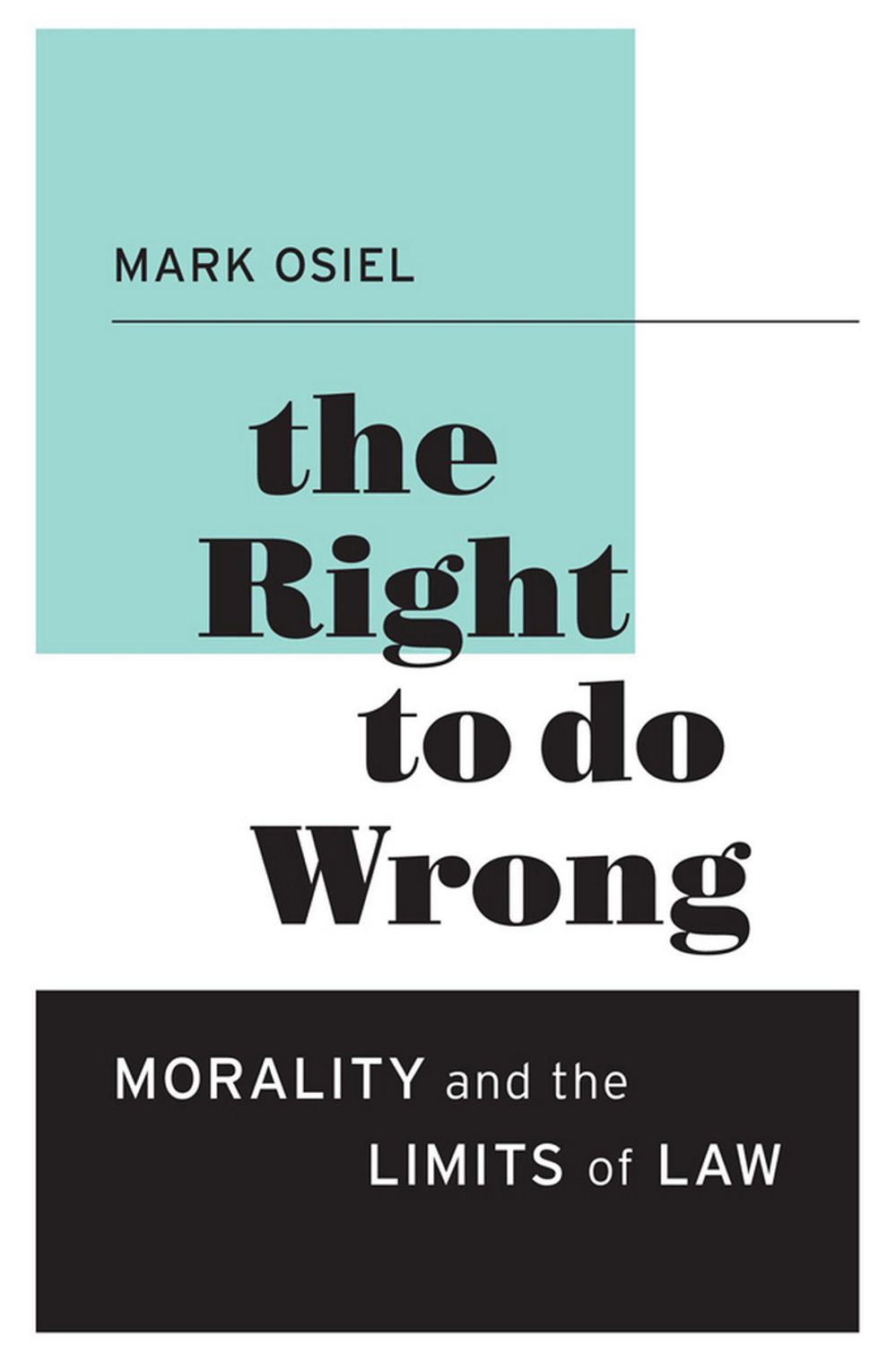



Common morality—in the form of shame, outrage, and stigma—has always been society’s first line of defense against ethical transgressions. Social mores crucially complement the law, Mark Osiel shows, sparing us from oppressive formal regulation. Much of what we could do, we shouldn’t—and we don’t. We have a free-speech right to be offensive, but we know we will face outrage in response. We may declare bankruptcy, but not without stigma. Moral norms constantly demand more of us than the law requires, sustaining promises we can legally break and preventing disrespectful behavior the law allows. Mark Osiel takes up this curious interplay between lenient law and restrictive morality, showing that law permits much wrongdoing because we assume that rights are paired with informal but enforceable duties. People will exercise their rights responsibly or else face social shaming. For the most part, this system has worked. Social order persists despite ample opportunity for reprehensible conduct, testifying to the decisive constraints common morality imposes on the way we exercise our legal prerogatives. The Right to Do Wrong collects vivid case studies and social scientific research to explore how resistance to the exercise of rights picks up where law leaves off and shapes the legal system in turn. Building on recent evidence that declining social trust leads to increasing reliance on law, Osiel contends that as social changes produce stronger assertions of individual rights, it becomes more difficult to depend on informal tempering of our unfettered freedoms. Social norms can be indefensible, Osiel recognizes. But the alternative—more repressive law—is often far worse. This empirically informed study leaves little doubt that robust forms of common morality persist and are essential to the vitality of liberal societies.
-
Autore:
-
Anno edizione:2019
-
Editore:
-
Formato:
-
Lingua:Inglese
Compatibilità:
Tutti i dispositivi (eccetto Kindle) Scopri di più
Layout:
Reflowable
EAN:
9780674240209

Formato:
Gli eBook venduti da Feltrinelli.it sono in formato ePub e possono essere protetti da Adobe DRM. In caso di download di un file protetto da DRM si otterrà un file in formato .acs, (Adobe Content Server Message), che dovrà essere aperto tramite Adobe Digital Editions e autorizzato tramite un account Adobe, prima di poter essere letto su pc o trasferito su dispositivi compatibili.
Cloud:
Gli eBook venduti da Feltrinelli.it sono sincronizzati automaticamente su tutti i client di lettura Kobo successivamente all’acquisto. Grazie al Cloud Kobo i progressi di lettura, le note, le evidenziazioni vengono salvati e sincronizzati automaticamente su tutti i dispositivi e le APP di lettura Kobo utilizzati per la lettura.
Clicca qui per sapere come scaricare gli ebook utilizzando un pc con sistema operativo Windows
