










EBOOK IN LINGUA STRANIERA





Siddhartha

8,99 €
+90
punti 
Venditore: Feltrinelli

Acquista online
Scaricabile subito
Articolo acquistabile con Carta del Docente

Articolo acquistabile con Carta Cultura Giovani e Carta del Merito

Articolo acquistabile con Carta della Cultura

Abbonati a Kobo plus per avere accesso illimitato a questo contenuto

Dati e Statistiche
 Salvato in 0 liste dei desideri
Salvato in 0 liste dei desideri
Siddhartha
Scaricabile subito
8,99 €
8,99 €
Scaricabile subito

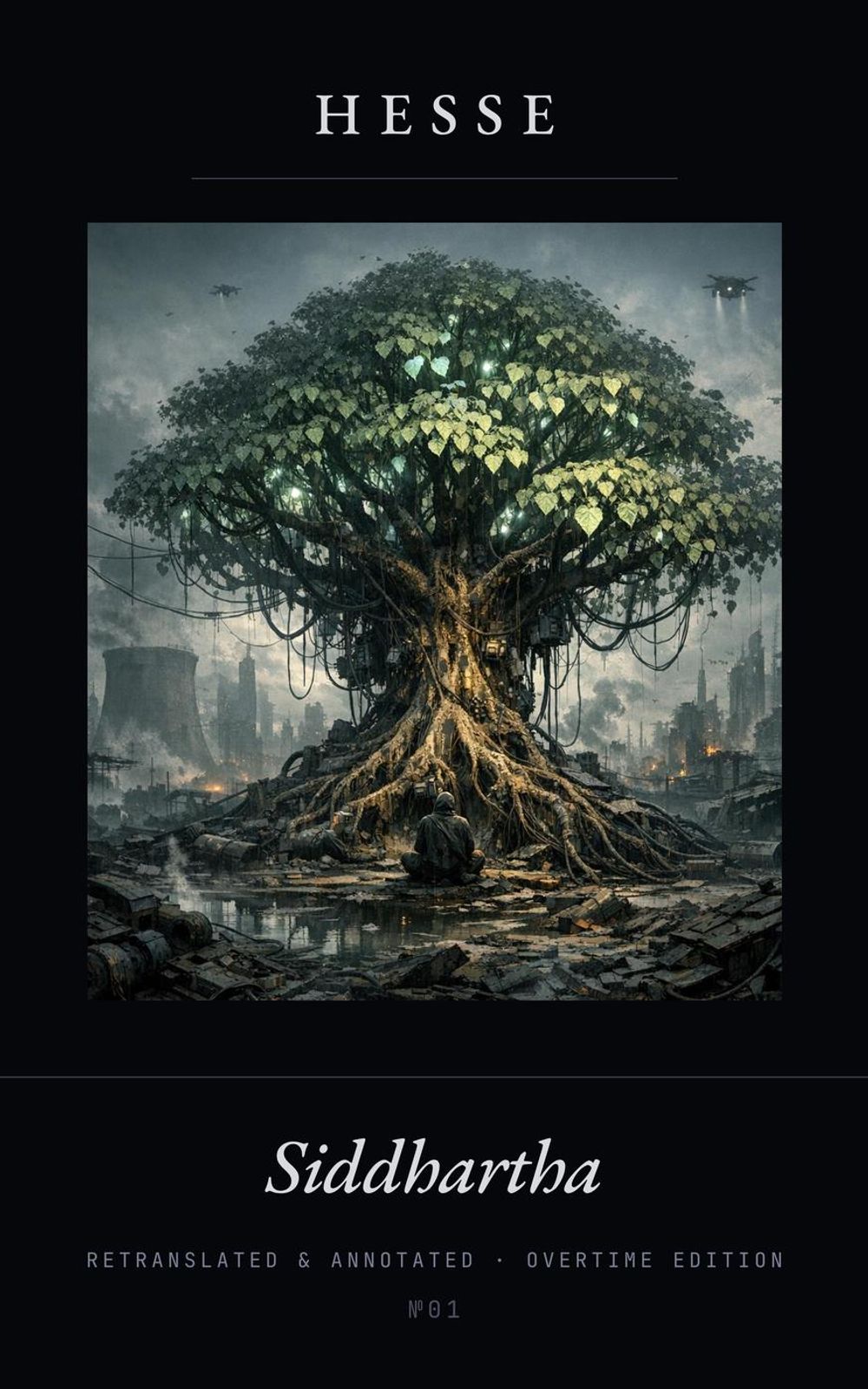



Hermann Hesse finished Siddhartha in 1922, in a stone house above a Swiss village, four years after he began it and two years after he stopped. He had to live the second half before he could write it. A young Brahmin leaves his father's house and joins the wandering ascetics. He meets the Buddha and walks away — a teaching cannot carry the awakening that produced it. In the city he apprentices himself to the courtesan-teacher Kamala in the arts of love and to the merchant Kamaswami in the arts of money, loses a decade, and abandons everything at the river of an old ferryman who has nothing to teach but how to listen. By the end, what he has found cannot be handed down. It can only be sat with. For seventy years, English readers have known Siddhartha through Hilda Rosner's 1951 translation — a fluent and careful text that nevertheless smoothed Hesse's liturgical repetition, muted his erotic register, and imported Christian vocabulary into a novel structurally refusing it. This new annotated edition goes back to the 1922 German. The repetition is preserved. The body stays in the book. Hesse's own Sanskrit spellings (Sansara, Gotama) are kept. Three original essays place the novel back alongside the cultural ghost it has become — the first "spiritual but not religious" text, the American reception running Emerson through Eckhart Tolle, and the erotic thread Hesse ran through the whole story. This edition includes: - A new English translation from the 1922 German source - Foreword, introduction, and note on translation by the editor - Chapter-by-chapter annotations on translation choices and Sanskrit/Pali terms - Three original essays on the novel's argument and its American afterlife - Glossary of Sanskrit and Pali terms, and a full Translation Appendix The river is still there. The book is on the bank. Come sit.
-
Autore:
-
Anno edizione:2026
-
Editore:
-
Formato:
-
Lingua:Inglese
Compatibilità:
Tutti i dispositivi (eccetto Kindle) Scopri di più
Layout:
Reflowable
EAN:
9798235904378

Formato:
Gli eBook venduti da Feltrinelli.it sono in formato ePub e possono essere protetti da Adobe DRM. In caso di download di un file protetto da DRM si otterrà un file in formato .acs, (Adobe Content Server Message), che dovrà essere aperto tramite Adobe Digital Editions e autorizzato tramite un account Adobe, prima di poter essere letto su pc o trasferito su dispositivi compatibili.
Cloud:
Gli eBook venduti da Feltrinelli.it sono sincronizzati automaticamente su tutti i client di lettura Kobo successivamente all’acquisto. Grazie al Cloud Kobo i progressi di lettura, le note, le evidenziazioni vengono salvati e sincronizzati automaticamente su tutti i dispositivi e le APP di lettura Kobo utilizzati per la lettura.
Clicca qui per sapere come scaricare gli ebook utilizzando un pc con sistema operativo Windows
