










LIBRO INGLESE





Transformations of Language in Modern Dystopias

172,20 €
+1720
punti 
Venditore: Feltrinelli
Articolo acquistabile con Carta del Docente

Articolo acquistabile con Carta Cultura Giovani e Carta del Merito

Articolo acquistabile con Carta della Cultura

Paga con Klarna in 3 rate senza interessi per ordini superiori a 39 €

Dati e Statistiche
 Salvato in 0 liste dei desideri
Salvato in 0 liste dei desideri
Transformations of Language in Modern Dystopias
Disponibilità in 2 settimane
172,20 €
172,20 €
Disponibilità in 2 settimane

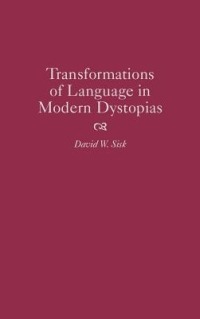



As the 20th century has progressed, dystopian fiction has gained power as utopian fiction has become increasingly irrelevant. As an overtly didactic genre, dystopia extrapolates terrifying near-futures from disturbing current trends. In order to quickly create an atmosphere that is at once plausible and terrifying, dystopian writers almost universally turn to an idea certain to generate both fear and sympathy in the reader—the dual concept of language as the primary tool by which repressive societies stifle dissent, and simultaneously as the primary weapon used by rebels bent on understanding, resisting, and countering such oppression. This volume traces the evolution of language's centrality in 20th-century dystopias in English, including Brave New World, 1984, A Clockwork Orange, The Handmaid's Tale, Native Tongue, The Judas Rose, and Riddley Walker. The brilliance of Orwell's 1984 has led to a backlash: many critics have smugly asserted that, as the year 1984 has passed without taking the shape of his fiction, Orwell's novel and the dystopia in general have lost their affective power and relevance. But as the 20th century progresses, dystopian fiction has gained power as utopian fiction has become increasingly irrelevant. As an overtly didactic genre, dystopia extrapolates terrifying near-futures from disturbing current trends. In order to quickly create an atmosphere that is at once plausible and terrifying, dystopian writers almost universally turn to an idea certain to generate both fear and sympathy in the reader—the dual concept of language as the primary tool by which repressive societies stifle dissent, and simultaneously as the primary weapon used by rebels bent on understanding, resisting, and countering such oppression. This volume traces the evolution of language's centrality in 20th-century dystopias in English, beginning with Huxley's ^IBrave New World^R and Orwell's ^I1984^R. As dystopian fiction has branched out to embrace multiple viewpoints and agendas, the emphasis on language has remained at the center of the dystopian impulse. These include the first-person narrative dystopia, such as Anthony Burgess's ^IA Clockwork Orange^R; the feminist dystopia, such as Margaret Atwood's ^IThe Handmaid's Tale^R and Suzette Elgin's ^INative Tongue^R and ^IThe Judas Rose^R; and the post-apocalyptic/mythic dystopia, such as Russell Hoban's ^IRiddley Walker^R. While other scholars have often alluded to the importance of language within specific literary dystopias, this book transcends earlier studies by presenting a generic model of dystopian language use.
-
Autore:
-
Editore:
-
Anno:1997
-
Rilegatura:Hardback
Pagine:
224 p.
Testo in English
EAN:
9780313304118

Informazioni e Contatti sulla Sicurezza dei Prodotti
Le schede prodotto sono aggiornate in conformità al Regolamento UE 988/2023. Laddove ci fossero taluni dati non disponibili per ragioni indipendenti da Feltrinelli, vi informiamo che stiamo compiendo ogni ragionevole sforzo per inserirli. Vi invitiamo a controllare periodicamente il sito www.lafeltrinelli.it per eventuali novità e aggiornamenti.
Per le vendite di prodotti da terze parti, ciascun venditore si assume la piena e diretta responsabilità per la commercializzazione del prodotto e per la sua conformità al Regolamento UE 988/2023, nonché alle normative nazionali ed europee vigenti.
Per informazioni sulla sicurezza dei prodotti, contattare productsafety@feltrinelli.it
