










EBOOK IN LINGUA STRANIERA





Adiabatic Logic

84,23 €
+840
punti 
Venditore: Feltrinelli

Acquista online
Scaricabile subito
Articolo acquistabile con Carta del Docente

Articolo acquistabile con Carta Cultura Giovani e Carta del Merito

Articolo acquistabile con Carta della Cultura

Dati e Statistiche
 Salvato in 0 liste dei desideri
Salvato in 0 liste dei desideri
Adiabatic Logic
Scaricabile subito
84,23 €
84,23 €
Scaricabile subito
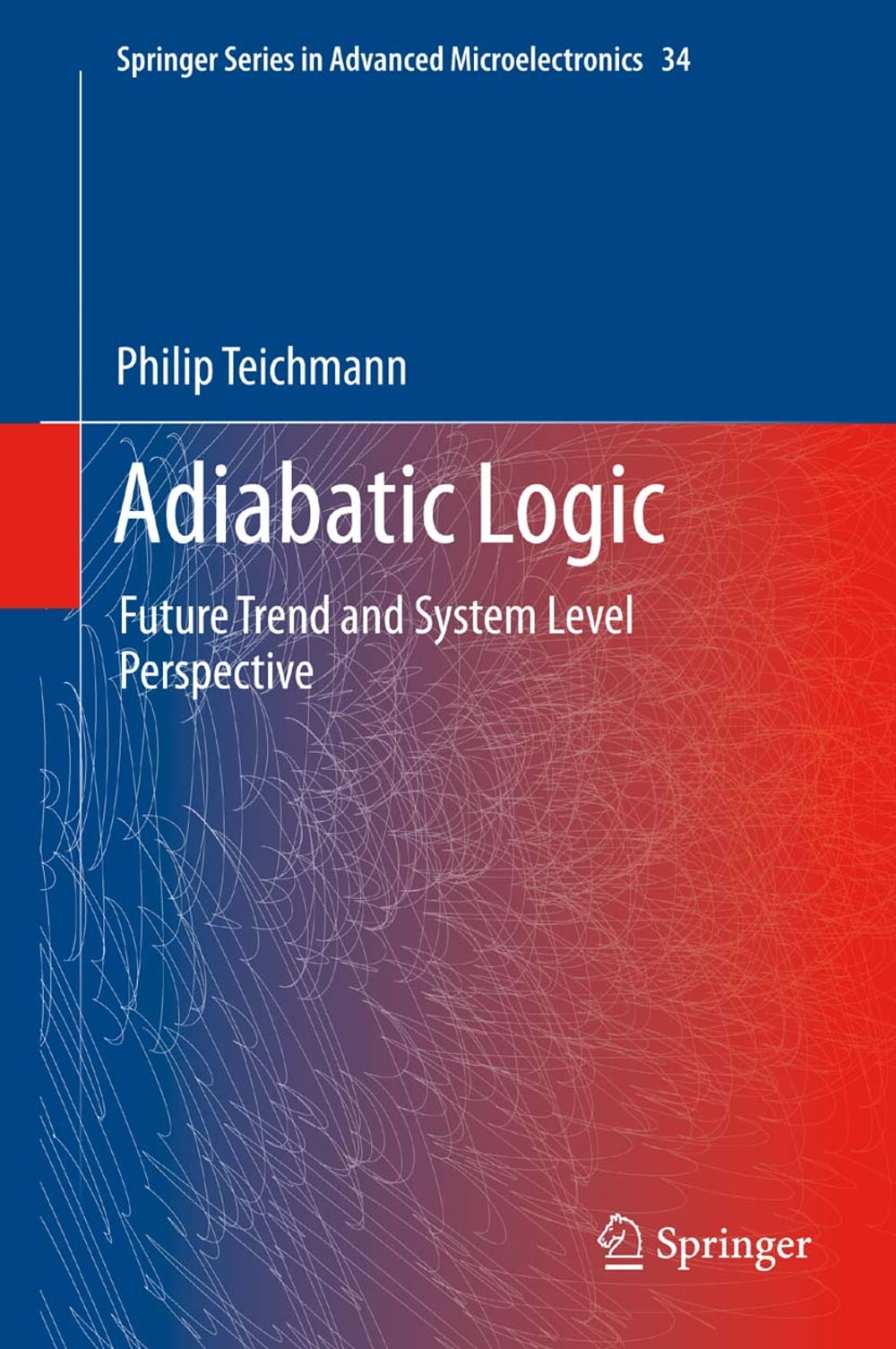


Adiabatic logic is a potential successor for static CMOS circuit design when it comes to ultra-low-power energy consumption. Future development like the evolutionary shrinking of the minimum feature size as well as revolutionary novel transistor concepts will change the gate level savings gained by adiabatic logic. In addition, the impact of worsening degradation effects has to be considered in the design of adiabatic circuits. The impact of the technology trends on the figures of merit of adiabatic logic, energy saving potential and optimum operating frequency, are investigated, as well as degradation related issues. Adiabatic logic benefits from future devices, is not susceptible to Hot Carrier Injection, and shows less impact of Bias Temperature Instability than static CMOS circuits. Major interest also lies on the efficient generation of the applied power-clock signal. This oscillating power supply can be used to save energy in short idle times by disconnecting circuits. An efficient way to generate the power-clock is by means of the synchronous 2N2P LC oscillator, which is also robust with respect to pattern-induced capacitive variations. An easy to implement but powerful power-clock gating supplement is proposed by gating the synchronization signals. Diverse implementations to shut down the system are presented and rated for their applicability and other aspects like energy reduction capability and data retention. Advantageous usage of adiabatic logic requires compact and efficient arithmetic structures. A broad variety of adder structures and a Coordinate Rotation Digital Computer are compared and rated according to energy consumption and area usage, and the resulting energy saving potential against static CMOS proves the ultra-low-power capability of adiabatic logic. In the end, a new circuit topology has to compete with static CMOS also in productivity. On a 130nm test chip, a large scale test vehicle containing an FIR filter was implemented in adiabatic logic, utilizing a standard, library-based design flow, fabricated, measured and compared to simulations of a static CMOS counterpart, with measured saving factors compliant to the values gained by simulation. This leads to the conclusion that adiabatic logic is ready for productive design due to compatibility not only to CMOS technology, but also to electronic design automation (EDA) tools developed for static CMOS system design.
-
Autore:
-
Anno edizione:2011
-
Editore:
-
Formato:
-
Lingua:Inglese
Compatibilità:
Tutti i dispositivi (eccetto Kindle) Scopri di più
Layout:
Reflowable
EAN:
9789400723450

Formato:
Gli eBook venduti da Feltrinelli.it sono in formato ePub e possono essere protetti da Adobe DRM. In caso di download di un file protetto da DRM si otterrà un file in formato .acs, (Adobe Content Server Message), che dovrà essere aperto tramite Adobe Digital Editions e autorizzato tramite un account Adobe, prima di poter essere letto su pc o trasferito su dispositivi compatibili.
Cloud:
Gli eBook venduti da Feltrinelli.it sono sincronizzati automaticamente su tutti i client di lettura Kobo successivamente all’acquisto. Grazie al Cloud Kobo i progressi di lettura, le note, le evidenziazioni vengono salvati e sincronizzati automaticamente su tutti i dispositivi e le APP di lettura Kobo utilizzati per la lettura.
Clicca qui per sapere come scaricare gli ebook utilizzando un pc con sistema operativo Windows
