










LIBRO INGLESE





Burials and the Black Death: The New Library Excavation, Hereford Cathedral


50,00 €
+500
punti 
Venditore: Feltrinelli
Articolo acquistabile con Carta del Docente

Articolo acquistabile con Carta Cultura Giovani e Carta del Merito

Articolo acquistabile con Carta della Cultura

Paga con Klarna in 3 rate senza interessi per ordini superiori a 39 €

Dati e Statistiche
 Salvato in 0 liste dei desideri
Salvato in 0 liste dei desideri
Burials and the Black Death: The New Library Excavation, Hereford Cathedral
Disponibile in 5 gg lavorativi
50,00 €
50,00 €
Disponibile in 5 gg lavorativi

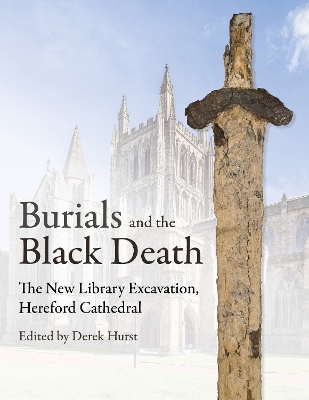



Excavation at Hereford Cathedral in 1993, prior to the construction of the Mappa Mundi Museum and a new archive library, revealed extensive archaeological remains, commencing with 8th/9th-century buildings and a Saxon cemetery. In the 10th century a well-metalled road surface was constructed. Alongside this, a very substantial building arose, partially built in stone, and with a cellar. Its scale and design indicated this to be the bishop’s residence. It was, however, remarkably short-lived. Its cellar became a cesspit, a pattern-welded sword lay on its floor, and overlying fills included an ornate inkwell, and a collection of animal carcasses. Radiocarbon dating suggests the Welsh ransacking of Hereford in 1055 as the context, recorded in historical evidence as disastrous for the cathedral. The site of the cellared building was later quarried for aggregate, which accords well with major building works during the Norman period, most notably the Losinga Chapel and the new cathedral. A vast amount of mostly Saxon charnel was incorporated into backfilling the quarry, its final deposition being accompanied by inhumation burials, some being irregular. The latter may be linked to the violent hostilities in Hereford (c 1140) during the Anarchy. From the mid-12th century the site wholly became a cemetery area, and the excavation of about 1000 burials has provided a full cross-section of the medieval population, with their analysis covering aspects such as health, stature and even origins. In the 14th century, three mass burial pits occurred, with dating consistent with the first outbreak of plague, the ‘Black Death’, in 1349. Associated analysis has contributed to an international study, successfully using ancient DNA analysis to identify the presence of Yersinia pestis, the plague microbe. This report includes detailed reporting on the finds, particularly the human remains, with the interpretation of the entire stratigraphic sequence underpinned throughout by extensive radiocarbon dating and chronological modelling.
-
Curatore:
-
Editore:
-
Anno:2026
-
Rilegatura:Hardback
Pagine:
416 p.
Testo in English
Dimensioni:
297 x 210 mm
EAN:
9781789258684

Informazioni e Contatti sulla Sicurezza dei Prodotti
Le schede prodotto sono aggiornate in conformità al Regolamento UE 988/2023. Laddove ci fossero taluni dati non disponibili per ragioni indipendenti da Feltrinelli, vi informiamo che stiamo compiendo ogni ragionevole sforzo per inserirli. Vi invitiamo a controllare periodicamente il sito www.lafeltrinelli.it per eventuali novità e aggiornamenti.
Per le vendite di prodotti da terze parti, ciascun venditore si assume la piena e diretta responsabilità per la commercializzazione del prodotto e per la sua conformità al Regolamento UE 988/2023, nonché alle normative nazionali ed europee vigenti.
Per informazioni sulla sicurezza dei prodotti, contattare productsafety@feltrinelli.it
