










EBOOK IN LINGUA STRANIERA





Computational Modeling in Tissue Engineering

84,23 €
+840
punti 
Venditore: Feltrinelli

Acquista online
Scaricabile subito
Articolo acquistabile con Carta del Docente

Articolo acquistabile con Carta Cultura Giovani e Carta del Merito

Articolo acquistabile con Carta della Cultura

Dati e Statistiche
 Salvato in 0 liste dei desideri
Salvato in 0 liste dei desideri
Computational Modeling in Tissue Engineering
Scaricabile subito
84,23 €
84,23 €
Scaricabile subito




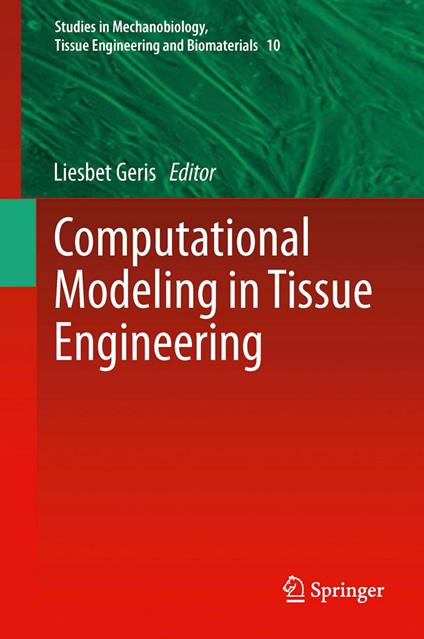
One of the major challenges in tissue engineering is the translation of biological knowledge on complex cell and tissue behavior into a predictive and robust engineering process. Mastering this complexity is an essential step towards clinical applications of tissue engineering. This volume discusses computational modeling tools that allow studying the biological complexity in a more quantitative way. More specifically, computational tools can help in: (i) quantifying and optimizing the tissue engineering product, e.g. by adapting scaffold design to optimize micro-environmental signals or by adapting selection criteria to improve homogeneity of the selected cell population; (ii) quantifying and optimizing the tissue engineering process, e.g. by adapting bioreactor design to improve quality and quantity of the final product; and (iii) assessing the influence of the in vivo environment on the behavior of the tissue engineering product, e.g. by investigating vascular ingrowth. The book presents examples of each of the above mentioned areas of computational modeling. The underlying tissue engineering applications will vary from blood vessels over trachea to cartilage and bone. For the chapters describing examples of the first two areas, the main focus is on (the optimization of) mechanical signals, mass transport and fluid flow encountered by the cells in scaffolds and bioreactors as well as on the optimization of the cell population itself. In the chapters describing modeling contributions in the third area, the focus will shift towards the biology, the complex interactions between biology and the micro-environmental signals and the ways in which modeling might be able to assist in investigating and mastering this complexity. The chapters cover issues related to (multiscale/multiphysics) model building, training and validation, but also discuss recent advances in scientific computing techniques that are needed to implement these models as well as new tools that can be used to experimentally validate the computational results.
-
Curatore:
-
Anno edizione:2012
-
Editore:
-
Formato:
Lingua:
Inglese
Compatibilità:
Tutti i dispositivi (eccetto Kindle) Scopri di più
Layout:
Reflowable
EAN:
9783642325632

Formato:
Gli eBook venduti da Feltrinelli.it sono in formato ePub e possono essere protetti da Adobe DRM. In caso di download di un file protetto da DRM si otterrà un file in formato .acs, (Adobe Content Server Message), che dovrà essere aperto tramite Adobe Digital Editions e autorizzato tramite un account Adobe, prima di poter essere letto su pc o trasferito su dispositivi compatibili.
Cloud:
Gli eBook venduti da Feltrinelli.it sono sincronizzati automaticamente su tutti i client di lettura Kobo successivamente all’acquisto. Grazie al Cloud Kobo i progressi di lettura, le note, le evidenziazioni vengono salvati e sincronizzati automaticamente su tutti i dispositivi e le APP di lettura Kobo utilizzati per la lettura.
Clicca qui per sapere come scaricare gli ebook utilizzando un pc con sistema operativo Windows
