









EBOOK IN LINGUA STRANIERA





Computing the Sentence

86,73 €
+870
punti 
Venditore: Feltrinelli

Acquista online
Scaricabile subito
Articolo acquistabile con Carta del Docente

Articolo acquistabile con Carta Cultura Giovani e Carta del Merito

Articolo acquistabile con Carta della Cultura

Dati e Statistiche
 Salvato in 0 liste dei desideri
Salvato in 0 liste dei desideri
Computing the Sentence
Scaricabile subito
86,73 €
86,73 €
Scaricabile subito
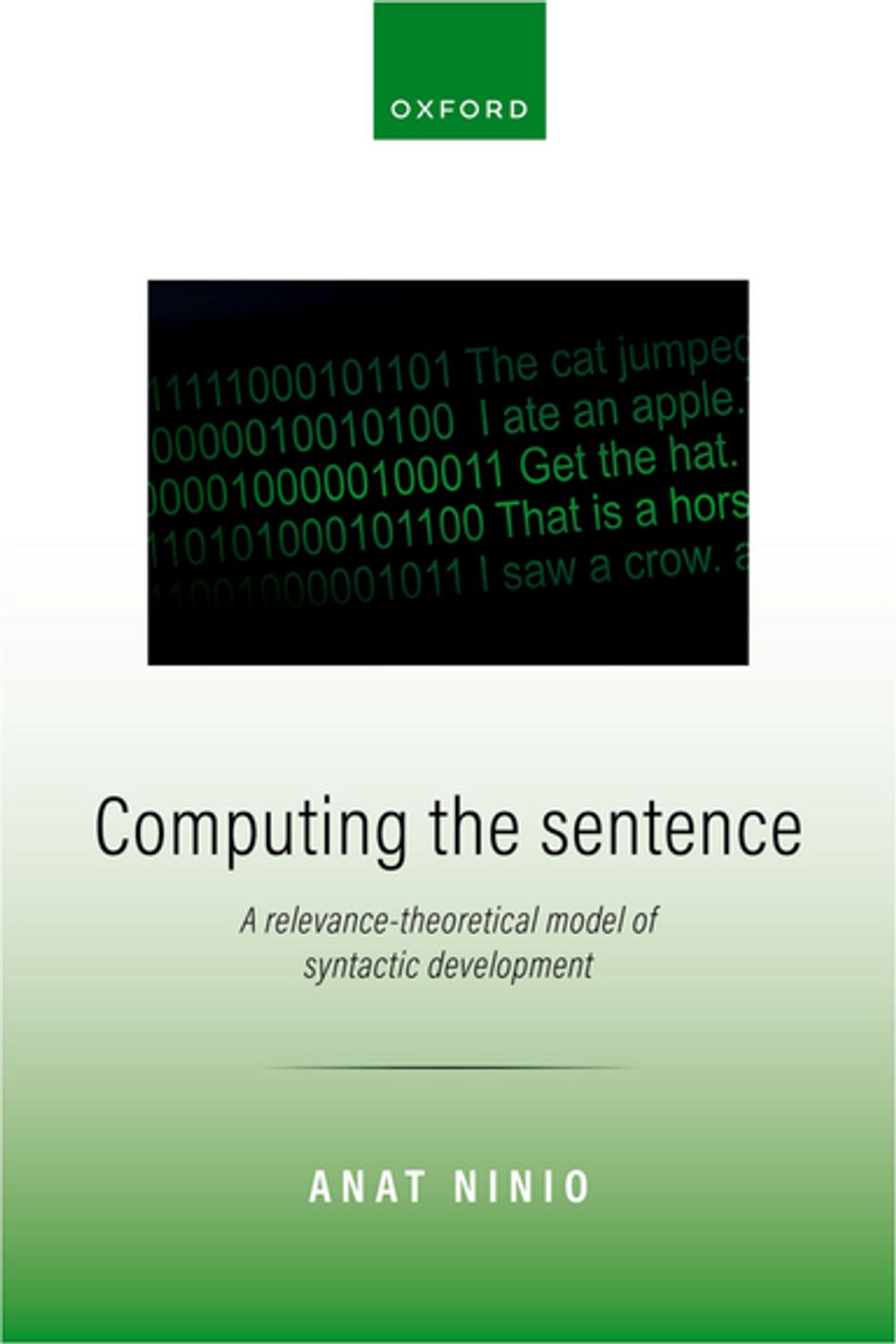


Developmental research is abandoning formal syntax, probably because Chomskyan generative syntax lacks psychological reality. Some studies opt for pure statistics-based definitions of syntactic knowledge, as if humans were similar to Large Language Models of AI and had no structurally meaningful concepts of syntactic relations. Others tend to Constructivist syntax, where patterns of elements are said to possess associated semantic meaning. The problem is that the core syntactic relations that young children acquire, such as verb-object and verb-subject combinations, do not possess particular associated semantics, meaning that the Constructivist approach is not a helpful vehicle for understanding syntactic acquisition. In this book, Anat Ninio approaches syntactic development from a novel point of view, within the framework of Relevance Theory, a theory of pragmatics with a strong commitment to a cognitive conceptualization of linguistic competence. This theory's architecture of linguistic information acknowledges the existence of procedural instructions as part of the content of words, covering various processing acts, including syntactic combination. Methodologically, the study employs computer programming algorithms as heuristic models for the cognitive combinatory processes of syntax, computer programs being a close analogue to mental plans for solving computational problems. The unusual framework and methodology adopted in the book represent a break with current approaches in developmental psycholinguistics and perhaps even with the teachings of mainstream linguistics. The first part of the book proposes a procedural syntax of the central patterns of English, covering argument-structure constructions, phrasal and clausal combinations of function words and content words, wh-questions, relative clauses, and coordination and gapping. This modelling resolves significant issues that have been eluding linguistic theory for decades. The second part of the book describes the development of certain syntactic procedures in English-speaking children, employing a microgenetic analysis to demonstrate that syntactic learning is guesswork by trial and error. Despite the apparent chaos, the many different attempts that children make to arrive at some syntactic construct belong to a single learning process, and gradually converge on the adult algorithm. Defining syntax in terms of combinatory procedures provides a novel perspective on our 'predictive brain', on language structure, and on cross-linguistic variation.
-
Autore:
-
Anno edizione:2025
-
Editore:
-
Formato:
-
Lingua:Inglese
Compatibilità:
Tutti i dispositivi (eccetto Kindle) Scopri di più
Layout:
Reflowable
EAN:
9780198907534

Formato:
Gli eBook venduti da Feltrinelli.it sono in formato ePub e possono essere protetti da Adobe DRM. In caso di download di un file protetto da DRM si otterrà un file in formato .acs, (Adobe Content Server Message), che dovrà essere aperto tramite Adobe Digital Editions e autorizzato tramite un account Adobe, prima di poter essere letto su pc o trasferito su dispositivi compatibili.
Cloud:
Gli eBook venduti da Feltrinelli.it sono sincronizzati automaticamente su tutti i client di lettura Kobo successivamente all’acquisto. Grazie al Cloud Kobo i progressi di lettura, le note, le evidenziazioni vengono salvati e sincronizzati automaticamente su tutti i dispositivi e le APP di lettura Kobo utilizzati per la lettura.
Clicca qui per sapere come scaricare gli ebook utilizzando un pc con sistema operativo Windows
