









EBOOK IN LINGUA STRANIERA





Deep Learning for Unmanned Systems

195,61 €
+1960
punti 
Venditore: Feltrinelli

Acquista online
Scaricabile subito
Articolo acquistabile con Carta del Docente

Articolo acquistabile con Carta Cultura Giovani e Carta del Merito

Articolo acquistabile con Carta della Cultura

Dati e Statistiche
 Salvato in 0 liste dei desideri
Salvato in 0 liste dei desideri
Deep Learning for Unmanned Systems
Scaricabile subito
195,61 €
195,61 €
Scaricabile subito
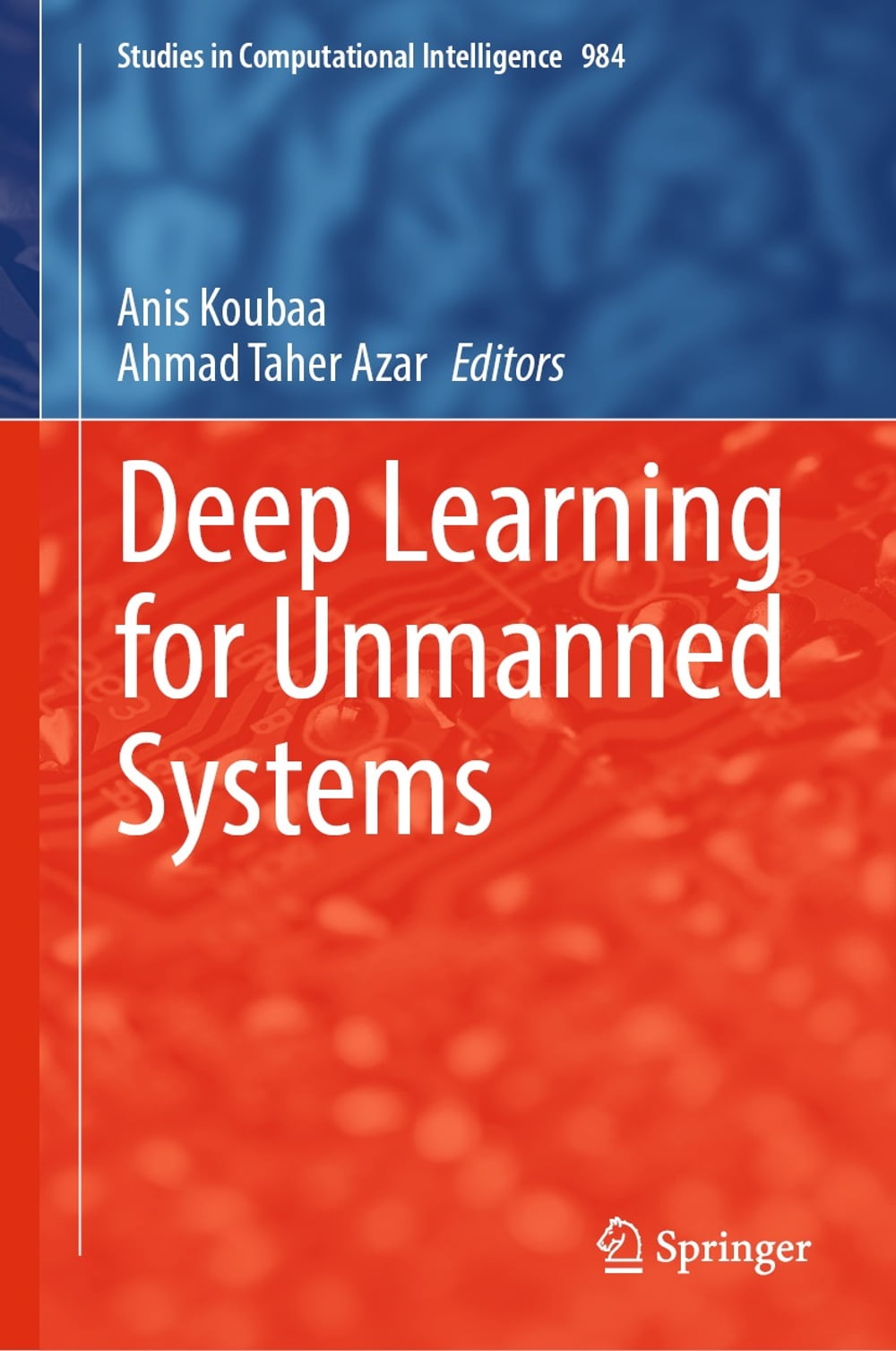


This book is used at the graduate or advanced undergraduate level and many others. Manned and unmanned ground, aerial and marine vehicles enable many promising and revolutionary civilian and military applications that will change our life in the near future. These applications include, but are not limited to, surveillance, search and rescue, environment monitoring, infrastructure monitoring, self-driving cars, contactless last-mile delivery vehicles, autonomous ships, precision agriculture and transmission line inspection to name just a few. These vehicles will benefit from advances of deep learning as a subfield of machine learning able to endow these vehicles with different capability such as perception, situation awareness, planning and intelligent control. Deep learning models also have the ability to generate actionable insights into the complex structures of large data sets. In recent years, deep learning research has received an increasing amount of attention from researchers in academia, government laboratories and industry. These research activities have borne some fruit in tackling some of the challenging problems of manned and unmanned ground, aerial and marine vehicles that are still open. Moreover, deep learning methods have been recently actively developed in other areas of machine learning, including reinforcement training and transfer/meta-learning, whereas standard, deep learning methods such as recent neural network (RNN) and coevolutionary neural networks (CNN). The book is primarily meant for researchers from academia and industry, who are working on in the research areas such as engineering, control engineering, robotics, mechatronics, biomedical engineering, mechanical engineering and computer science. The book chapters deal with the recent research problems in the areas of reinforcement learning-based control of UAVs and deep learning for unmanned aerial systems (UAS) The book chapters present various techniques of deep learning for robotic applications. The book chapters contain a good literature survey with a long list of references. The book chapters are well written with a good exposition of the research problem, methodology, block diagrams and mathematical techniques. The book chapters are lucidly illustrated with numerical examples and simulations. The book chapters discuss details of applications and future research areas.
-
Curatore:
-
Anno edizione:2021
-
Editore:
-
Formato:
Lingua:
Inglese
Compatibilità:
Tutti i dispositivi (eccetto Kindle) Scopri di più
Layout:
Reflowable
EAN:
9783030779399

Formato:
Gli eBook venduti da Feltrinelli.it sono in formato ePub e possono essere protetti da Adobe DRM. In caso di download di un file protetto da DRM si otterrà un file in formato .acs, (Adobe Content Server Message), che dovrà essere aperto tramite Adobe Digital Editions e autorizzato tramite un account Adobe, prima di poter essere letto su pc o trasferito su dispositivi compatibili.
Cloud:
Gli eBook venduti da Feltrinelli.it sono sincronizzati automaticamente su tutti i client di lettura Kobo successivamente all’acquisto. Grazie al Cloud Kobo i progressi di lettura, le note, le evidenziazioni vengono salvati e sincronizzati automaticamente su tutti i dispositivi e le APP di lettura Kobo utilizzati per la lettura.
Clicca qui per sapere come scaricare gli ebook utilizzando un pc con sistema operativo Windows
