









EBOOK IN LINGUA STRANIERA





Dust Before an Army

9,99 €
+100
punti 
Venditore: Feltrinelli

Acquista online
Scaricabile subito
Articolo acquistabile con Carta del Docente

Articolo acquistabile con Carta Cultura Giovani e Carta del Merito

Articolo acquistabile con Carta della Cultura

Dati e Statistiche
 Salvato in 0 liste dei desideri
Salvato in 0 liste dei desideri
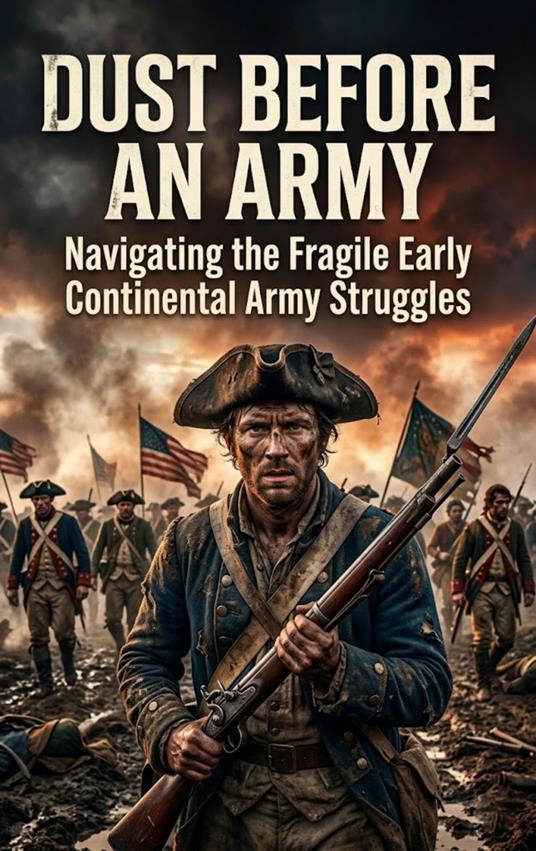
Dust Before an Army
Scaricabile subito
9,99 €
9,99 €
Scaricabile subito

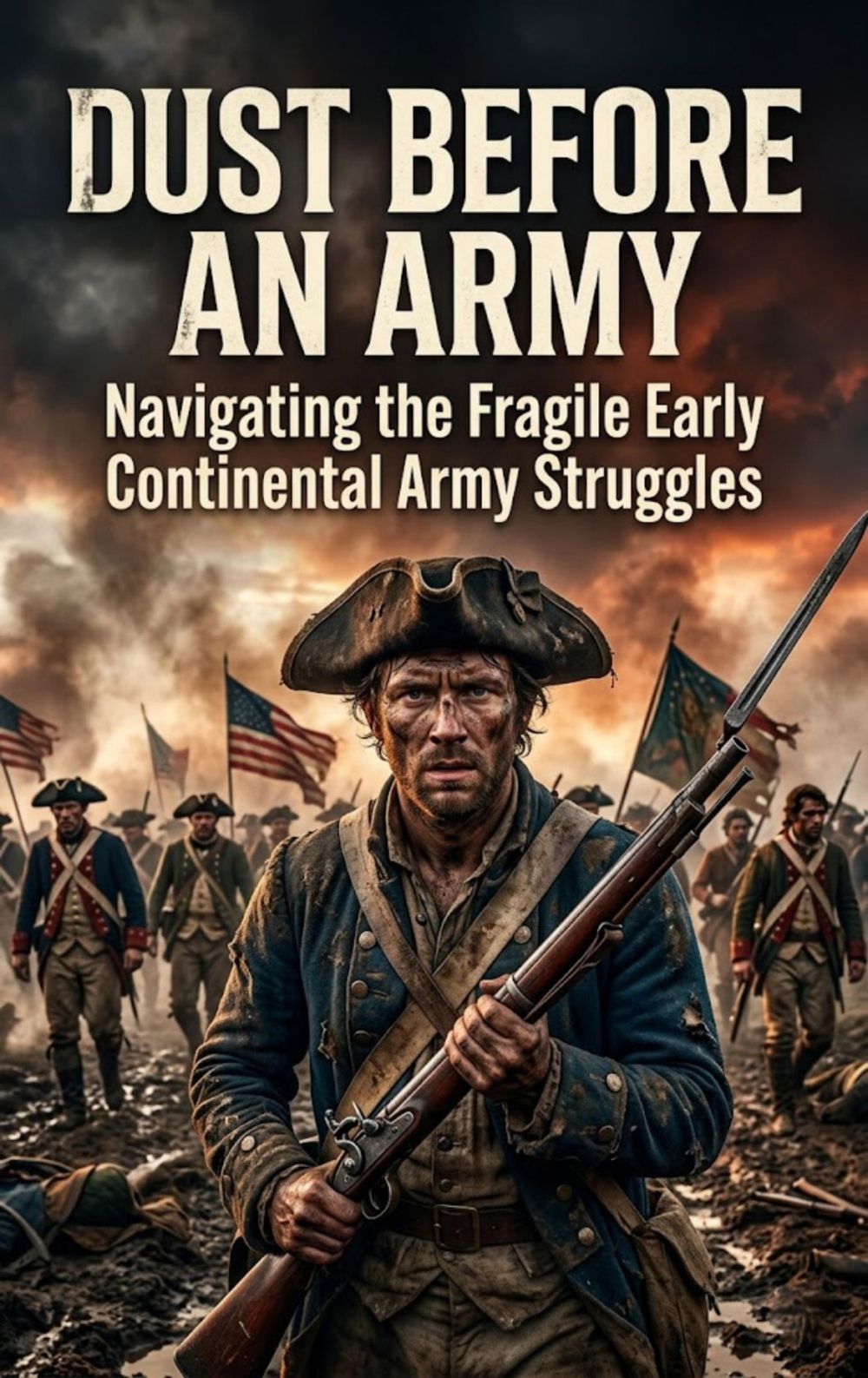



When George Washington arrived at Cambridge, Massachusetts, in July 1775 to take command of the Continental Army, what greeted him was not a fighting force — it was a gathering of farmers, teenage boys, and elected officers who voted on whether to follow orders. Military discipline was virtually nonexistent, most soldiers carried no weapon, and the regiments had assembled with almost none of the supplies required to arm, clothe, or shelter themselves. Washington's first act was not to plan a battle. It was to count his men — a task that took over a week. The structural crises ran deeper than morale. Enlistments expired with the calendar year: by 31 December 1775, fewer than half of the 20,000 men authorized by Congress had been recruited for the new army, forcing Washington to call out militia reinforcements to plug the gap. Critical shortages of arms, ammunition, clothing, tents, and food had plagued the army from its first weeks around Boston, driven by inadequate administrative procedures, the failure of credit, a broken transportation system, and the Continental Congress's legal inability to compel states to contribute money or supplies. Washington wrote to Congress that different regiments were "upon the point of cutting each other's throats" for firewood near their encampments. The army's internal fractures were no less dangerous than the British lines outside. Officers had been chosen by popularity rather than competence, soldiers operated on a democratic spirit that resisted command, and throughout the war the Continental Army suffered no fewer than 56 recorded mutinies. Discipline, when imposed, walked a knife's edge — too lax and the army dissolved, too harsh and it turned against itself. Washington's ordeal was not simply to defeat the British; it was first to manufacture, from near-nothing, something that resembled an army at all.
-
Autore:
-
Anno edizione:2026
-
Editore:
-
Formato:
-
Lingua:Inglese
Compatibilità:
Tutti i dispositivi (eccetto Kindle) Scopri di più
Layout:
Reflowable
EAN:
9783565406791

Formato:
Gli eBook venduti da Feltrinelli.it sono in formato ePub e possono essere protetti da Adobe DRM. In caso di download di un file protetto da DRM si otterrà un file in formato .acs, (Adobe Content Server Message), che dovrà essere aperto tramite Adobe Digital Editions e autorizzato tramite un account Adobe, prima di poter essere letto su pc o trasferito su dispositivi compatibili.
Cloud:
Gli eBook venduti da Feltrinelli.it sono sincronizzati automaticamente su tutti i client di lettura Kobo successivamente all’acquisto. Grazie al Cloud Kobo i progressi di lettura, le note, le evidenziazioni vengono salvati e sincronizzati automaticamente su tutti i dispositivi e le APP di lettura Kobo utilizzati per la lettura.
Clicca qui per sapere come scaricare gli ebook utilizzando un pc con sistema operativo Windows
