










AUDIOLIBRO IN LINGUA STRANIERA





Eastern Han Dynasty

4,45 €
+40
punti 
Venditore: Feltrinelli

Acquista online
Disponibile su APP ed eReader Kobo
Articolo acquistabile con Carta del Docente

Articolo acquistabile con Carta Cultura Giovani e Carta del Merito

Articolo acquistabile con Carta della Cultura

Abbonati a Kobo plus per avere accesso illimitato a questo contenuto

Dati e Statistiche
 Salvato in 0 liste dei desideri
Salvato in 0 liste dei desideri
Eastern Han Dynasty
Disponibile su APP ed eReader Kobo
4,45 €
4,45 €
Disponibile su APP ed eReader Kobo

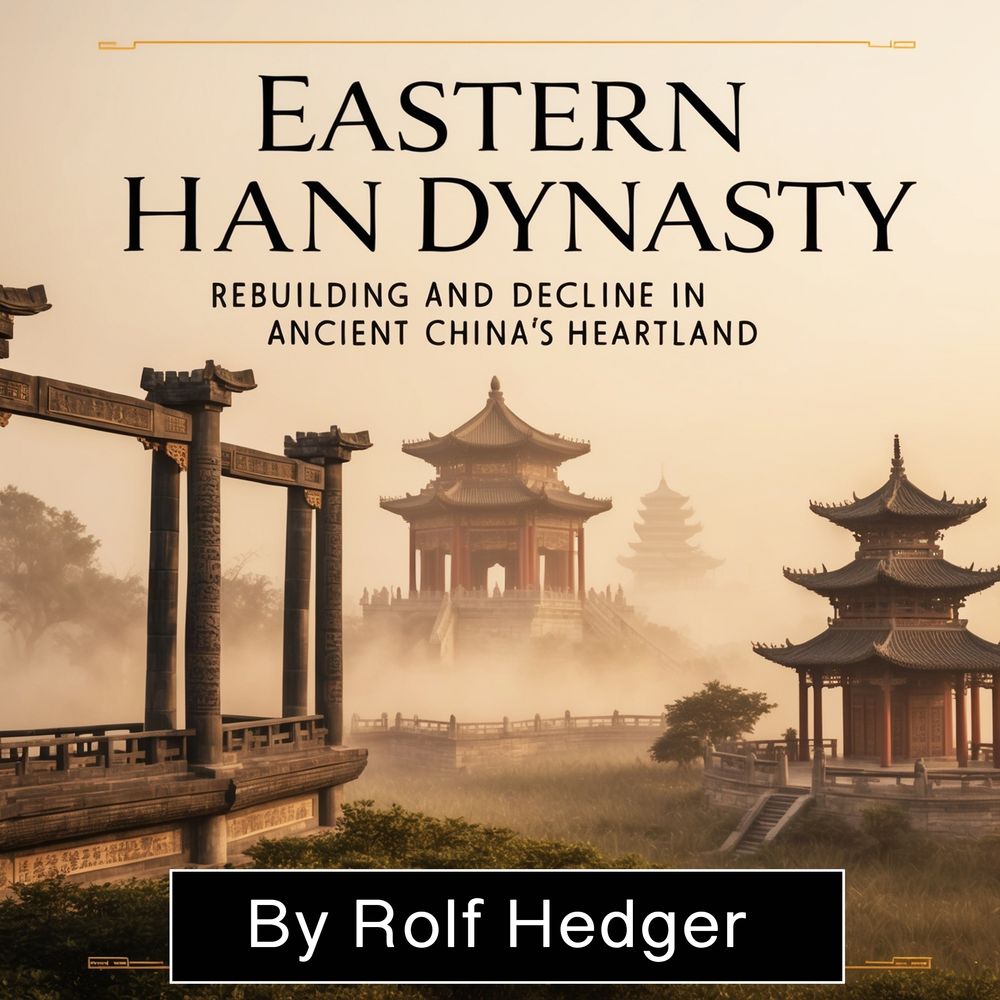



The Eastern Han Dynasty emerged from the chaos and turmoil that followed the collapse of Wang Mang’s Xin Dynasty. After usurping the Han throne in 9 CE, Wang Mang attempted radical reforms, including land redistribution and changes to the currency system. However, his policies destabilized the empire, leading to widespread discontent, natural disasters, and peasant uprisings. Among these, the most significant was the Red Eyebrows Rebellion, which contributed to the downfall of Wang Mang’s rule. In 23 CE, rebel forces stormed the capital, Chang’an, killing Wang Mang and leaving the empire in a state of disarray. In the wake of this collapse, Liu Xiu, a distant relative of the former Han imperial family, seized the opportunity to restore Han rule. He first distinguished himself as a military leader, defeating rival factions and consolidating power. In 25 CE, he declared himself Emperor Guangwu and established the Eastern Han Dynasty, with Luoyang as its new capital. Unlike the Western Han, which had ruled from Chang’an, the relocation of the capital symbolized a fresh start, one that aimed to correct the failures of the past. Emperor Guangwu’s early reign was marked by efforts to stabilize the empire and reestablish Han authority. He adopted a cautious approach to governance, reducing taxes and reviving Confucian principles to strengthen the legitimacy of his rule. Unlike Wang Mang’s drastic policies, Guangwu relied on gradual reforms to restore economic stability. He also worked to rebuild the imperial bureaucracy, appointing competent officials who could help him govern effectively. By reinforcing Confucianism as the guiding philosophy of the state, he sought to restore order and unity among the people.
-
Autore:
-
Durata in (hh:mm:ss):02:33:38
-
Anno edizione:2025
-
Editore:
Lingua:
Inglese
EAN:
9798347956685

Formato:
Gli Audiolibri venduti dal nostro sito sono in formato MP3 e protetti da un DRM proprietario Kobo.
Compatibilità:
Gli Audiolibri venduti dal nostro sito possono essere ascoltati sul tuo smartphone o tablet tramite la APP gratuita Kobo Books scaricabile da iOS o Android. Gli Audiolibri non possono essere scaricati in locale o trasferiti su un client di ascolto diverso da quello fornito tramite Kobo. Non è possibile ascoltare gli audiolibri con la Kobo APP Desktop. Puoi ascoltare gli Audiolibri tramite determinati eReader Kobo, utilizzando cuffie o casse con Bluetooth. Visita la pagina degli eReader per avere maggiori dettagli.
Cloud:
Gli Audiolibri venduti singolarmente dal nostro sito sono immediatamente sincronizzati sul tuo account personale in automatico. Successivamente all'acquisto, sono subito disponibili all'ascolto tramite i client di lettura Kobo compatibili.
Clicca qui servissero ulteriori informazioni
