










EBOOK IN LINGUA STRANIERA





Forecasting in the Social and Natural Sciences

46,79 €
+470
punti 
Venditore: Feltrinelli

Acquista online
Scaricabile subito
Articolo acquistabile con Carta del Docente

Articolo acquistabile con Carta Cultura Giovani e Carta del Merito

Articolo acquistabile con Carta della Cultura

Dati e Statistiche
 Salvato in 0 liste dei desideri
Salvato in 0 liste dei desideri
Forecasting in the Social and Natural Sciences
Scaricabile subito
46,79 €
46,79 €
Scaricabile subito

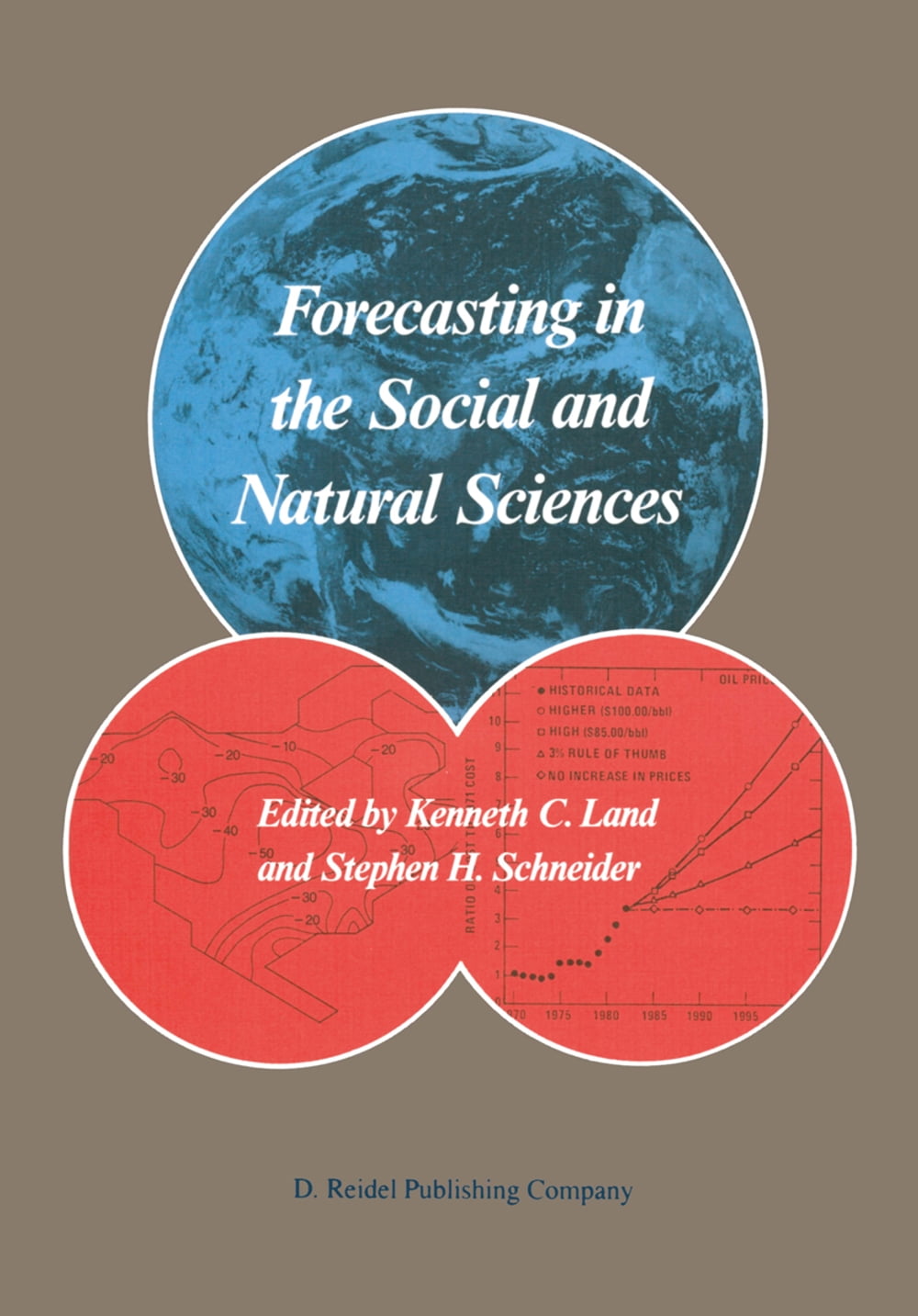



Social and natural scientists often are called upon to produce, or participate, in the pro duction of forecasts. This volume assembles essays that (a) describe the organizational and political context of applied forecasting, (b) review the state-of-the-art for many fore casting models and methods, and (c) discuss issues of predictability, the implications of forecaSt errors, and model construction, linkage and verification. The essays should be of particular interest to social and natural scientists concerned with forecasting large-scale systems. This project had its origins in discussions of social forecasts and forecasting method ologies initiated a few years ago by several social and natural science members of the Social Science Research Council's Committee on Social Indicators. It became appar ent in these discussions that certain similar problems were confronted in forecasting large-scale systems-be they social or natural. In response, the Committee hypothesized that much could be learned through more extended and systematic interchanges among social and natural scientists focusing on the formal methodologies applied in forecasting. To put this conjecture to the test, the Committee sponsored a conference at the National Center for Atmospheric Research in Boulder, Colorado, on June 10-13, 1984, on forecasting in the social and natural sciences. The conference was co-chaired by Committee members Kenneth C. Land and Stephen H. Schneider representing, respectively, the social and natural science mem bership of the Committee. Support for the conference was provided by a grant to the Council from the Division of Social and Economic Science of the National Science Foundation.
-
Curatore:
-
Anno edizione:2012
-
Editore:
-
Formato:
Lingua:
Inglese
Compatibilità:
Tutti i dispositivi (eccetto Kindle) Scopri di più
Layout:
Reflowable
EAN:
9789400940116

Formato:
Gli eBook venduti da Feltrinelli.it sono in formato ePub e possono essere protetti da Adobe DRM. In caso di download di un file protetto da DRM si otterrà un file in formato .acs, (Adobe Content Server Message), che dovrà essere aperto tramite Adobe Digital Editions e autorizzato tramite un account Adobe, prima di poter essere letto su pc o trasferito su dispositivi compatibili.
Cloud:
Gli eBook venduti da Feltrinelli.it sono sincronizzati automaticamente su tutti i client di lettura Kobo successivamente all’acquisto. Grazie al Cloud Kobo i progressi di lettura, le note, le evidenziazioni vengono salvati e sincronizzati automaticamente su tutti i dispositivi e le APP di lettura Kobo utilizzati per la lettura.
Clicca qui per sapere come scaricare gli ebook utilizzando un pc con sistema operativo Windows
