










EBOOK IN LINGUA STRANIERA





High Frequency Techniques

117,99 €
+1180
punti 
Venditore: Feltrinelli

Acquista online
Scaricabile subito
Articolo acquistabile con Carta del Docente

Articolo acquistabile con Carta Cultura Giovani e Carta del Merito

Articolo acquistabile con Carta della Cultura

Dati e Statistiche
 Salvato in 0 liste dei desideri
Salvato in 0 liste dei desideri
High Frequency Techniques
Scaricabile subito
117,99 €
117,99 €
Scaricabile subito
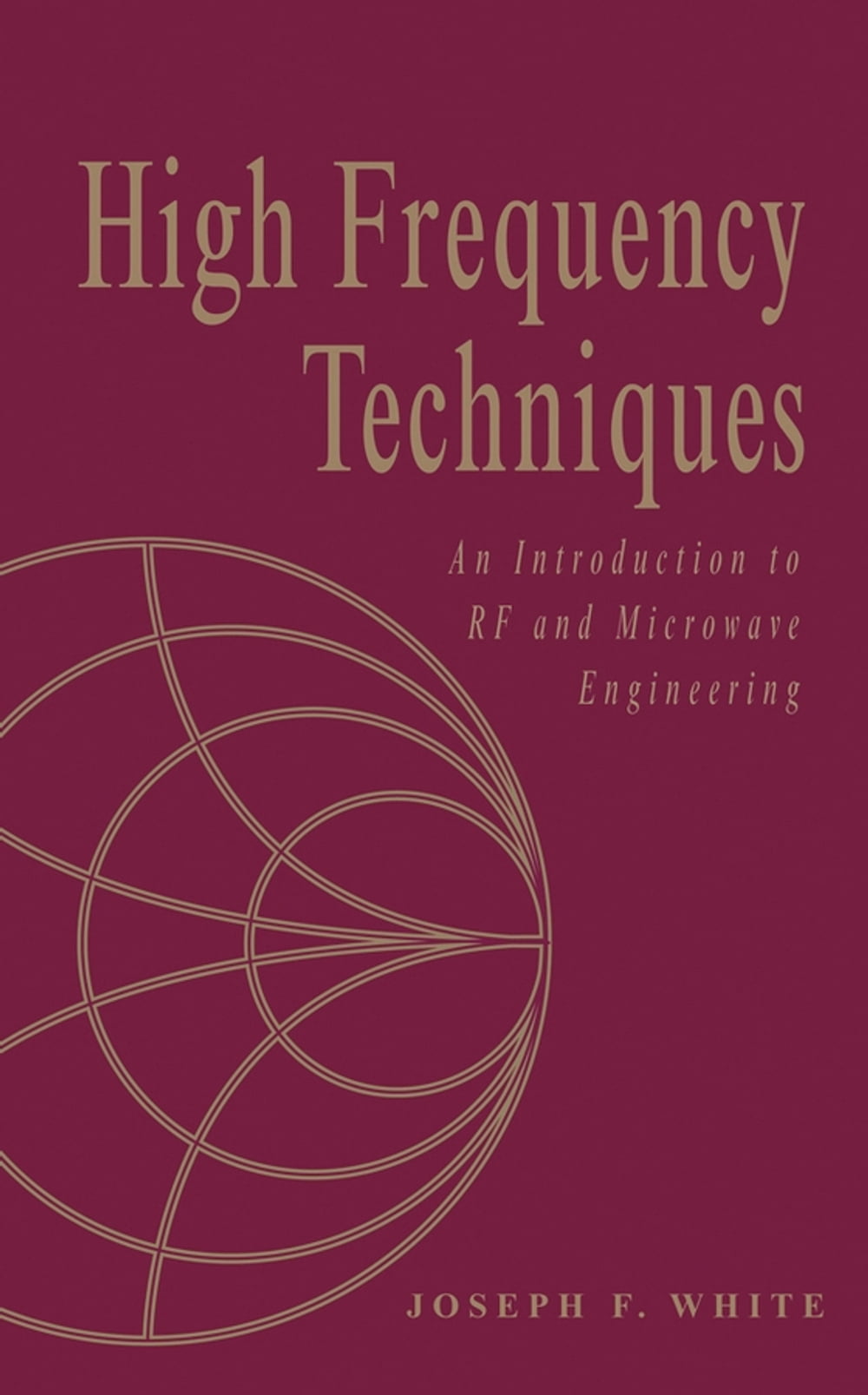


This textbook is an introduction to microwave engineering. The scope of this book extends from topics for a first course in electrical engineering, in which impedances are analyzed using complex numbers, through the introduction of transmission lines that are analyzed using the Smith Chart, and on to graduate level subjects, such as equivalent circuits for obstacles in hollow waveguides, analyzed using Green’s Functions. This book is a virtual encyclopedia of circuit design methods. Despite the complexity, topics are presented in a conversational manner for ease of comprehension. The book is not only an excellent text at the undergraduate and graduate levels, but is as well a detailed reference for the practicing engineer. Consider how well informed an engineer will be who has become familiar with these topics as treated in High Frequency Techniques: (in order of presentation) Brief history of wireless (radio) and the Morse code U.S. Radio Frequency Allocations Introduction to vectors AC analysis and why complex numbers and impedance are used Circuit and antenna reciprocity Decibel measure Maximum power transfer Skin effect Computer simulation and optimization of networks LC matching of one impedance to another Coupled Resonators Uniform transmission lines for propagation VSWR, return Loss and mismatch error The Telegrapher Equations (derived) Phase and Group Velocities The Impedance Transformation Equation for lines (derived) Fano's and Bode's matching limits The Smith Chart (derived) Slotted Line impedance measurement Constant Q circles on the Smith Chart Approximating a transmission line with lumped L's and C's ABCD, Z, Y and Scattering matrix analysis methods for circuits Statistical Design and Yield Analysis of products Electromagnetic Fields Gauss's Law Vector Dot Product, Divergence and Curl Static Potential and Gradient Ampere's Law and Vector Curl Maxwell's Equations and their visualization The Laplacian Rectangular, cylindrical and spherical coordinates Skin Effect The Wave Equation The Helmholtz Equations Plane Propagating Waves Rayleigh Fading Circular (elliptic) Polarization Poynting's Theorem EM fields on Transmission Lines Calculating the impedance of coaxial lines Calculating and visualizing the fields in waveguides Propagation constants and waveguide modes The Taylor Series Expansion Fourier Series and Green's Functions Higher order modes and how to suppress them Vector Potential and Retarded Potentials Wire and aperture antennas Radio propagation and path loss Electromagnetic computer simulation of structures Directional couplers The Rat Race Hybrid Even and Odd Mode Analysis applied to the backward wave coupler Network analyzer impedance and transmission measurements Two-port Scattering Parameters (s matrix) The Hybrid Ring coupler The Wilkinson power divider Filter design: Butterworth, Maximally flat & Tchebyscheff responses Filter Q Diplexer, Bandpass and Elliptic filters Ri
-
Autore:
-
Anno edizione:2016
-
Editore:
-
Formato:
-
Lingua:Inglese
Compatibilità:
Tutti i dispositivi (eccetto Kindle) Scopri di più
Layout:
Reflowable
EAN:
9781119336044

Formato:
Gli eBook venduti da Feltrinelli.it sono in formato ePub e possono essere protetti da Adobe DRM. In caso di download di un file protetto da DRM si otterrà un file in formato .acs, (Adobe Content Server Message), che dovrà essere aperto tramite Adobe Digital Editions e autorizzato tramite un account Adobe, prima di poter essere letto su pc o trasferito su dispositivi compatibili.
Cloud:
Gli eBook venduti da Feltrinelli.it sono sincronizzati automaticamente su tutti i client di lettura Kobo successivamente all’acquisto. Grazie al Cloud Kobo i progressi di lettura, le note, le evidenziazioni vengono salvati e sincronizzati automaticamente su tutti i dispositivi e le APP di lettura Kobo utilizzati per la lettura.
Clicca qui per sapere come scaricare gli ebook utilizzando un pc con sistema operativo Windows
