









LIBRO INGLESE





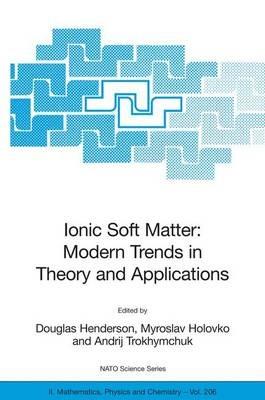
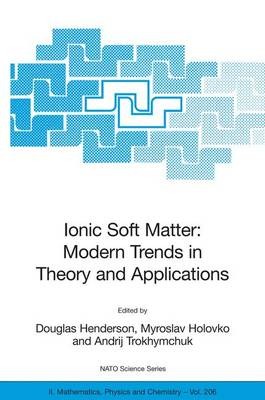
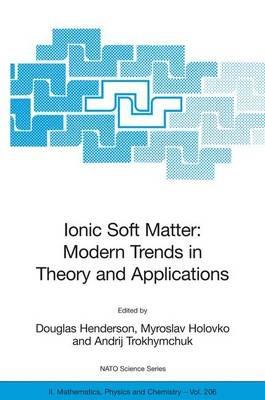
Ionic Soft Matter: Modern Trends in Theory and Applications: Proceedings of the NATO Advanced Research Workshop on Ionic Soft Matter: Modern Trends in Theory and Application Lviv, Ukraine, 14-17 April, 2004

131,40 €
+1310
punti 
Venditore: Feltrinelli
Articolo acquistabile con Carta del Docente

Articolo acquistabile con Carta Cultura Giovani e Carta del Merito

Articolo acquistabile con Carta della Cultura

Paga con Klarna in 3 rate senza interessi per ordini superiori a 39 €

Dati e Statistiche
 Salvato in 0 liste dei desideri
Salvato in 0 liste dei desideri
Ionic Soft Matter: Modern Trends in Theory and Applications: Proceedings of the NATO Advanced Research Workshop on Ionic Soft Matter: Modern Trends in Theory and Application Lviv, Ukraine, 14-17 April, 2004
Disponibilità in 2 settimane
131,40 €
131,40 €
Disponibilità in 2 settimane



Recently there have been profound developments in the understanding and interpretation of liquids and soft matter centered on constituents with sho- range interactions. Ionic soft matter is a class of conventional condensed soft matter with prevailing contribution from electrostatics and, therefore, can be subject to possible long-range correlations among the components of the - terial and in many cases crucially affecting its physical properties. Among the most popular representatives of such a class of materials are natural and synthetic saline environments, like aqueous and non-aqueous electrolyte - lutions and molten salts as well as variety of polyelectrolytes and colloidal suspensions. Equally well known are biological systems of proteins. All these systems are examples of soft matter strongly in?uenced, if not dominated, by long-range forces. For more than half of century the classical theories by Debye and Hückel as well as by Derjaguin, Landau, Verwey and Owerbeek (DLVO) have been at the basis of theoretical physical chemistry and chemical engineering. The substantial progress in material science during last few decades as well as the advent of new instrumentation and computational techniques made it apparent that in many cases the classical theories break down. New types of interactions (e.g. hydrodynamic, entropic) have been discovered and a number of questions have arisen from theoretical and experimental studies. Many of these questions still do not have de?nite answers.
-
Curatore:
-
Editore:
-
Collana:NATO Science Series II: Mathematics, Physics and Chemistry
-
Anno:2005
-
Rilegatura:Hardback
Pagine:
418 p.
Testo in English
Dimensioni:
232 x 156 mm
EAN:
9781402036620

Informazioni e Contatti sulla Sicurezza dei Prodotti
Le schede prodotto sono aggiornate in conformità al Regolamento UE 988/2023. Laddove ci fossero taluni dati non disponibili per ragioni indipendenti da Feltrinelli, vi informiamo che stiamo compiendo ogni ragionevole sforzo per inserirli. Vi invitiamo a controllare periodicamente il sito www.lafeltrinelli.it per eventuali novità e aggiornamenti.
Per le vendite di prodotti da terze parti, ciascun venditore si assume la piena e diretta responsabilità per la commercializzazione del prodotto e per la sua conformità al Regolamento UE 988/2023, nonché alle normative nazionali ed europee vigenti.
Per informazioni sulla sicurezza dei prodotti, contattare productsafety@feltrinelli.it
